

Getting a diagnosis of degenerative disc disease (DDD) can be unsettling. But it's important to know that effective treatment options for degenerative disc disease are all about managing your symptoms and getting you back to your life, not just learning to live with the pain. The first step is to reframe what the diagnosis means. It isn’t some scary, progressive disease; it’s a term that describes the natural wear and tear your spinal discs experience over time.
Think of it as a starting point—a green light to find the right path toward relief.
Let's be honest, the term "degenerative disc disease" sounds pretty grim. It brings to mind something that’s only going to get worse. The reality, however, is much more optimistic.
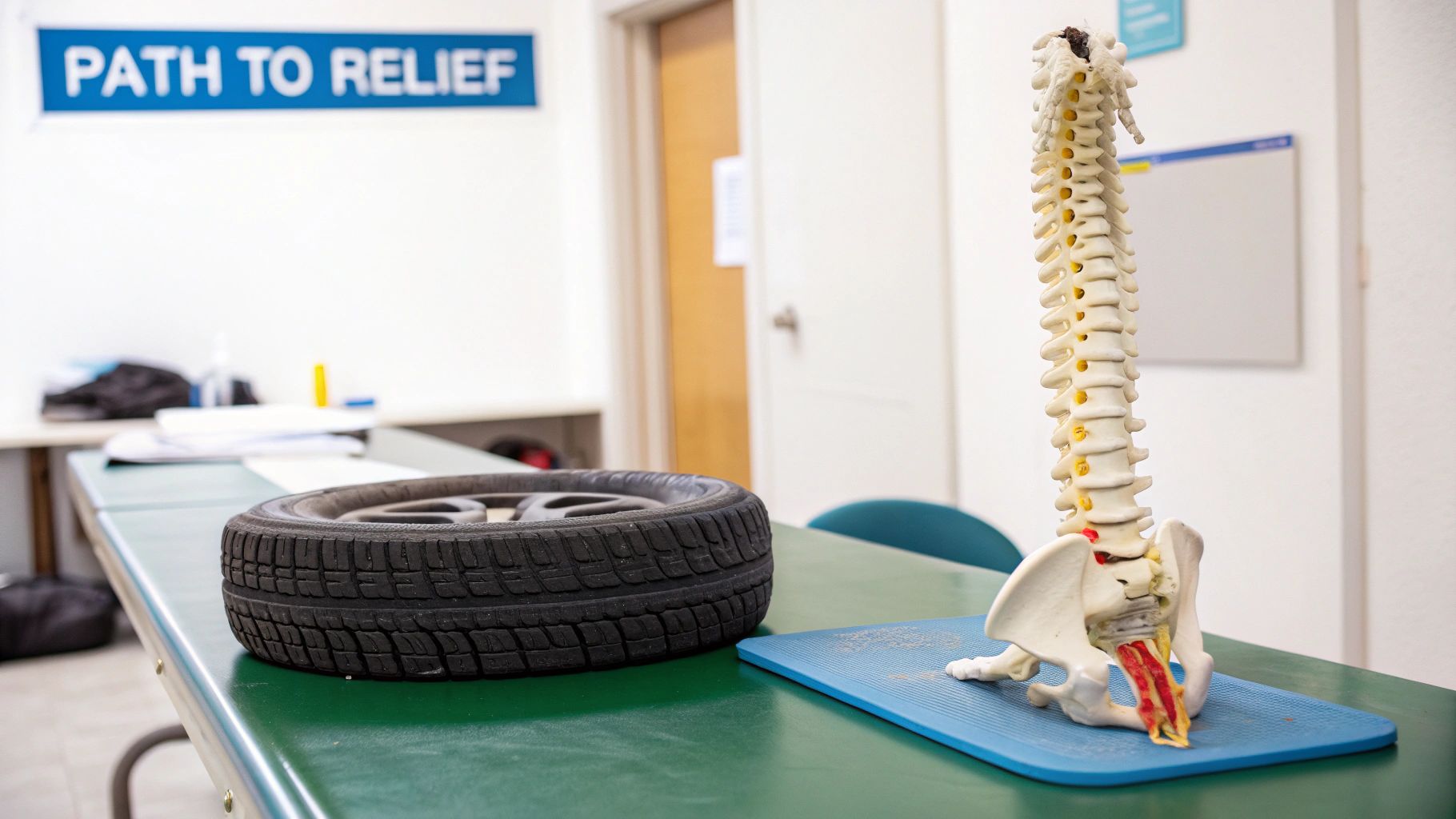
This term simply describes the gradual changes in your spinal discs over the years. A great analogy is a car tire losing its tread and pressure after thousands of miles on the road. As we get older, our discs can lose hydration, thin out, and become less effective at absorbing shock.
This breakdown can lead to pain, stiffness, and other frustrating symptoms, especially if a weakened disc starts to irritate nearby nerves or creates instability in the spine. But here’s the key takeaway: a DDD diagnosis is not a life sentence of decline. It's a clear signal that your spine needs some support and a chance to take proactive steps to restore its function so you can live comfortably again.
Understanding what DDD actually is helps shift your mindset from fear to empowerment. This is an incredibly common issue, affecting an estimated 266 million people worldwide each year. You can read the full research on global DSD prevalence to see just how widespread it is. This statistic really underscores the need for solutions that do more than just mask the pain.
The great news is that your body has an amazing ability to heal and adapt, as long as you provide the right conditions for it to do so. This guide is here to give you the knowledge you need to make smart, informed decisions about your health. We'll walk through the full spectrum of care, from foundational conservative methods to advanced non-surgical protocols that get to the root of what's causing your pain.
A diagnosis of degenerative disc disease isn't an endpoint; it's a roadmap. It provides the information needed to navigate toward targeted, effective treatments that can restore your quality of life without invasive procedures.
Our philosophy is straightforward: we want to empower you with a clear understanding of your condition and the best solutions available. In this guide, we’ll break down the most effective treatment options for degenerative disc disease, helping you build a personalized plan for lasting relief.

When you first get a diagnosis of degenerative disc disease, the path to feeling better almost always starts with the simplest, most logical steps. This is what we call conservative care—a range of non-surgical treatments aimed at reducing pain, improving your ability to move, and slowing down the degenerative process itself.
Think of it as building a strong, supportive foundation for your spine from the ground up. These methods are the go-to first line of defense because they're safe, they work for a lot of people, and they tap into your body's own incredible ability to heal. The goal here is to manage your symptoms effectively enough to help you sidestep more invasive procedures later on.
And this approach is gaining serious traction. The market for DDD treatments was valued at USD 31.99 billion and is on track to hit USD 57.78 billion by 2032, which shows a huge demand for effective, non-surgical solutions. This growth, detailed in this market analysis, is largely fueled by the proven success of physical therapy and other conservative strategies.
Of all the non-surgical treatment options for degenerative disc disease, physical therapy is one of the most powerful tools in our arsenal. A good physical therapist is like a personal coach for your spine, designing a program that targets your specific areas of weakness and pain.
The main objective is to build what I like to call a "natural back brace." This involves strengthening the core muscles in your abdomen, back, and hips that are responsible for supporting your spine. When these muscles are strong and stable, they offload a huge amount of pressure from your worn-out discs, which is key to reducing pain and preventing further damage.
A solid physical therapy plan for DDD usually includes:
While physical therapy focuses on building muscular support from the outside in, chiropractic care hones in on the spine's structural alignment. Even small misalignments, or subluxations, can create uneven pressure on your discs, speeding up the wear-and-tear process and irritating nearby nerves.
Modern chiropractic isn't about forceful "cracking." It's about using precise, gentle adjustments to restore healthy movement to the joints in your spine. By correcting the alignment, these adjustments can take pressure off nerves, ease pain, and create a better healing environment for your discs. It's a crucial piece of the puzzle that works in tandem with physical therapy. The principles of restoring proper alignment are also central to managing other disc issues, which you can read about in our guide on non-surgical approaches to disc injuries.
The combination of strengthening the muscles around the spine (physical therapy) and ensuring the spine itself is properly aligned (chiropractic care) creates a powerful synergy for managing DDD symptoms.
To give you a clearer picture of how these foundational treatments stack up, here's a quick comparison.
| Treatment | Primary Goal | What It Involves | Best For |
|---|---|---|---|
| Physical Therapy | Strengthen supporting muscles, improve mobility, and reduce pain. | Customized exercises, stretching, and low-impact cardio. | Patients needing to build core stability and functional strength. |
| Chiropractic Care | Correct spinal misalignments and improve joint function. | Targeted spinal adjustments to restore proper motion. | Individuals with joint restrictions, nerve irritation, and postural issues. |
| Lifestyle Changes | Reduce inflammation and mechanical stress on the spine. | Anti-inflammatory diet, proper ergonomics, and weight management. | Everyone with DDD, as it provides the foundation for other treatments to succeed. |
As you can see, each approach has a distinct role, but they often work best when used together to create a comprehensive, multi-faceted care plan.
Never underestimate the power of your daily habits. What you do and what you eat have a massive impact on managing degenerative disc disease. Two of the biggest factors are ergonomics and nutrition, as they directly influence both the physical stress on your spine and your body's internal inflammatory response.
Proper ergonomics is all about setting up your environment to support good posture. This could be as simple as adjusting your office chair, propping up your computer monitor to eye level, or learning how to lift heavy objects without straining your back. These small tweaks add up, significantly reducing the daily micro-trauma that your spinal discs endure.
Nutrition is just as vital. A diet packed with processed foods, sugar, and unhealthy fats can fuel chronic inflammation, making DDD pain feel so much worse. On the flip side, focusing on anti-inflammatory foods can help calm that fire and give your body the raw materials it needs to repair tissues.
Making smart food swaps is a great place to start. Prioritize whole, nutrient-dense foods that fight inflammation and limit those that promote it. By thoughtfully integrating these conservative strategies—physical therapy, chiropractic care, and mindful lifestyle choices—you can take real, meaningful control over your DDD and build a resilient spine for the long haul.
So, what happens when foundational care like physical therapy isn't enough to get you back on your feet? It doesn’t mean surgery is your only option. There’s a whole category of advanced, non-surgical therapies designed to bridge that exact gap.
These treatments go beyond simply managing your symptoms. They're engineered to tackle the underlying mechanical problems of degenerative disc disease head-on, offering a major step up from basic care without the invasive nature and long recovery of surgery. Think of them as targeted interventions that create the perfect healing environment right where you need it most—inside the disc and the tissues around it.
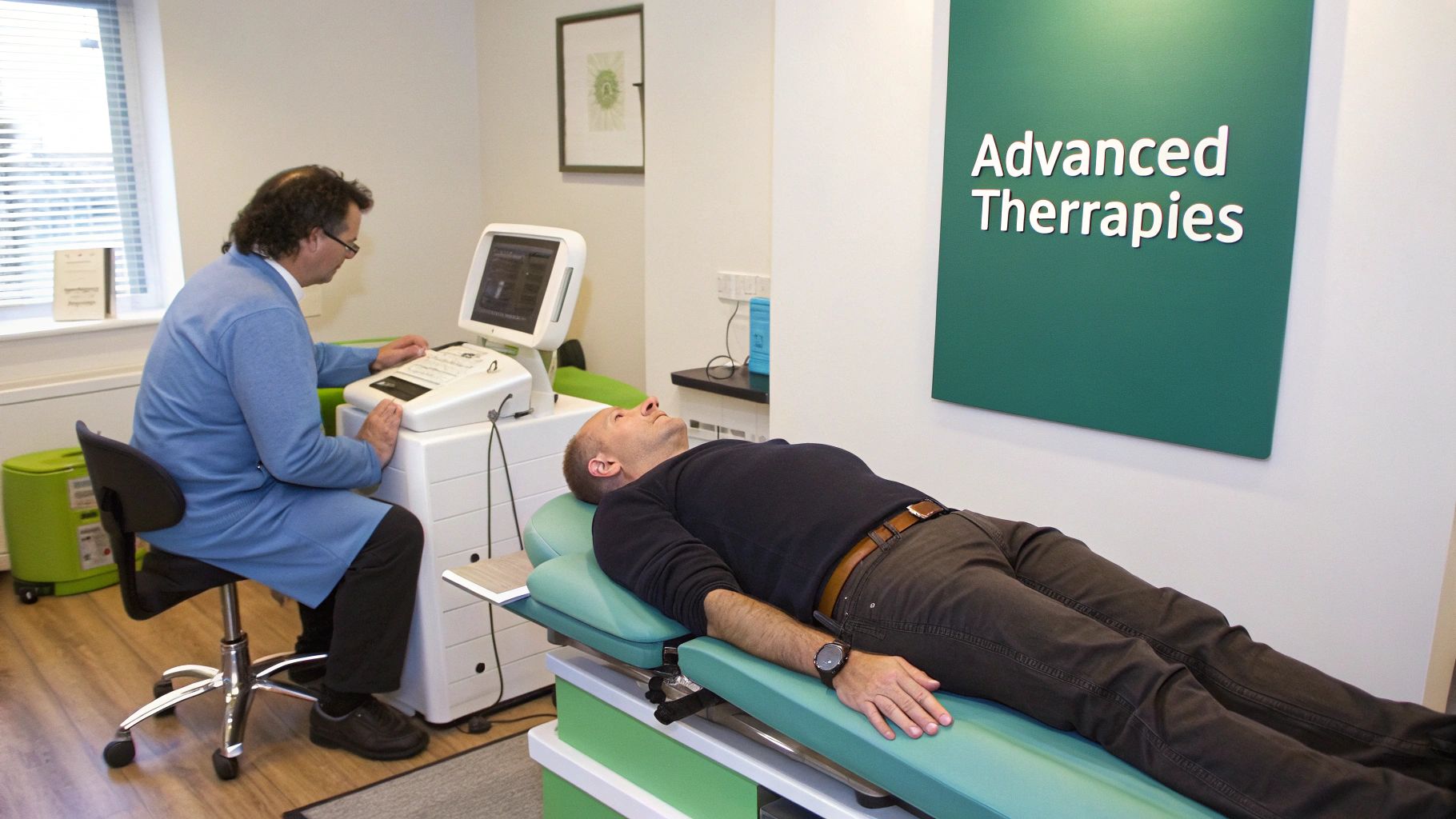
One of the most powerful tools in our arsenal is non-surgical spinal decompression. This technology is a game-changer because it directly fights the compressive forces at the very heart of DDD. As a disc breaks down, it loses height, which forces the vertebrae closer together and puts constant, punishing pressure on the disc.
Imagine a dry, flattened sponge. It can’t absorb water. Decompression therapy works by gently and precisely separating the vertebrae, creating space for that "sponge" to plump back up. Using a sophisticated, computer-controlled table, we apply a gentle, calculated pulling force to the spine.
This creates negative pressure—a vacuum effect—inside the disc, which is critical for two reasons:
This isn't old-school traction. Non-surgical spinal decompression is a highly sophisticated process designed to bypass the body's natural tendency to tense up, allowing the disc to truly unload and create an environment where healing can finally begin.
While decompression tackles the big-picture mechanical issues, Class IV laser therapy gets to work on a cellular level. It's the perfect partner to decompression, dramatically reducing inflammation and accelerating the healing process.
Think of the cells in your damaged spinal tissues as tiny batteries that are running on empty. They just don't have the energy to repair themselves properly. Class IV laser therapy uses specific wavelengths of light that penetrate deep into your tissue, acting like a supercharger for these exhausted cells.
This process is called photobiomodulation. It stimulates the mitochondria—the powerhouses inside your cells—to ramp up energy production. With this boost of cellular fuel, tissues can repair faster, inflammation dies down, and circulation improves. The end result is quicker pain relief and stronger, more resilient tissue. You can get a more detailed look at how this works in our guide to cold laser therapy for pain relief.
Beyond these two cornerstone therapies, we can get even more specific. Computer-guided instruments like the PulStar system allow us to restore motion to spinal joints with incredible precision and without any of the forceful twisting of traditional manual adjustments—perfect for sensitive, degenerated spines.
Injection therapies can also play a key role. While steroid injections are useful for calming down severe nerve inflammation, the medical field is also making exciting progress with regenerative options. For instance, innovative techniques like radiofrequency ablation (RFA) have been shown to reduce chronic low back pain by about 50% and improve function. There's a clear trend toward solutions that help the body heal itself, which offers tremendous hope for patients looking to avoid more invasive procedures.
By combining these modern technologies, we can build a truly comprehensive protocol. This integrated approach—decompressing the spine, healing the cells, and restoring precise motion—attacks DDD from every angle. It's a powerful pathway to lasting relief that has helped countless people get their lives back without going under the knife.
For most people struggling with degenerative disc disease, surgery is something they’ll never have to seriously consider. The reality is, a smart, consistent plan combining physical therapy, chiropractic care, and other non-surgical treatments usually does the trick to get pain under control and bring back function.
But for a small number of people, that’s just not the case. When you’ve tried everything and are still left with debilitating pain, the conversation might need to shift toward surgery. This isn’t about failure; it’s about changing the game plan when the old one isn't working. It's a big step, reserved for very specific situations where the potential upside finally starts to outweigh the significant risks. It truly is the last resort among all treatment options for degenerative disc disease.
So, what are the warning signs that put surgery on the table? This discussion usually only starts after someone has genuinely committed to a full-scale conservative care plan for at least six months without getting any real, lasting relief.
Beyond that, a few severe symptoms act as major red flags, signaling that surgery might be needed to stop permanent nerve damage in its tracks. These critical signs include:
If surgery becomes the only viable path forward, there are two primary procedures doctors typically use for degenerative disc disease. Both are designed to stabilize the spine and take pressure off the pinched nerves.
Spinal Fusion
This has been the go-to surgery for decades. A surgeon goes in, removes the problem disc entirely, and then fuses the two vertebrae on either side of it into one solid piece of bone. By stopping the movement at that painful joint, it can provide significant stability and pain relief. The main downside? You permanently lose flexibility at that specific level of your spine.
A Quick Word on Making the Call: Before you ever say "yes" to surgery, getting a second—or even a third—opinion is absolutely crucial. Another expert might see your case differently or know of a non-surgical path you haven't tried yet.
Artificial Disc Replacement
This is a more modern approach. Instead of fusion, the surgeon removes the damaged disc and puts a prosthetic implant in its place. This artificial disc is engineered to move like a healthy, natural one. The key benefit here is preserving motion in the spine, which helps protect the neighboring discs from extra wear and tear down the road. It's a great option, but not everyone's anatomy makes them a good candidate.
Ultimately, deciding on surgery is a massive, deeply personal choice. It means weighing the potential for relief against the very real risks of infection, hardware problems, and a long, demanding recovery. This is exactly why we believe so strongly in exhausting every powerful non-surgical tool first. Our goal is to help you find a way to get better and, hopefully, stay far away from the operating room.
Trying to figure out the best treatment for degenerative disc disease can feel overwhelming. With so many options, it's easy to get lost. But here’s the thing: there isn't a single magic bullet. The real key is building a plan that’s tailored specifically to you—your body, your symptoms, and your life.
This is where you shift from being a passive patient to the active driver of your own care. A truly effective treatment plan is never a one-size-fits-all prescription. It’s a strategy you build in partnership with your doctor, one designed to get to the root of your pain.
Your journey to relief starts with a good conversation. To build the right plan, your provider needs to see beyond the MRI report and understand how your back pain actually impacts your daily life. Come prepared to talk about what you want to get back to, whether that’s playing with your grandkids or just being able to sit through a movie without wincing.
To get the most out of this partnership, a little prep goes a long way:
Of course, finding the right professional to guide you is a huge piece of the puzzle. If you need some help with that, our guide on how to choose a chiropractor offers some solid, practical advice.
Your final plan will probably look like a blend of different therapies working together. Think of it like a team approach. You might use spinal decompression to take pressure off the disc and create space for healing, then follow it up with specific exercises to build the core strength needed to hold everything in place.
Your voice is the most critical component of your treatment plan. Openly communicating your experiences, concerns, and goals allows your care team to adapt and refine your strategy, ensuring it continues to meet your needs as you heal.
It’s also crucial to understand the road ahead, especially when things aren’t improving as quickly as you’d like. Most people want to avoid surgery, and the good news is, that's the goal of conservative care, too.

This flowchart shows the typical decision-making path. It makes it clear that surgery is almost always a last resort, reserved for cases where conservative treatments haven’t worked and there are serious red flags, like progressive nerve damage.
By taking an active role in the process, you can navigate your options with confidence and help build a plan that gives you the best possible shot at getting back to the life you want to live.
When you're dealing with a diagnosis like degenerative disc disease, you’re bound to have questions. It's completely normal. Getting clear answers is the first step toward feeling in control and confident about your recovery plan. Let's walk through some of the most common things patients ask.
My goal here is to give you direct, honest information that cuts through the noise. Understanding these points will help you set realistic expectations and become an active partner in your own healing process.
This is usually the first question on everyone's mind, and it's a big one. The honest answer is that the structural, age-related changes to the disc can't be "cured" in the way an infection is. But—and this is a huge but—the pain, stiffness, and limitations it causes can absolutely be managed, improved, and in many cases, eliminated.
The goal of modern treatment options for degenerative disc disease isn’t to turn back the clock on wear and tear. It's to restore function, get you out of pain, and halt the degenerative process in its tracks.
Think of it less like fixing a broken part and more like rehabilitating a struggling forest. You can’t make an old tree young again, but you can improve the soil, clear out the underbrush, and create an environment where it can thrive. That's what treatments like spinal decompression and Class IV laser therapy do for your discs—they improve the environment by boosting nutrient flow and calming inflammation, allowing your body to heal itself. For the person living with the pain, that feels like a reversal.
Every person’s healing journey is unique. Your timeline really depends on how advanced the condition is, your overall health, and how consistently you follow through with your care plan. That said, most people start to feel a noticeable shift within the first few weeks.
This initial improvement usually comes as a reduction in that sharp, nagging pain as inflammation starts to calm down. The deeper, more structural healing that leads to lasting change happens over several months, as the discs and surrounding tissues genuinely repair and strengthen.
The key is to remember that these therapies are designed for true, long-term healing, not just a quick fix. It’s a marathon, not a sprint. Your personalized plan will map out the milestones we expect to see along the way.
Absolutely, as long as it's the right kind of chiropractic care. When performed by a skilled practitioner using modern, gentle techniques, it's one of the safest and most effective tools for managing DDD. The common fear people have often stems from an old-school image of aggressive twisting and popping.
That’s not how we operate. Today’s advanced chiropractic clinics rely on precision. For instance, computer-assisted adjustment tools like the PulStar system allow for incredibly specific adjustments with no forceful twisting, making the process perfectly safe even for sensitive or damaged discs.
Safety always comes first. A thorough exam, including a review of your medical history and imaging like MRIs, is non-negotiable. This ensures every technique we use is perfectly matched to your specific condition.
Nutrition plays a massive, often overlooked role in spine health. Your spinal discs are living tissues. They need nutrients and a ton of water to stay pliable and healthy. What you eat directly feeds—or fights—the inflammation that drives DDD pain.
A diet filled with processed foods, sugar, and unhealthy fats fuels chronic inflammation. Trying to heal your back while eating that way is like trying to put out a fire while spraying it with lighter fluid. It just won't work.
On the flip side, an anti-inflammatory diet gives your body the tools it needs to heal.
This connection is so strong that any truly comprehensive treatment plan must include nutritional guidance. By addressing this foundational piece, we make sure your body has the raw materials it needs to rebuild from the inside out.
At Bonesetters, we don't believe in just masking symptoms. We are dedicated to finding and addressing the root cause of your pain with a personalized, multi-faceted approach. If you're tired of temporary fixes and are ready for a plan that combines advanced technology with foundational health principles, we are here to help. Discover how our non-surgical protocols can help you reclaim your life from degenerative disc disease by visiting us at https://bonesetters.org.