
For most people, the best treatment for bone spurs in the spine starts with non-surgical methods designed to relieve pain and get you moving comfortably again. Surgery is rarely the first step. Instead, we begin with proven, conservative approaches like chiropractic care, physical therapy, and smart strategies to reduce inflammation.
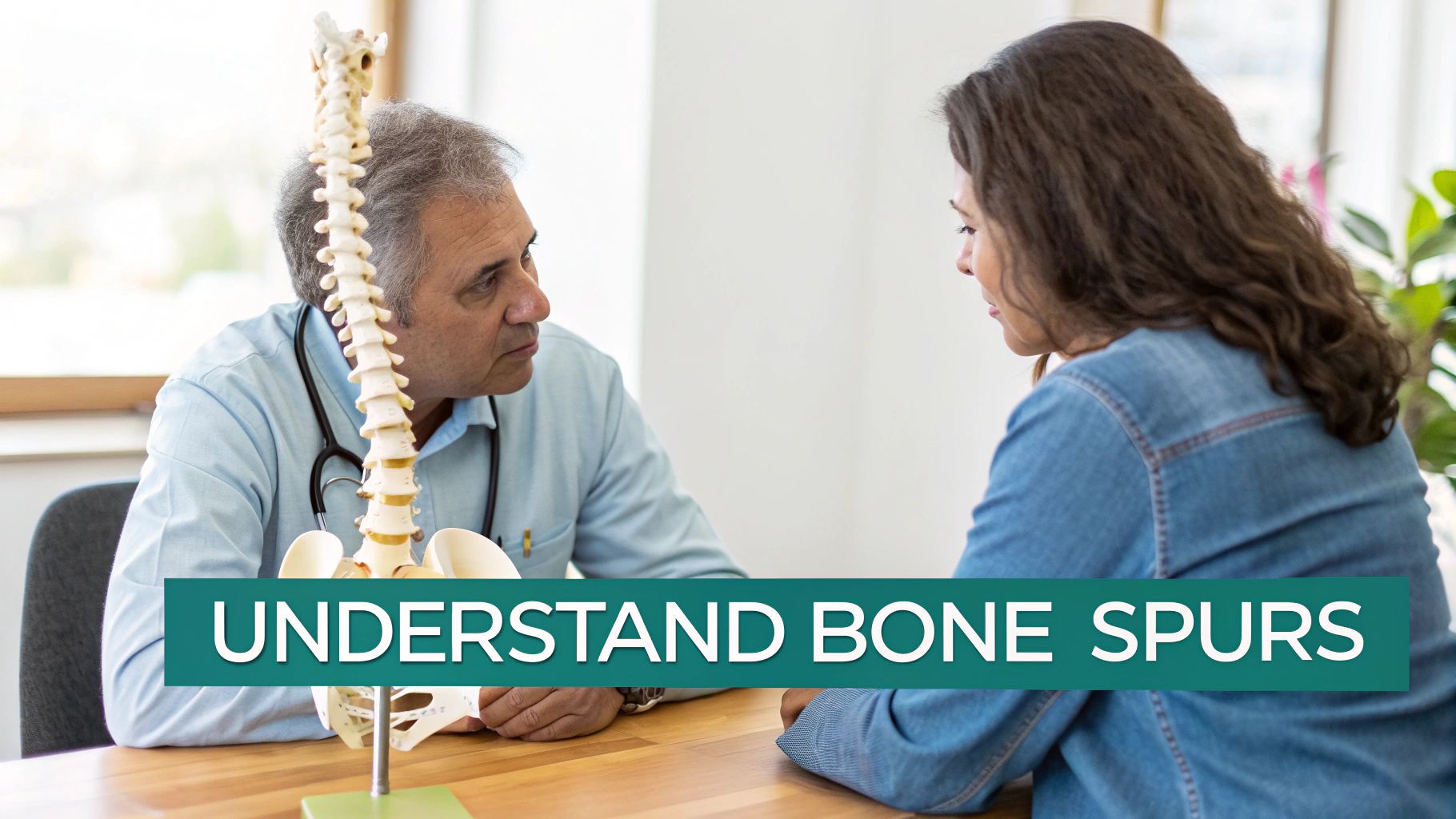
Hearing you have spinal bone spurs, or osteophytes, can sound pretty alarming. The name alone brings to mind something sharp and painful. But let’s clear that up right away. A bone spur is less like a spike and more like a bone callus—it's your body's natural, and often misguided, attempt to stabilize a joint that’s under stress.
This stress is usually a side effect of other issues, like osteoarthritis or degenerative disc disease, which wear down the spine's natural cushioning. As a defense mechanism, your body grows extra bone to try and reinforce the weakened area. The intention is good, but these bony growths can narrow the small openings in your spine, putting pressure on nerves and causing pain, numbness, or even weakness.
A truly effective approach to treatment for bone spurs in the spine always has two main objectives: ease your symptoms and fix what caused the instability in the first place. It’s not about just covering up the pain. It’s about getting to the root of the biomechanical problem that signaled your body to create the spur. This is how we restore your long-term mobility and quality of life.
The most important thing to remember is that the bone spur itself is usually just a symptom. The real problem is the pressure and inflammation it creates when it crowds nearby nerves and tissues.
Think of this guide as your personal roadmap. We’ll walk you through the entire spectrum of care, starting with the powerful, non-invasive treatments that are the cornerstone of modern spine health, and we’ll explain when it might be time to consider other options.
Navigating your options for treatment for bone spurs in the spine is much easier when you can see the big picture. This table provides a clear summary of the primary treatment categories, their goals, and who they are best suited for, helping you quickly understand the path forward.
| Treatment Category | Primary Goal | Ideal Candidate |
|---|---|---|
| Conservative Care | Reduce inflammation, manage pain, and improve spinal mechanics. | Individuals with mild to moderate symptoms who want to avoid invasive procedures. |
| Advanced Non-Surgical | Decompress nerves, accelerate healing, and correct spinal alignment. | Patients whose symptoms persist despite initial conservative treatments. |
| Surgical Intervention | Physically remove the spur or stabilize the spine to relieve severe nerve compression. | Individuals with significant neurological deficits or intractable pain. |
This overview gives you a clear, side-by-side look at the different stages of care, making it simpler to see where you might start and where you could go from there.
Spinal bone spurs don't just pop up for no reason. Think of them as your body's well-intentioned but often misguided attempt to fix a problem. Imagine the foundation of your house showing signs of stress. You might add some braces or supports to shore it up. Your spine does something similar—when it senses instability, it tries to stabilize itself by building extra bone.
These bony projections, known as osteophytes, are essentially your body’s DIY attempt at a spinal fusion. It's trying to reinforce an area that has become weak or wobbly. While the goal is to add support, this new bone can end up crowding nerves and other critical structures, leading to the pain that sends people looking for effective treatment for bone spurs in the spine.
More often than not, the whole process gets started because of long-term wear and tear on the joints in your spine. As the years go by, the different parts of our spine naturally age, and these changes can set the stage for bone spurs to form.
Two key culprits are usually behind this instability:
Here’s the main thing to remember: Bone spurs are almost always a secondary issue. They're a symptom of a deeper mechanical problem. That’s why the best treatments don't just focus on the spur itself—they address the instability that caused it in the first place.
Once you grasp this cause-and-effect relationship, your diagnosis starts to make more sense. It isn't just a random flaw; it's a predictable consequence of specific stresses on your spine. This understanding is the first step toward finding care that provides a real, lasting solution.
While aging and degeneration are the primary drivers, a few other things can put the process on fast-forward. These risk factors add extra stress to your spine, basically encouraging your body to go overboard with its bone-building strategy.
Some common contributors include:
Each of these factors adds to the biomechanical stress that tells your body to build a bone spur. Pinpointing which ones apply to you is a crucial step in developing a prevention plan and finding the right treatment for bone spurs in the spine that's tailored to your specific situation.

For the vast majority of people, finding an effective treatment for bone spurs in the spine doesn’t start in an operating room. In fact, the most powerful and lasting relief often comes from a smart, non-surgical approach designed to calm inflammation, restore healthy movement, and get to the root of the problem. This is where you can really start to take control of your spinal health.
Think of it like building a strong support system around your spine. Instead of just zeroing in on the bone spur itself, these methods work together to improve the entire environment. The goal is simple: reduce the mechanical stress that led to the spur in the first place and create more space for any nerves it might be bothering.
This multifaceted strategy is the foundation of modern spine care because it’s effective, low-risk, and gives you the tools to manage your own well-being for the long haul.
When most people hear "chiropractic," they immediately picture aggressive twisting or cracking. But modern, evidence-based chiropractic care is a world away from that—it’s far more precise and gentle. For bone spurs, our primary goal is to carefully restore mobility to spinal joints that have become stiff and dysfunctional.
Proper joint movement is absolutely essential for a healthy spine. When vertebrae get "locked up," they put extra strain on the discs and surrounding tissues, which contributes to the very instability that can trigger bone spur growth. Specialized chiropractic adjustments gently reintroduce motion, which can take the pressure off and improve how your spine functions as a whole. This targeted approach ensures we can provide relief without aggravating the sensitive area around the spur.
Physical therapy is an absolute cornerstone of any good plan for treatment for bone spurs in the spine. A skilled therapist will put together a program designed to hit two main targets: strengthening your body's support system and improving your flexibility.
This active approach doesn't just manage the symptoms you feel now; it helps you build a more resilient spine, making you far less likely to run into future issues. Before diving into specific therapies, it's worth exploring broader strategies for effective pain management without medication, which can be a game-changer for your quality of life.
What you do every single day has a profound impact on your spine. You’d be surprised how simple, consistent changes can dramatically dial down the inflammation and pain that bone spurs can cause.
Inflammation is a huge driver of pain when a bone spur starts irritating nearby tissues. Shifting to an anti-inflammatory diet can help you manage this from the inside out. This just means focusing on whole foods—fruits, vegetables, healthy fats like olive oil and avocados, and lean proteins—while cutting back on processed foods, sugar, and refined carbs.
Your diet can be one of your most powerful tools against inflammation. Foods rich in omega-3 fatty acids, such as salmon and walnuts, and spices like turmeric have been shown to have potent anti-inflammatory effects.
Managing your weight is also crucial. Every extra pound you carry places more stress on your spinal column, especially the vertebrae and discs in your lower back. Believe it or not, even a modest weight loss of just 5-10% of your body weight can lead to a significant drop in back pain.
Finally, it’s about learning to move smarter, not less. This doesn't mean stopping everything you love. It means paying attention to proper lifting techniques, taking frequent breaks if you sit for long periods, and making sure your desk or workspace is set up ergonomically. If a bone spur has led to a pinched nerve, you might find helpful tips in our guide on https://bonesetters.org/how-to-treat-pinched-nerve/.
By combining these conservative treatments, you build a strong defense that often provides all the relief you need to get back to an active, comfortable life.
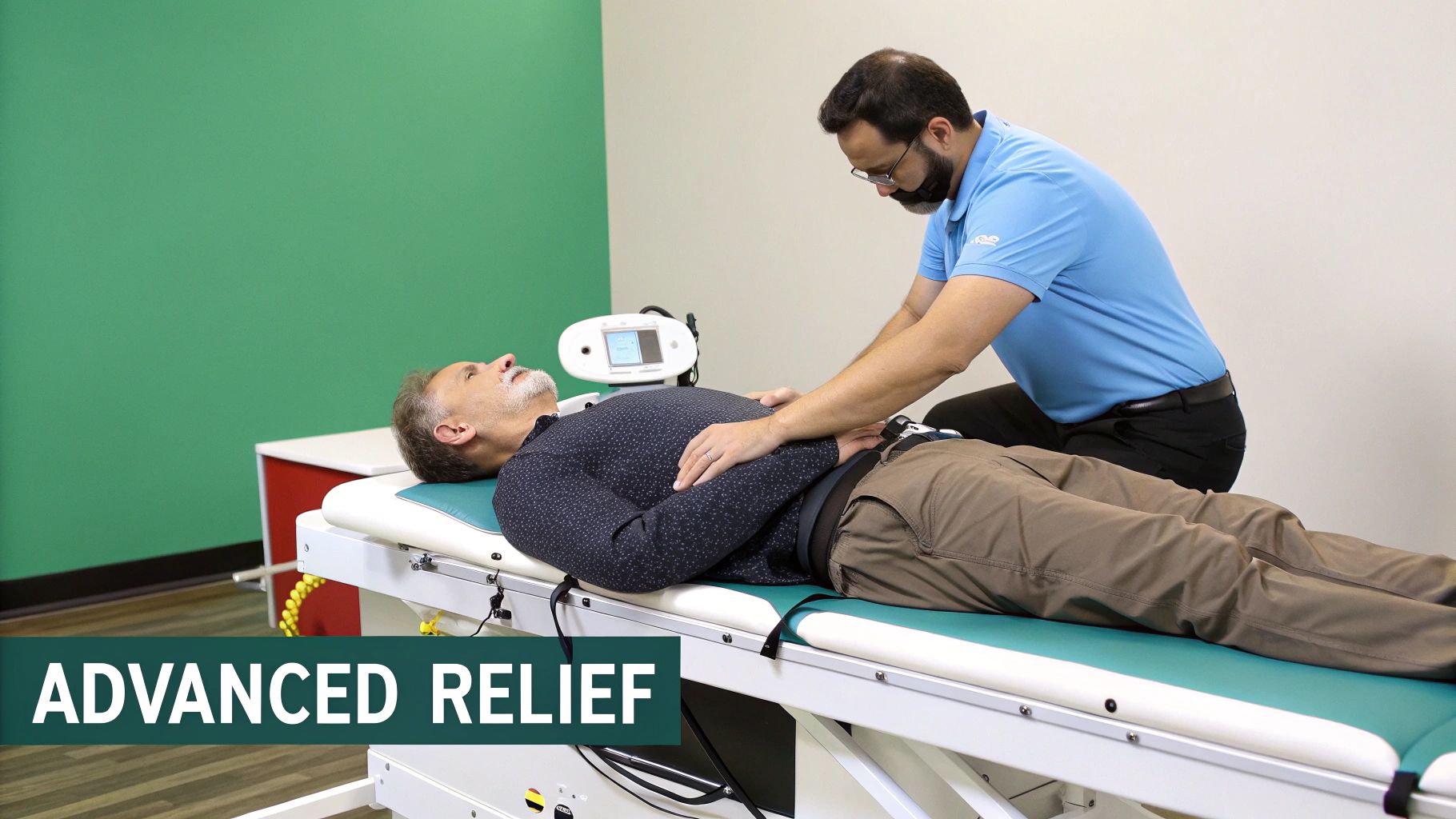
Sometimes, the foundational work of physical therapy and lifestyle changes just isn't enough to get you over the hump. If that nagging pain sticks around, it’s easy to think surgery is the only option left. But that’s not always the case.
This is exactly where a new generation of powerful, evidence-based technologies comes into play. They’re designed to target the root biomechanical problems with incredible precision, offering a bridge between initial conservative care and more invasive procedures.
Think of a spinal bone spur as a small rock jutting out into a narrow tunnel. Your spinal nerve has to pass through that tunnel, and the spur is constantly crowding it, causing irritation and pain. The goal, then, is to gently widen that tunnel.
That’s precisely what non-surgical spinal decompression therapy does. This FDA-cleared technology uses a highly controlled system to apply a gentle, calculated stretch to your spine. As the vertebrae slowly and safely separate, it creates negative pressure inside the spinal discs.
It’s like a subtle vacuum effect that helps pull bulging disc material back where it belongs and, more importantly, gives that pinched nerve root some much-needed breathing room.
This process delivers two huge benefits:
For many people, it’s the key to finally getting the pressure off so their body can begin to heal. You can learn more about how this works in our guide to the spinal decompression chair.
While traditional hands-on chiropractic adjustments are fantastic for restoring general joint mobility, modern technology allows us to be even more precise. Systems like the FDA-backed PulStar use sophisticated computer analysis to pinpoint exactly which segments of your spine are stiff and restricted.
Instead of a manual thrust, the PulStar delivers a series of light, rapid impulses directly to the stuck joint. It’s constantly measuring how the joint responds and adjusts the treatment in real time until normal motion is restored. This means you get an adjustment that is perfectly calibrated for your body, without any forceful twisting or cracking.
For a sensitive issue like a spinal bone spur, this level of precision is a game-changer. It allows us to restore healthy mechanics to the spine without putting any unnecessary stress on the irritated area, making the treatment both safe and remarkably effective.
This gentle-yet-powerful approach corrects the underlying joint problems that contribute to the instability and pain in the first place.
Inflammation is a major source of the pain you feel from bone spurs. When a spur aggravates nearby muscles, ligaments, or nerves, your body’s inflammatory response kicks in, leading to swelling and that all-too-familiar ache. Class IV Laser Therapy (sometimes called cold laser) is a non-invasive way to calm this process down at a cellular level.
This technology uses specific wavelengths of light that penetrate deep into your body’s tissues. This light energy gets absorbed by the mitochondria—the tiny power plants inside your cells—and triggers a healing cascade called photobiomodulation.
This cellular boost helps in three key ways:
The result is a noticeable drop in pain and a kick-start to your body's natural healing capabilities, making it a perfect partner to other therapies.
Hearing a doctor mention "surgery" for your back is enough to make anyone nervous. But let's put it in perspective. Surgery is the absolute last resort for spinal bone spurs, not the starting point. Our entire approach is to fix the problem with the most effective, least invasive treatments first.
The reality is, most people with bone spurs will never even need to think about surgery. These little bony growths are a surprisingly common part of aging. Research shows up to 80% of men and 60% of women over 50 have them, but the vast majority never feel a thing. You can see just how prevalent they are by checking out the data on bone spur trends at reanin.com. This is why we don't rush into drastic measures for something so common.
So, when does the conversation about surgery actually start? It only begins when we see clear, serious warning signs that a bone spur is causing more than just pain—it's causing legitimate nerve damage that could become permanent.
We’re not talking about a little stiffness or a bad day. We're looking for undeniable red flags that tell us the conservative treatments have hit their limit.
Key indicators that might lead to a surgical consult include:
The decision to operate really boils down to a single, critical question: Is the risk of permanent nerve damage from not doing the surgery greater than the risks of the procedure itself? When the answer is yes, surgery stops being a choice and starts being a necessary step to protect your future.
If you and your doctor decide surgery is the right path, the goal is simple: create more room for the pinched nerve or spinal cord. The surgeon achieves this by physically removing the bone spur or whatever else is causing the compression.
The most common procedures you'll likely hear about are:
Knowing what these terms mean can make the conversation with your surgeon feel much less intimidating. It empowers you to ask the right questions and truly be a partner in your own care. If you're dealing with related issues, our guide to degenerative disc disease treatment options can offer more insight.
Finding the right treatment for bone spurs in the spine isn't just about chasing symptoms away. It’s about building a solid foundation for your long-term spinal health. Think of this as a partnership. We start with a deep dive into your unique situation to understand what’s really going on, and from there, we build a care plan that gets to the root cause of the problem.
This is where all the pieces of the puzzle come together. The immediate goal is relief, of course, but the bigger picture is lasting wellness. True prevention isn't about wrapping yourself in bubble wrap; it's about making your body more resilient so it can handle the stresses of daily life. That means creating a strategy that’s as unique as you are.
Your recovery plan is like a roadmap. The first leg of the journey might involve intensive therapies like spinal decompression or Class IV laser therapy to put out the fire—calming inflammation and getting pressure off those nerves. But once things have stabilized, our focus shifts to building resilience so this doesn't happen again.
A solid long-term strategy usually revolves around three key elements:
As you move forward, incorporating therapeutic exercises can make a world of difference. For example, exploring something like Pilates for rehabilitation is a fantastic way to build core strength and body awareness—two crucial pillars of a healthy spine.
The real goal here is empowerment. We bring the expertise and the advanced tools, but it's your active participation—sticking with the exercises and making mindful choices every day—that turns temporary relief into a lifetime of wellness.
So, when does surgery enter the picture? This simple decision tree shows the specific circumstances where it becomes a serious consideration.
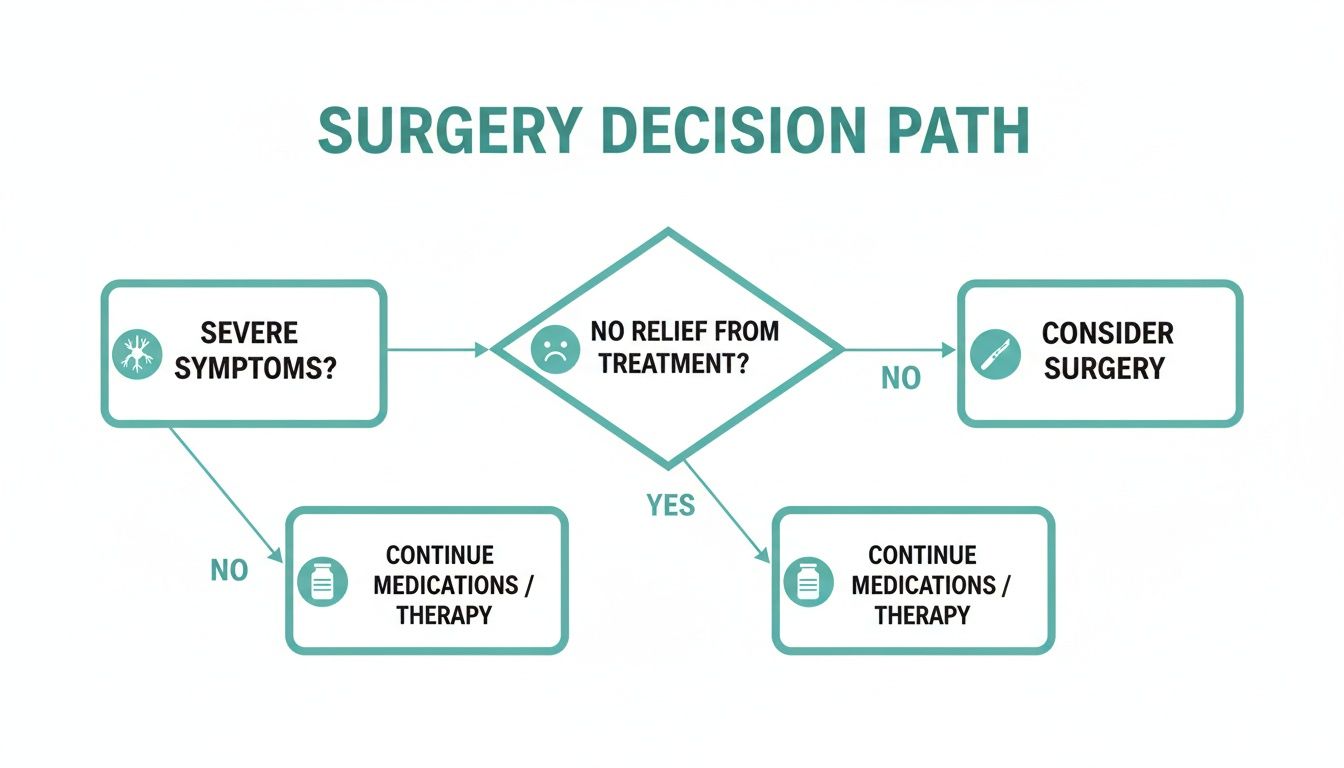
As you can see, surgery is really reserved for those cases where severe neurological symptoms just aren't improving with dedicated non-surgical care. This patient-first approach ensures you understand exactly where you stand every step of the way, giving you the power to build a stronger, more resilient spine for the long haul.
After learning about the causes and treatments for spinal bone spurs, it's completely normal to have some questions pop up. Let's tackle some of the most common ones head-on to give you clarity and confidence as you move forward.
This is a great question, and one we hear often. The short answer is no—not when the adjustments are performed by a skilled specialist using the right techniques. In fact, our entire goal is to do the opposite.
Gentle, precise adjustments, especially those guided by computerized tools like the PulStar, are designed to restore proper motion to your joints. Think of it this way: the abnormal stress on your spine is what encouraged the bone spurs to form in the first place. By improving how your spine moves, we take that stress off the joint and surrounding tissues, which can ease the inflammation and pain around the spur.
Once a bone spur has formed, it's a permanent structural change—it won't dissolve or vanish by itself. But here’s the crucial part that often gets missed: that doesn't mean you're stuck with the pain forever. This is the whole philosophy behind effective treatment for bone spurs in the spine.
Our focus isn't on getting rid of the spur itself, but on making it irrelevant. We work to manage the inflammation and nerve compression it's causing, so that it simply stops affecting your life.
By creating more space for the nerves and calming the inflammation, advanced non-surgical therapies can make the spur asymptomatic—meaning it's still there, but it no longer causes pain. You can get back to living a full, active life.
Everyone’s healing journey is a bit different, so the timeline really depends on your specific situation. Factors like the severity of your condition, the exact treatments we use, and your body's unique response all play a role.
With that said, many of our patients report feeling a noticeable difference within just the first few weeks of consistent care. A full corrective program, which aims to fix the underlying mechanical problems, might take several months to achieve deep, lasting results. Consistency with your personalized treatment plan is the single most important key to a successful outcome.
If you're ready to find a lasting solution without jumping to surgery, the team at Bonesetters Critical Chiropractic is here to help. We focus on evidence-based, non-surgical treatments that get to the root cause of your pain. Schedule your consultation today and take the first real step toward getting your comfort and mobility back.