
When I talk to patients about reversing peripheral neuropathy naturally, I often hear a mix of hope and skepticism. The idea of "reversing" a condition that causes so much chronic pain and numbness can feel like a long shot. But here’s the powerful truth I've seen play out time and again in my practice: your peripheral nerves have an incredible, built-in capacity to repair and regenerate.
The whole process hinges on a two-part strategy: first, you have to stop whatever is causing the nerve damage. Second, you need to give your body the specific building blocks and environment it needs to heal itself from the inside out.
If you're living with that persistent tingling, numbness, burning, or weakness in your hands or feet, you know how disruptive it can be. These feelings aren't the disease itself; they are alarm bells. Your nerves are sending out an S.O.S., signaling that they're in distress.
Simply taking medication to numb the pain is like hitting the snooze button on a fire alarm. It might quiet the noise for a little while, but the fire is still burning. To get real, lasting relief, you have to go deeper and address what's actually causing the damage.
The good news is that your peripheral nerves—the ones in your arms, legs, hands, and feet—are not like the nerves in your brain and spinal cord. They can heal. It's a slow and steady process, but when you remove the source of the injury and create the right conditions, they can absolutely start to rebuild.
To start healing, we have to play detective and figure out what’s causing the problem in the first place. Neuropathy isn't a one-size-fits-all condition, and the trigger can vary wildly from person to person.
Some of the most common culprits I see include:
Reversing peripheral neuropathy isn't magic; it's just biology. This simple visual breaks down the journey from the initial nerve distress to the active regeneration phase.
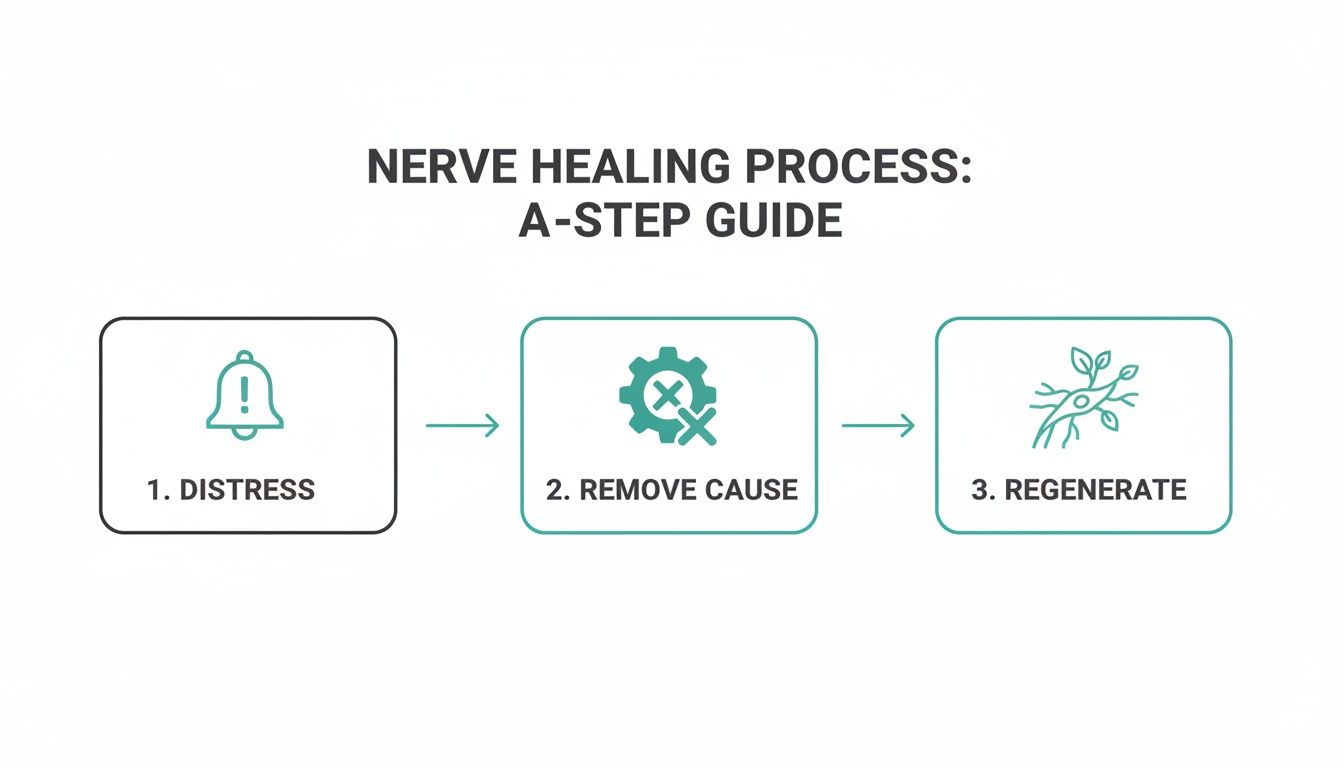
What this image really drives home is a core principle of our approach: you can't start rebuilding the nerve until you stop what's tearing it down. This is precisely why we are so focused on digging deep to find and address the root cause.
And this is far from a niche issue. Did you know that an estimated 7% of adults worldwide deal with polyneuropathy symptoms? It's a silent epidemic that accounts for 10% of all neurological visits each year. The impact is staggering, with 50% of patients living with chronic pain. In the U.S. alone, diabetic polyneuropathy—the cause in 40% of cases—costs a staggering $11 billion annually.
Shifting your mindset from “managing symptoms” to “enabling healing” is the most important step you can take. Your body is designed to repair itself—our job is to give it the support it needs to do that work effectively.
This foundational understanding is what paves the way for the practical, actionable strategies we'll discuss next. By creating an internal environment that supports cellular repair—through targeted diet, specific movements, and advanced therapies—you become an active participant in your own recovery.
Technologies like electrical stimulation can also be a fantastic supportive tool in this process, helping to improve circulation and wake up nerve signaling. To get a better sense of how it works, you can read our guide on what E-stim therapy is.
Let's get one thing straight: your path to nerve repair starts on your plate. I’ve seen it time and again in my practice—what you eat can either fuel the fire of neuropathy or provide the exact building blocks your body needs to start healing.
We’re not talking about some restrictive, joyless diet. This is about being strategic. It’s about making smart, powerful food choices that directly combat inflammation and nerve damage, turning every meal into a deliberate act of healing.
Before we talk about anything else, we have to talk about blood sugar. Unstable blood sugar is one of the most destructive forces I see when it comes to peripheral nerves. Even if you don't have a formal diabetes diagnosis, the constant spikes and crashes from a high-sugar, high-carb diet create a storm of inflammation and oxidative stress that is incredibly toxic to your delicate nerve endings.
Think of your nerves like tiny, sensitive wires. A surge of sugar in your bloodstream is like a power surge zapping those wires, frying their protective coating. Do that over and over, and you get the symptoms you’re all too familiar with—the tingling, numbness, and burning.
Getting off this rollercoaster is priority number one. Here’s how:
Oxidative stress is another major villain in the neuropathy story. In simple terms, it's like cellular rust, caused by unstable molecules called free radicals that wreak havoc on your nerve cells. The antidote? Antioxidants.
A simple rule I give my patients is to "eat the rainbow." The vibrant colors you see in fruits and vegetables are a direct signal of their antioxidant power. Load up on dark leafy greens like spinach and kale, deep red beets, and the rich blues and purples of berries.
Healthy fats are just as important. The myelin sheath that insulates and protects your nerves is made primarily of fat. To rebuild it, you must give your body the right raw materials.
I always say, you can't repair a brick wall with sawdust. In the same way, you can't rebuild healthy nerve sheaths with inflammatory, processed fats from junk food. You need high-quality materials.
Here are the best sources of nerve-building fats:
Beyond the big-picture strategy, certain vitamins and minerals are the unsung heroes of nerve health. In fact, deficiencies in these specific nutrients can directly cause or dramatically worsen neuropathy. Your diet is the absolute best place to start getting them.
The table below breaks down the essential nutrients your nerves are crying out for, explaining their specific job and where you can find them in your grocery store.
| Nutrient | Role in Nerve Health | Top Food Sources |
|---|---|---|
| B-Complex Vitamins | Absolutely critical for nerve signaling, cellular energy, and maintaining the myelin sheath. B vitamin deficiencies are a very common cause of neuropathy. | Leafy greens, eggs, legumes, wild-caught salmon, nutritional yeast (a great source of B12 for those on a plant-based diet). |
| Alpha-Lipoic Acid | A unique and powerful antioxidant that protects nerves from oxidative damage and has been shown to improve blood flow directly to the nerves. | Spinach, broccoli, brussels sprouts, red meat, and organ meats like liver. |
| Magnesium | This mineral helps calm the entire nervous system. It can be particularly helpful for the muscle cramps and spasms that often come with neuropathy. | Dark chocolate (70% cacao or higher), almonds, spinach, black beans, and avocados. |
| Omega-3 Fatty Acids | Directly fights inflammation at the cellular level and provides the structural fats needed to build healthy, flexible nerve cell membranes. | Wild-caught salmon, mackerel, herring, sardines, flaxseeds, and walnuts. |
Think of these foods as medicine. By making them the foundation of your diet, you provide your body with a constant supply of the compounds it needs to repair nerve damage, cool off inflammation, and begin restoring function from the inside out. This isn't just a suggestion; it's a non-negotiable part of any serious plan to reverse peripheral neuropathy naturally.

When your feet are burning or your hands feel like they're wrapped in cotton, the very idea of exercise can seem daunting. I get it. But here's something I've seen time and again in practice: gentle, purposeful movement is one of the most powerful things you can do to bring those nerves back to life.
This isn't about pushing through pain or training for a 5K. It’s about creating the right environment for healing. Think of your nerves as tiny rivers that carry vital messages. Neuropathy makes those rivers stagnant. Movement acts like a fresh, gentle rain, boosting circulation and delivering the oxygen-rich blood your nerves are starving for.
The name of the game is consistency, not intensity. The best approach is to find low-impact aerobic activities that get your blood flowing without jarring your body or putting you at risk for injury.
Here are a few fantastic starting points that my patients have had great success with:
The absolute golden rule is to listen to your body. If something causes sharp or increased pain, back off. The goal is to finish feeling gently energized, not sore and depleted.
One of the most unsettling symptoms of neuropathy is a growing sense of instability. When you can’t fully feel where your feet are in space, your risk of falling skyrockets. That’s why balance exercises aren't just a good idea—they are non-negotiable for your safety and confidence.
You can easily do these at home. Just make sure you’re holding onto a sturdy countertop or the back of a solid chair for support, especially when you're starting out.
This isn't just about preventing a fall. It's about getting your life back. It's the confidence to walk across the lawn at a family BBQ, play with your grandkids without fear, or simply move around your own home with ease.
Now for a more targeted technique called nerve gliding, which you might also hear called nerve flossing. Picture a nerve as a long, delicate thread running through muscles and tissues. If that thread gets pinched or snagged, it can't send signals correctly.
Nerve gliding uses specific, gentle movements to help that nerve slide back and forth freely, breaking up adhesions and reducing irritation. This is particularly effective when nerve entrapment is part of the problem, like when the sciatic nerve gets compressed. For a deeper dive into this, our guide on how to relieve sciatica pain naturally has some great information.
Try This Simple Sciatic Nerve Glide:
When you combine these three elements—gentle aerobics, dedicated balance work, and targeted nerve gliding—you create a powerful healing synergy. You're no longer just passively managing symptoms; you are actively giving your body the tools it needs to repair and regenerate from the inside out.
While getting your nutrients from food is always the best foundation, certain supplements can give your body a targeted, powerful boost to kickstart nerve repair. Think of them less as a magic pill and more as strategic support, delivering high concentrations of the specific compounds your healing nerves are crying out for.
It's not about just grabbing a few bottles off the shelf at the grocery store, though. To be effective—and safe—you really need to work with a healthcare provider. They can help you find high-quality, bioavailable supplements and dial in the correct therapeutic dosages for your unique situation. Going it alone can be a waste of money or, worse, potentially harmful.

When I build a supplement protocol for a patient, my focus is always on compounds with solid evidence for protecting nerves, tamping down inflammation, and improving the way nerves talk to each other.
Here are a few of the heavy hitters I consistently recommend for supporting nerve health:
Beyond those specialized compounds, making sure you have optimal levels of key B-vitamins and minerals is completely non-negotiable. It's surprising how often a simple deficiency in one of these is a major, and often overlooked, cause of neuropathy.
A supplement is only as good as your body's ability to absorb it. Always look for high-quality, bioavailable forms—like methylcobalamin for B12 instead of the cheaper cyanocobalamin—to ensure you're getting the full benefit. This is where professional guidance makes a huge difference.
The need for these kinds of interventions is growing at an alarming rate. Projections show that by 2045, regions like Asia Pacific, the Middle East, and Africa could see a staggering 301 million people with peripheral neuropathy, largely driven by the explosion in diabetes cases. This is creating a massive health crisis, especially when you consider that up to 80% of cases go undiagnosed.
The real game-changer here is that nerves can regenerate if the damage isn't too far gone. This makes early, comprehensive interventions absolutely critical for a natural reversal. You can find more insights into this growing health challenge and the real hope for recovery on WorldHealthExpo.com.
When you integrate these supplements into a complete plan that includes diet and lifestyle changes, you’re giving your body the best possible chance to heal. You're providing the raw materials needed to rebuild what’s been damaged and restore proper communication, moving you from just managing symptoms to actively reversing the condition.

For many people, the combination of targeted nutrition and strategic movement builds a powerful foundation for pushing back against peripheral neuropathy. But to really speed things up, we can bring in advanced therapies that work on a deeper, cellular level.
Think of these treatments not as a replacement for the lifestyle work, but as powerful amplifiers. They create the ideal internal environment for nerves to regenerate.
Imagine you're trying to rebuild a damaged road. Your diet and exercise are like clearing the debris and trucking in the new asphalt. These advanced therapies are the specialized paving and steamrolling equipment that gets the job done faster and makes the repairs last. They help slash inflammation, crank up cellular energy, and improve nerve communication in ways that lifestyle changes alone might take much longer to accomplish.
One of the most effective tools I use in my practice is Class IV Cold Laser Therapy. This isn't science fiction; it's a very specific application of light energy. Unlike hot, surgical lasers that cut, this type of laser sends specific wavelengths of light deep into your tissues without any heat.
What's really happening? That light energy gets soaked up by the mitochondria—the tiny power plants inside your nerve cells. This triggers a huge boost in the production of ATP (adenosine triphosphate), the body's primary fuel for all cellular activity. Damaged nerves are energy hogs; they need a tremendous amount of fuel to repair themselves, and cold laser therapy gives them a direct infusion.
The benefits don't stop there:
I've written more about the science and how we apply cold laser therapy for pain relief if you'd like to dive deeper. It's a safe, non-invasive cornerstone of creating the perfect healing environment.
Sometimes, the problem isn't just in the hands or feet. Often, it starts much higher up in the spine. The nerves that travel all the way down to your limbs can get pinched or choked off by bulging or herniated discs. When that happens, you can eat all the right foods in the world, but if the nerve's supply line is cut off at the source, the message just isn't getting through.
This is where non-surgical spinal decompression is a game-changer. We use a highly controlled table that applies a gentle, specific pulling force to the spine. This creates a negative pressure inside the troubled disc, which acts like a vacuum to help pull the bulging material back into place and away from the nerve root. It’s a comfortable, safe process that re-opens the channels for healing fluids and nutrients to get back into the disc and to the starved nerve.
Beyond laser and decompression, we have other technologies that help re-train nerve signals to fire correctly. In our clinic, we focus on a few key approaches that have delivered some truly remarkable results.
Computer-Guided Adjustments
Using systems like the FDA-backed PulStar, we can deliver incredibly precise and gentle adjustments. Instead of a forceful manual thrust, this tool uses a light tapping force to restore motion to stuck joints. This can free up irritated nerve pathways without any of the popping or cracking that makes some patients nervous.
Horizontal Stimulation Therapy
This is a very different kind of electrical stimulation that works on a metabolic level. It’s not a simple muscle stimulator. Horizontal Therapy uses specific frequencies that can do two things at once: reduce inflammation and improve cellular metabolism. In essence, it helps "re-educate" nerve pathways to fire properly again. It’s another powerful tool for improving the internal landscape where nerves have to heal.
It’s a shocking reality that a staggering number of peripheral neuropathy cases go undiagnosed, leaving millions to battle symptoms without knowing the cause. Yet, the hopeful news from recent studies is that early, evidence-based interventions can effectively halt progression and promote nerve regeneration. This is especially true for demyelinating types of neuropathy, where the protective nerve sheath can repair itself faster than the nerve axon itself can regrow. You can discover more about these findings and the importance of early diagnosis in recent research.
By integrating these advanced therapies, we attack neuropathy from every angle—cellular energy, structural compression, and faulty nerve signals. This comprehensive approach is what truly moves the needle from just managing symptoms to actively reversing the damage.
When you start exploring natural ways to heal from peripheral neuropathy, a lot of questions pop up. It’s completely normal. Let’s walk through some of the most common ones I hear from patients to give you some clarity and confidence as you begin.
This is probably the most frequent question I get, and the honest answer is: it's different for everyone. Your personal timeline depends on the real cause of your neuropathy, how much nerve damage has occurred, and, frankly, how consistent you are with the plan.
Some people start to feel a change—maybe less burning or tingling—within a few weeks of overhauling their diet and beginning targeted therapies. For others, especially if the neuropathy has been progressing for years, it can take several months to feel significant, lasting relief.
Think of it this way: nerve regeneration is a marathon, not a sprint. The key is unwavering consistency. In my practice, we don't guess. We track your progress with objective tests that measure actual nerve function, not just how you feel on a given day. This lets us see what’s working and fine-tune your program for the best results.
The most important thing to remember is that progress, even if it feels slow, is still progress. Celebrating the small wins—like being able to feel the texture of your bedsheets again for the first time in months—is what keeps you going.
The potential for a complete turnaround really comes down to the extent of the nerve damage. If we catch it early and successfully address the root cause, a significant or even total reversal of symptoms is absolutely possible.
Your peripheral nerves have an amazing, built-in capacity to heal themselves, especially the protective myelin sheath that surrounds them. The real challenge comes when the nerve axon—the core fiber inside—has been permanently damaged. In those cases, a 100% cure might not be on the table.
But here’s what a natural, whole-body protocol aims to do:
Many of our patients get to a point where they are either completely symptom-free or their symptoms have become so minor that they no longer interfere with daily life. And they achieve this without a long-term reliance on medication.
This is an excellent and incredibly important question. While foundational changes like improving your diet and adding gentle exercise are safe and beneficial for almost everyone, you must discuss any new treatments with your primary healthcare provider. That includes supplements and any of the more advanced therapies.
Certain supplements can interact with prescription medications, so that's a conversation you need to have. Also, as your health improves—for example, as you gain better control of your blood sugar through diet—your doctor may need to adjust your medication dosages to prevent complications like hypoglycemia.
We always work collaboratively with our patients' medical teams. The goal is to create a safe, integrated plan where everyone is on the same page. Never stop or change a prescribed medication without talking to your doctor first.
If you're experiencing persistent tingling, numbness, or burning, the single most important first step is to get a clear and accurate diagnosis. You have to uncover the root cause. So many cases of neuropathy are dismissed as "just getting older," and that’s a huge mistake.
A specialist can perform a comprehensive neurological exam to figure out the specific type and severity of your neuropathy. This isn't just a label; it's the critical information needed to build a plan that will actually work.
Once you have that diagnosis, you can immediately start on foundational steps like cleaning up your diet. But for a truly targeted protocol that includes advanced, non-surgical therapies, your best move is to schedule a consultation with a clinic that specializes in natural neuropathy reversal. We can help you create a personalized roadmap to get you back on your feet.
At Bonesetters Critical Chiropractic, we specialize in identifying the root cause of peripheral neuropathy and developing personalized, non-surgical treatment plans that deliver real results. If you're ready to move beyond just managing symptoms and start a true healing journey, we are here to help. Discover a path to a pain-free, healthier future by visiting us at https://bonesetters.org.