

When you're dealing with peripheral neuropathy, the path to relief isn't a one-size-fits-all solution. Treatment options run the gamut from medications and physical therapy to specific lifestyle changes, all designed to manage your symptoms and, hopefully, address the underlying nerve damage.
In my experience, the most effective management often involves a combination of strategies. This could mean using prescription drugs to get pain under control, specialized therapies like spinal decompression to take physical pressure off a nerve, and targeted nutritional support to give your nerves the building blocks they need to heal. Ultimately, the best approach is always a personal one, tailored to the specific cause of your nerve pain.
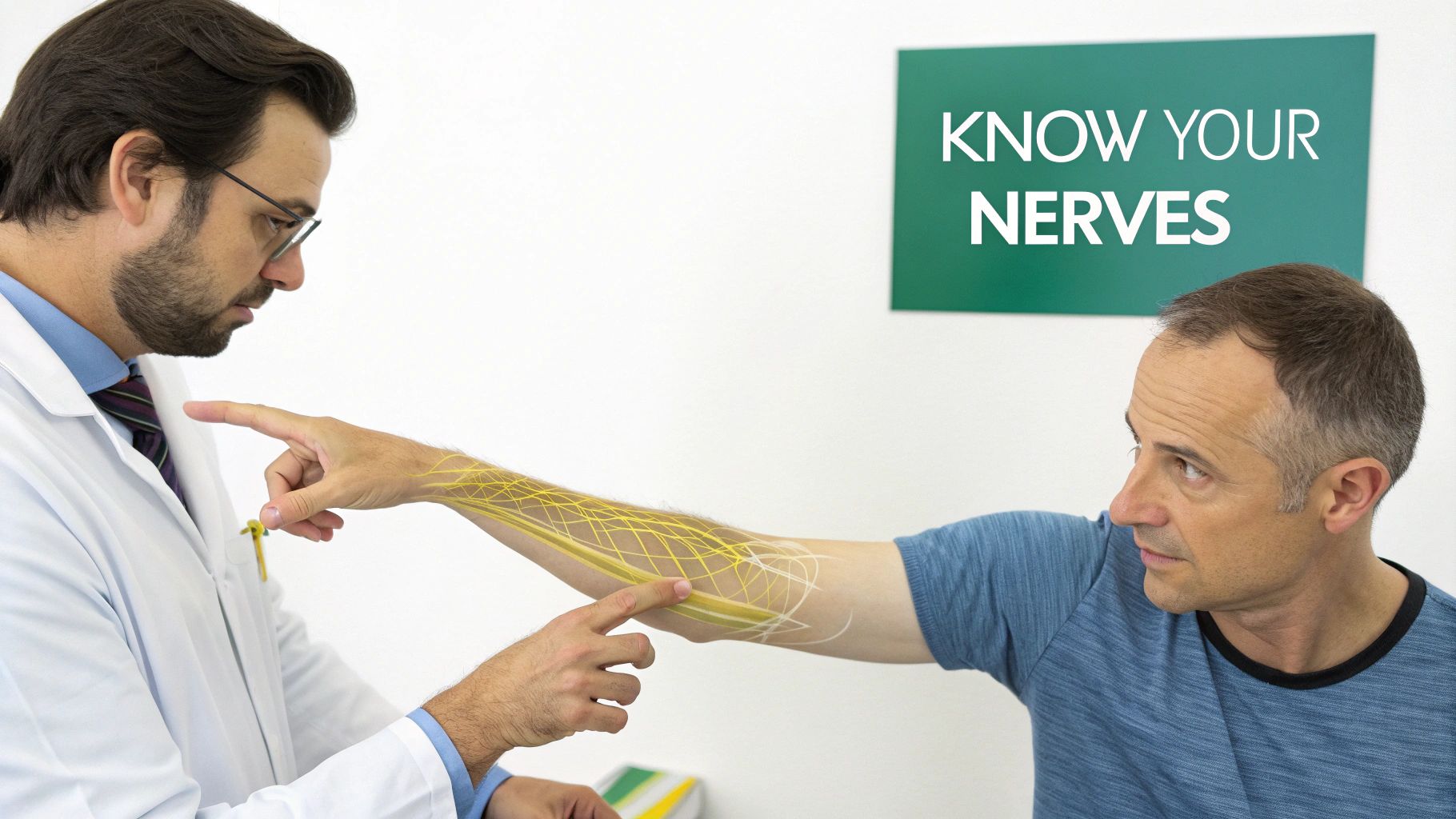
Think of your nervous system as the body’s incredibly complex electrical grid. It carries messages between your brain, spinal cord, and everything else. When you have peripheral neuropathy, it’s like this wiring has become frayed or damaged, causing the signals to go haywire.
Instead of clear, crisp communication, your brain gets a blast of static. This "static" is what you feel as tingling, burning, numbness, or those sharp, stabbing pains that seem to come out of nowhere.
It's important to remember that neuropathy isn't a single disease. It's a sign that your peripheral nerves—the ones outside your brain and spinal cord—are in trouble. These are the nerves that let you feel the difference between silk and sandpaper or coordinate the muscles you need just to walk across a room. Getting a handle on what's really happening inside your body is the first, most crucial step toward feeling better.
To really understand what you're up against, it helps to know that your peripheral nervous system is made up of three main types of nerves. Your specific symptoms are a direct clue as to which of these are being affected.
Many people find they have a mix of symptoms because more than one type of nerve is damaged. This condition is far more common than most people realize. Globally, about 2.4% of people have some form of peripheral nerve disorder, and that number jumps to nearly 8% in older adults.
While diabetes is easily the most well-known cause—affecting roughly half of all people who have lived with the condition long-term—it’s by no means the only one. Pinpointing the root cause is absolutely critical for creating a treatment plan that actually works.
Your body has an incredible capacity for healing, but it needs the right conditions. Finding and addressing the source of nerve interference—whether it’s nutritional, mechanical, or metabolic—is the foundation of lasting recovery.
Beyond diabetes, here are some other common causes we see:
By figuring out the "why" behind your symptoms—which nerves are involved and what's causing the trouble—you stop being a passive patient and become an empowered partner in your own healthcare. This knowledge is what allows you to confidently navigate the various peripheral neuropathy treatment options and work with your provider to build a plan that truly addresses what’s going on in your body.
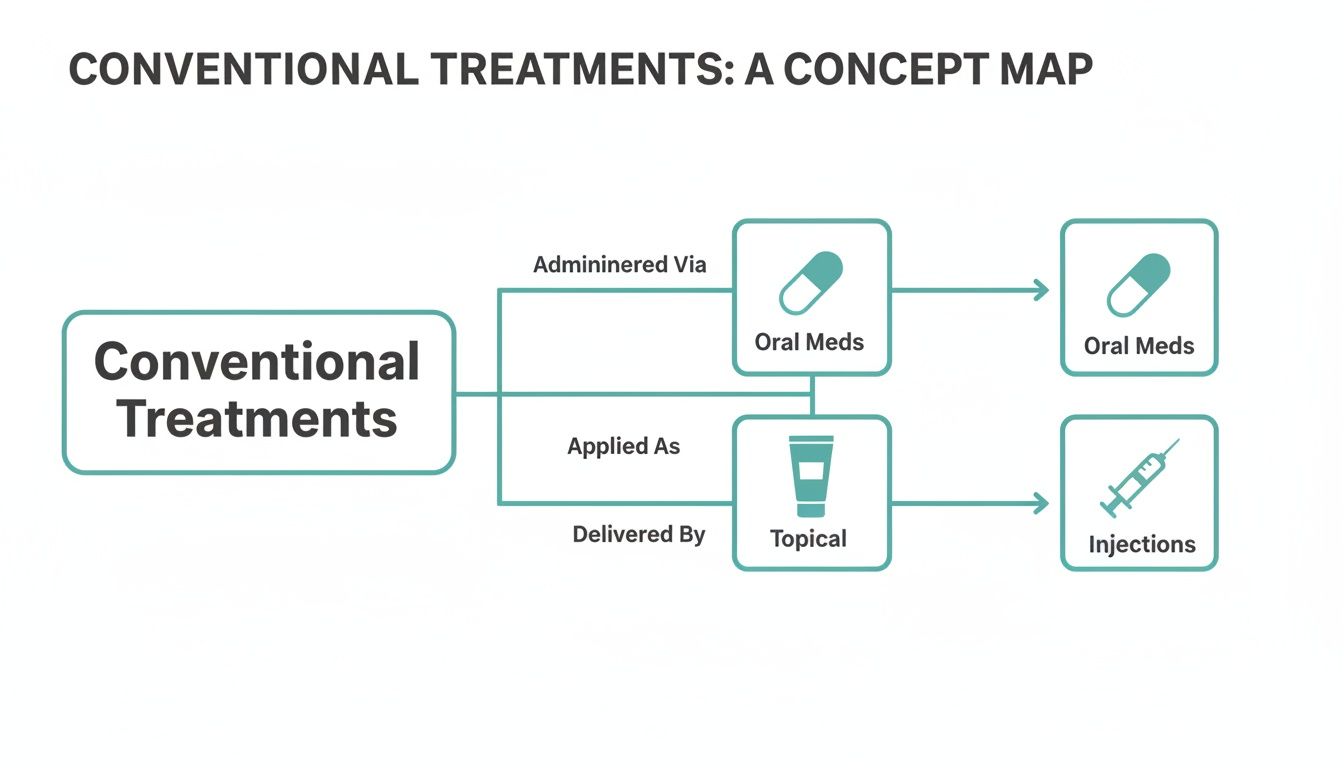
When you're dealing with the constant, nagging discomfort of neuropathy, your first stop is usually conventional medicine. These are the tried-and-true approaches designed to get your symptoms under control, slow down any further nerve damage, and simply help you get back to living your life. The main idea is to interrupt the faulty pain signals that your damaged nerves are sending to your brain.
Here’s a good way to think about it: imagine your nerve pain is a faulty fire alarm that won't stop blaring. These treatments don't instantly rewire the system. Instead, they work to either turn down the volume of that alarm or temporarily cut the power, giving you some much-needed peace and quiet. This relief is often a critical first step, creating a window for other healing processes to begin.
Finding the right medical solution is almost never a one-and-done deal, which is why working closely with your doctor is so important. It often takes some fine-tuning to land on what works best for your body with the fewest side effects.
For most people, oral medications are the foundation of managing nerve pain. It’s crucial to understand these aren't your typical over-the-counter painkillers like ibuprofen. They work on a much deeper level by changing how your nervous system actually processes pain signals.
The most common medications fall into a couple of key categories:
While these medications can be a game-changer for many, they can come with side effects like drowsiness, dizziness, or dry mouth. A good doctor will always start you on a low dose and slowly increase it, trying to find that perfect balance of maximum relief with minimal side effects.
What if your neuropathy is mostly in one specific area, like your feet or hands? In that case, topical treatments can be a fantastic option. You apply them directly to the skin, targeting the nerves right at the source of the pain. This often means you get the relief you need without the systemic side effects that can come with oral pills.
Think of topical treatments as precision strikes. Instead of a pill that affects your whole system, a patch or cream delivers its pain-relieving power exactly where you hurt the most, bypassing the rest of your body.
Some of the most common localized peripheral neuropathy treatment options include:
Sometimes, especially when the pain is severe and pinned down to one spot, your doctor might suggest a therapeutic injection. These are usually done by a specialist and can offer more powerful, targeted relief than anything you can take by mouth or rub on your skin.
Nerve blocks, for example, involve injecting a numbing medication right around the affected nerves to shut down pain signals for a longer period. And if nerve compression is the culprit—say, from a herniated disc—steroid injections can reduce the inflammation that’s putting pressure on the nerve.
For anyone looking into non-surgical ways to handle issues like that, understanding all your options is key. Our guide on non-surgical disc herniation treatment is a great resource. Ultimately, these conventional treatments are often a vital part of a bigger plan that can also include rehabilitative therapies.
While medication can be a lifesaver for dialing down pain signals, it often acts as more of a temporary fix. It doesn't get to the root of the problem—the physical issues that are actually causing or worsening the neuropathy in the first place. This is where hands-on, rehabilitative therapies really make their mark.
Think of it like this: medication is the fire extinguisher that puts out the immediate blaze of pain. Rehabilitative therapy is the crew that comes in to repair the faulty wiring and reinforce the building to prevent future fires. These peripheral neuropathy treatment options aren't passive; they're about actively helping your body heal and regain function.
The whole point is to improve strength, get your balance back, and boost circulation—all things that nerve damage can seriously compromise. We're moving beyond just managing symptoms to making real, lasting improvements in how you move and live every day.
Physical therapy (PT) is often the first and most important step in functional recovery. When nerves are damaged, the muscles they’re connected to can weaken and waste away, which is a major reason people with neuropathy struggle with balance and are at a higher risk for falls. A good physical therapist acts as your personal coach, guiding you through exercises designed to fight back against these effects.
A solid PT program will almost always include:
There's a great positive cycle here. As you get stronger and your balance improves, you start to move with more confidence. That confidence encourages more movement, which in turn builds more strength.
Sometimes, the cause of neuropathy is purely mechanical. It’s a structural problem. A vertebra that’s slightly out of place or a bulging spinal disc can physically pinch a nerve, messing with its signals and causing that familiar pain, numbness, or tingling further down your arm or leg. Chiropractic care zeroes in on these kinds of structural issues.
A chiropractor uses skilled, precise adjustments to restore proper alignment in the spine, literally taking the pressure off the nerve that’s causing all the trouble. For problems involving compressed discs, spinal decompression is an incredibly effective, non-surgical tool.
With decompression therapy, you relax on a specialized table that gently and rhythmically stretches your spine. This creates a small vacuum effect inside the discs, which helps pull bulging material back where it belongs and away from the nerve. It also floods the area with oxygen and nutrients, giving the disc a chance to finally heal.
Modern clinics now have some amazing tools that go beyond hands-on adjustments to stimulate healing right down at the cellular level. These technologies are a non-invasive way to calm inflammation and give damaged nerve cells the energy they need to repair themselves.
Cold Laser Therapy, also called Class IV laser therapy, uses specific wavelengths of light that can pass through the skin to reach damaged tissues deep inside. Your cells absorb this light energy, which essentially jump-starts their metabolism. The result? Less inflammation, better blood flow, and faster tissue repair right where the nerve is damaged.
Another powerful approach is neuromodulation, which uses electrical energy to change how nerves behave.
A well-known type of neuromodulation involves a Transcutaneous Electrical Nerve Stimulation (TENS) unit. It’s a small, portable device that sends gentle electrical pulses through pads placed on the skin over the painful area. These pulses can essentially "scramble" the pain signals on their way to your brain, offering significant relief without drugs. More advanced types of electrical stimulation can go even further to promote nerve regeneration. You can learn more about E-stim therapy and how it helps the recovery process in our in-depth guide.
Choosing the right non-surgical therapy can feel overwhelming, as each has its own strengths. This table breaks down some of the most common options to help clarify which might be the best fit for your specific situation.
| Therapy | Primary Mechanism | Best For Symptoms Like | Ideal Patient Profile |
|---|---|---|---|
| Physical Therapy | Strengthens muscles, improves balance, and increases flexibility. | Muscle weakness, poor balance, unsteadiness, and fall risk. | Someone whose neuropathy impacts mobility and daily function. |
| Spinal Decompression | Creates negative pressure to relieve pinched nerves from bulging or herniated discs. | Sciatica, radiating pain, numbness, or tingling from a known disc issue. | A patient with nerve pain clearly linked to spinal compression. |
| Cold Laser Therapy | Uses light energy to reduce inflammation and stimulate cellular repair. | Localized burning pain, inflammation, and slow-healing nerve damage. | Individuals seeking to accelerate healing at the source of nerve irritation. |
| Neuromodulation (TENS) | Blocks pain signals from reaching the brain via electrical pulses. | Chronic, persistent nerve pain that needs on-demand relief. | A person looking for a drug-free way to manage daily pain levels. |
As you can see, these therapies are not one-size-fits-all. A comprehensive treatment plan often combines several of these approaches to attack the problem from every angle, providing both immediate symptom relief and long-term healing.

While advanced therapies are powerful tools, the daily choices we make are the true bedrock of nerve recovery. Think of your body like a garden. You can have the best tools in the shed, but if the soil is poor and you never water the plants, nothing will thrive. Lifestyle and nutrition are the healthy soil and water that create an environment where your nerves can actually heal.
These daily habits are active, not passive. They are powerful peripheral neuropathy treatment options that you have direct control over every single day. By feeding your nerves what they need, improving circulation, and protecting your body from further damage, you become the most important member of your own care team.
This is so critical because it gets to the root of the problem, addressing the underlying conditions that allow neuropathy to stick around or get worse. It’s a proactive approach that makes any clinical treatment you receive far more effective.
Your nerves are hungry. They need a steady stream of specific nutrients to function properly and, more importantly, to repair themselves. If you tried to build a brick wall without enough bricks or mortar, you’d end up with a shaky, unstable structure. It's the exact same principle for your nerves when they're starved of the right vitamins and minerals.
A diet built around whole, unprocessed foods is always the best place to start. From there, you can zero in on nutrients known for their nerve-supporting abilities.
Strategic nutrition is about so much more than just "eating healthy." It’s about arming your body with the precise building blocks it needs to mend frayed nerve pathways and quiet inflammation from the inside out.
While getting these nutrients from food is ideal, sometimes targeted supplements are needed, especially if a specific deficiency is causing your neuropathy. Just be sure to talk with your healthcare provider before starting anything new to make sure it’s safe and right for you.
I get it. When you’re in constant pain, the last thing you want to hear is "you should exercise." But gentle, consistent movement is one of the best things you can do to boost circulation, which is how your body delivers oxygen and nutrients to those damaged nerves.
Think of your blood vessels as tiny delivery routes. Exercise keeps traffic on those routes moving smoothly, ensuring your peripheral nerves get the fuel they need to heal. You don't need to run a marathon; low-impact activities are perfect.
The goal is simply to get your body moving regularly in a way that supports blood flow without causing more stress or pain.
Beyond what you eat and how you move, a few daily habits are non-negotiable, especially if you have numbness in your feet. This is where simple self-care becomes a vital part of your treatment.
Meticulous foot care is a must. You have to be your own detective—check your feet every single day for cuts, blisters, or sores you might not be able to feel. For anyone with diabetic neuropathy, managing blood sugar is paramount, as stable glucose levels are the key to preventing further nerve damage.
Finally, it’s crucial to steer clear of known nerve toxins. This means limiting or, even better, eliminating alcohol, which can be directly toxic to nerves and make your symptoms much worse. The cost of not paying attention to these basics is huge; in the U.S. alone, diabetic polyneuropathy leads to nearly $11 billion in direct annual costs from complications. You can learn more about the global burden of neuropathy to understand the wider impact. By embracing these foundational habits, you take back a significant amount of control over your health and well-being.
When you’re dealing with peripheral neuropathy, real, lasting relief almost never comes from a single, magic-bullet solution. The people who find success are the ones who build an integrated strategy that tackles the problem from several angles at once. This is your personal action plan—a roadmap you’ll create with your healthcare team to find the right mix of therapies that works for you.
The best plans weave together different peripheral neuropathy treatment options. It's like putting together a team of experts for a big project. Medication might be your pain management specialist. Physical therapy acts as the structural engineer, rebuilding your strength and balance. And nutritional changes? That’s your supply chain manager, making sure your nerves get the raw materials they need to repair themselves. This multi-pronged approach gives you the best shot at real results while avoiding over-reliance on any one treatment.
Before we can even think about a plan, we have to figure out exactly what we're up against. The diagnostic process is a bit like detective work. Your doctor’s job is to gather clues to pinpoint not only what type of nerve damage you have but, more importantly, what’s causing it.
You can expect this process to follow a few key steps:
This first phase is all about getting the diagnosis right, because every decision we make from here on out depends on it.
Once we have a clear diagnosis, the next step is a team effort. You and your provider will sit down together to create that personalized action plan. A huge part of this is setting realistic, measurable goals that actually mean something to you.
It's not enough to say, "I want to feel better." That's too vague. Good goals are specific and trackable. For example, a great goal might be: "I want to be able to walk to the mailbox and back without severe pain within three weeks." Or maybe it's, "I want to reduce my reliance on pain medication by 25% over the next two months."
Think of your neuropathy action plan as a living document, not a rigid set of rules. It should be reviewed and adjusted with your healthcare team as your symptoms and goals change, keeping you on the most direct path to relief.
Setting these kinds of goals puts you in the driver's seat. You’re no longer just passively receiving care—you’re an active partner in your own recovery, with clear milestones to aim for and celebrate.
Sometimes, your primary care doctor might suggest bringing in a specialist to get access to a wider range of peripheral neuropathy treatment options. This isn’t a sign of failure; it’s a smart move to bring in a team with more advanced tools and focused expertise.
A referral to a neurologist is common for tricky cases, but you should also look at clinics that offer an integrated, non-surgical approach. At Bonesetters, for instance, our entire team specializes in combining advanced rehabilitative therapies under one roof. We blend treatments like spinal decompression, Class IV cold laser therapy, and precise computer-guided adjustments to get at both the mechanical and cellular root causes of neuropathy.
This kind of specialized care is often the next logical step when standard treatments just aren't cutting it, or when we know that nerve compression is a major part of the problem. By understanding all your options and taking an active role in building your plan, you take back control and start navigating the path toward finding the unique combination of therapies that will finally bring you relief and give you your life back.
When you're dealing with something as complex as peripheral neuropathy, it's natural to have a lot of questions. Getting clear, honest answers is the first step toward feeling empowered and taking back control. Let's walk through some of the most common concerns we hear from patients.
This is the big question, and the answer isn't a simple yes or no—it really hinges on what’s causing the nerve damage in the first place.
If the neuropathy stems from something we can fix, like a severe vitamin B12 deficiency or a nerve being physically pinched, then yes, a full recovery is often on the table. Once we correct the underlying issue—with the right supplements or a non-surgical treatment like spinal decompression—the nerve has a chance to heal, and symptoms can fade away completely.
However, when neuropathy is tied to a chronic condition like diabetes, the focus shifts from a "cure" to smart, effective management. The goal becomes controlling your symptoms, stopping the nerve damage from getting worse, and protecting your quality of life. A good plan can help you live a full, active life, even with the condition.
Everyone wants to know when they'll see results, but the timeline is different for every person and every treatment plan. It helps to think about it in two ways: immediate relief versus long-term healing.
Some approaches offer relatively fast, though often temporary, relief.
On the other hand, treatments that focus on true healing are more of a commitment.
True nerve healing is a marathon, not a sprint. While some therapies offer quick symptom relief, the real work of repairing nerve pathways and rebuilding strength happens with consistent effort over weeks and months. Patience is your most powerful ally.
With therapies like physical therapy, Cold Laser Therapy, or targeted nutritional changes, the progress is gradual. You might first notice small improvements in your balance or a little less tingling after a few weeks. The key is consistency. Sticking with the plan is what gives your body the time and resources it needs to make lasting repairs.
Yes, absolutely. While most neuropathy symptoms are chronic and manageable, some are red flags for a serious, fast-moving problem that needs immediate medical attention. You have to act quickly if you experience any of these.
Seek urgent care if you notice:
If you have diabetes, any new wound, ulcer, or sign of infection on your feet is also an emergency. Don't wait. Call your doctor or head to an emergency room if any of these critical symptoms appear. They can signal a severe nerve issue that needs to be addressed right away to prevent permanent damage.
At Bonesetters, we specialize in creating personalized action plans that get to the root of your nerve pain without surgery or endless medication. If you're ready to find lasting relief from tingling, numbness, and burning, we are here to help. Discover our evidence-based, non-surgical peripheral neuropathy treatment options.