

If you're dealing with the tingling, numbness, and pain of peripheral neuropathy, you know how frustrating it can be when the only solutions offered are medications that just mask the symptoms. Chiropractic care takes a completely different route. Instead of simply turning down the volume on your pain, we focus on fixing the problem at its source—the damaged nerves themselves.

Think of your nervous system as the electrical grid in your house. The brain and spinal cord are the main circuit breaker, and the peripheral nerves are the wires that run out to every light, outlet, and appliance. Peripheral neuropathy is what happens when those wires get frayed, pinched, or damaged.
Suddenly, the signals get scrambled or don't go through at all. This is the "electrical misfiring" that causes those maddening symptoms like burning, tingling, or a complete loss of sensation, usually in your hands and feet. The communication lines between your brain and body are officially on the fritz.
So often, the conventional medical answer is a prescription. While medication can sometimes help, it’s a bit like putting tape over a check engine light—it doesn't fix what's wrong under the hood. Our approach to peripheral neuropathy chiropractic care is fundamentally different. We're not interested in just masking the pain; we want to find and repair the damaged wiring.
In this guide, we'll break down exactly how we uncover the root causes of nerve damage and use a blend of advanced, non-surgical techniques to help your body heal. It’s a logical path away from merely managing symptoms and toward real, lasting relief. Our goal with peripheral neuropathy pain management is to address the problem at its core.
Millions of people live with peripheral neuropathy, but there’s growing hope outside the pharmacy. Chiropractic care is proving to be a powerful non-surgical option, and the clinical evidence is compelling.
For example, a landmark 2020 study on Low-Level Light Therapy (LLLT), a cornerstone of many modern chiropractic neuropathy protocols, showed an incredible 97% success rate. It works by promoting angiogenesis—the formation of new blood vessels—which floods damaged nerves with the oxygen and nutrients they desperately need to heal.
Our entire philosophy is built on this principle. By focusing on the structural and metabolic factors that impact your nerves, our chiropractic protocol does more than just quiet the noise. It creates the ideal environment for your nerves to heal, regenerate, and start working properly again.
This is what drives our process. We truly believe that by correcting foundational issues like nerve compression and poor circulation, we can offer a solution that doesn't just reduce your pain but gives you back your comfort, mobility, and quality of life.
To get lasting relief from peripheral neuropathy, we have to look past where you feel the pain. The burning, tingling, and numbness might be in your hands or feet, but the problem often starts much closer to home—in your spine. This is the cornerstone of how we approach peripheral neuropathy with chiropractic care.
Think of your nervous system as a complex electrical grid. The spinal cord is the main power station, and the peripheral nerves are the wires running out to every house in the city. If the lights are flickering in a house on the edge of town, you don't just change the lightbulb. A smart electrician checks the circuit breaker and the main power lines first.
That's our job. We trace the problem back to its source, looking for the mechanical issues that are interfering with your body's wiring.
Here’s a simple way to picture it: imagine a garden hose. When there are no kinks, water flows freely from the spigot all the way to the sprinkler. But if you bend that hose or put a heavy rock on it, you know what happens—the flow slows to a trickle.
That’s a perfect illustration of nerve compression. A structural problem in your spine, like a misaligned vertebra or a bulging disc, acts like that heavy rock. It pinches the nerve, choking off the vital flow of signals, oxygen, and nutrients that the nerve needs to stay healthy and function properly.
The symptoms you feel—the tingling, numbness, and pain—are your body’s alarm system. It's a clear signal that the communication and supply lines are being squeezed, not at your fingertips, but much closer to the spine.
So, what are these "heavy rocks"? Several common spinal conditions are notorious for creating roadblocks in the nervous system. When these aren't addressed, neuropathy symptoms can hang around for years, often getting worse over time.
Here are a few of the most common issues we find:
This is why just focusing on the hands and feet often fails. It’s like trying to water a wilting plant without un-kinking the hose first. You might see a tiny bit of improvement, but you haven't solved the real problem.
The chiropractic approach is fundamentally different. Our goal is to find that kink and remove it. By carefully correcting spinal misalignments, creating space for compressed discs, and restoring healthy movement, we take the pressure off the nerve. This reopens the flow of communication, allowing your body to finally start the healing process and repair that damaged tissue downstream. It’s this focus on the source that allows us to help people find real, lasting relief.
When it comes to successfully treating peripheral neuropathy, there's no single magic bullet. It’s a complex problem that demands a thoughtful, multi-faceted strategy. We need to tackle it from every possible angle—improving blood flow, decompressing pinched nerves, calming inflammation, and actually re-educating the nerve pathways to function properly again.
Our entire approach is built on this principle. We've integrated a suite of advanced, non-surgical therapies that work together, creating the perfect environment for your nerves to finally begin healing. Think of it like a highly skilled repair crew showing up to a job site. One therapy clears away the roadblocks (compression), another restores the power supply (blood flow), a third repairs the damaged wiring (nerve cells), and a fourth retrains the entire system to work correctly. This integrated, synergistic approach is the real secret to why our care is so effective.
This concept map really helps visualize how a problem starting in your spine can be the direct cause of the symptoms you're feeling much further down the line.
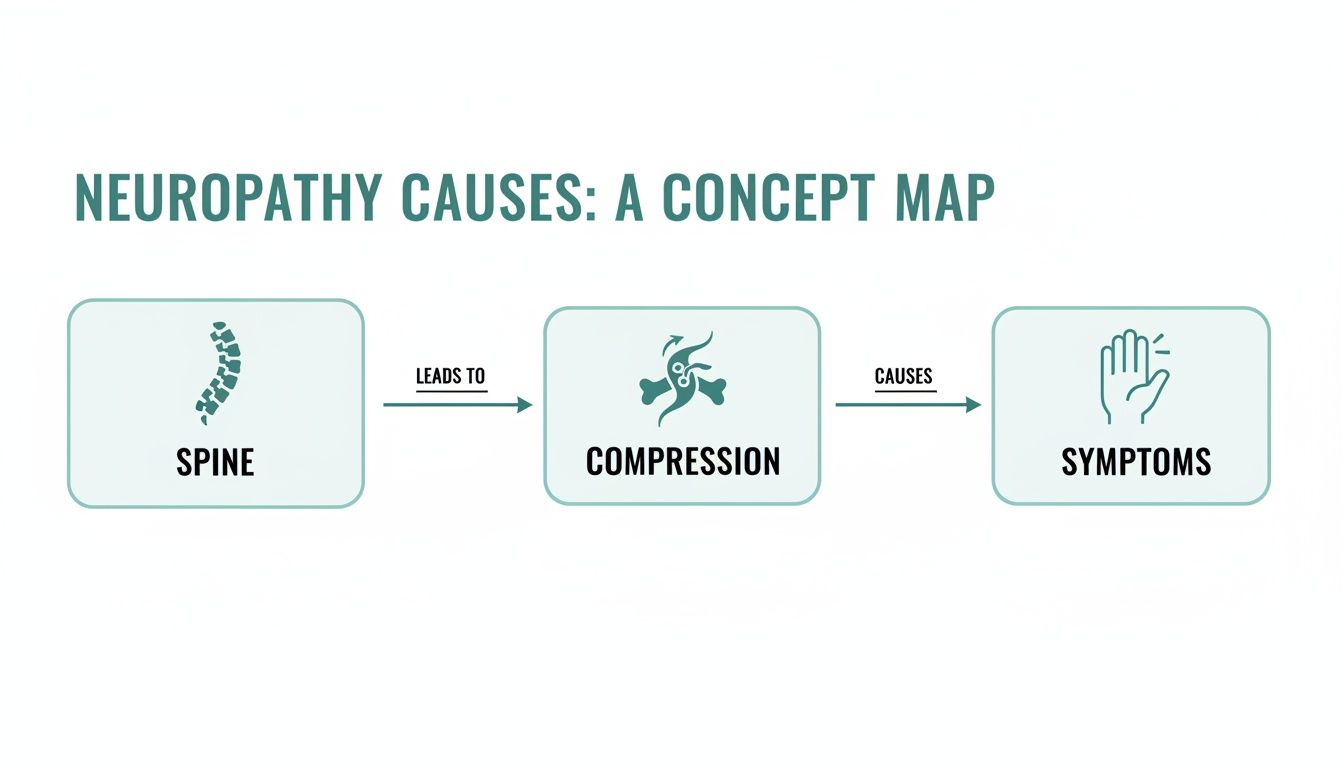
As you can see, that frustrating tingling or numbness in your feet can often be traced right back to nerve compression happening in your lower back.
For many of our patients, creating space in the spine is the critical first step. It all starts with spinal decompression. Picture a kitchen sponge that has completely dried out. You can't just drip water on top of it; you need to open it up so it can absorb the water again. Spinal decompression does something very similar for your spinal discs and the nerves around them.
Using a highly precise, computer-controlled table, we apply a gentle and slow stretch to the spine. This creates a negative pressure—a sort of vacuum effect—inside the discs. This vacuum helps pull bulging or herniated disc material back where it belongs, taking direct pressure off those compressed nerve roots. At the same time, it draws a fresh supply of oxygen, water, and nutrients into the disc, kick-starting the healing process from the inside out.
Once we've created that initial space, the next step is to make sure the spine is moving and functioning correctly. This is where the FDA-cleared PulStar system is a game-changer. A lot of people hear "chiropractor" and immediately think of manual twisting or popping, but this is a totally different experience. The PulStar provides a gentle, computer-guided analysis and adjustment without any of that.
The system uses a small handheld instrument to send soft impulses into the spine, precisely measuring how each joint moves in response. It's like a structural engineer tapping along a bridge to find weak spots. The software instantly analyzes this feedback and shows us a clear map of any restricted joints. It then delivers targeted, low-force impulses only to the areas that need it, restoring proper motion without any cracking or popping.
This level of precision makes the adjustments not only incredibly effective but also extremely comfortable and safe. It's a cornerstone of our peripheral neuropathy chiropractic care, especially for patients who are a bit anxious about traditional adjustments.
With pressure off the nerves and motion restored to the spine, we can shift our focus to healing the damaged nerve cells themselves. Class IV Cold Laser Therapy is one of our most powerful tools for this part of the job. This technology uses specific wavelengths of light energy that penetrate deep into your tissues without any heat.
Think of it as giving your cells a high-octane energy drink. The light is absorbed by the mitochondria—the little powerhouses inside your cells—and supercharges their ability to produce ATP, which is cellular energy. This energy boost sets off a cascade of positive effects:
This therapy is a completely non-invasive way to trigger the body's own natural healing processes. You can dive deeper into how cold laser therapy provides effective pain relief in our dedicated guide on the topic.
The final piece of the puzzle is re-establishing clear communication between your nerves and your brain. Over time, damaged nerves essentially forget how to send and receive the right signals. Horizontal Stimulation Therapy is specifically designed to re-educate these broken pathways.
This is far more advanced than a simple TENS unit that just tries to block pain. Horizontal Stimulation uses very specific electrical frequencies that actually mimic the body's own bio-electrical language. By delivering these targeted signals, we can essentially "reboot" the nerve cells. This helps to:
This therapy helps retrain the nervous system to work the way it's supposed to, solidifying the progress we've made with decompression and laser for results that truly last.
To bring it all together, here is a quick overview of our core treatment modalities.
| Therapy | How It Works | Key Benefit for Neuropathy |
|---|---|---|
| Spinal Decompression | Creates negative pressure in the spine to retract bulging discs and draw in nutrients. | Relieves direct mechanical pressure on the nerve roots causing the symptoms. |
| PulStar Adjustments | Uses computer-guided impulses to gently restore motion to restricted spinal joints. | Improves overall spinal function and nerve communication without forceful twisting. |
| Class IV Cold Laser | Delivers light energy to cells, boosting ATP production and metabolic activity. | Reduces inflammation and pain while accelerating nerve cell repair and regeneration. |
| Horizontal Stimulation | Uses specific frequencies to re-educate nerve pathways and restore normal signaling. | Retrains the nervous system to reduce numbness and calm burning pain signals. |
Each of these treatments plays a vital, interconnected role. By working in concert, they address your neuropathy from every possible angle to give you the best chance at recovery.
Deciding to try a new approach for your health isn't a leap of faith—it should be a step based on solid evidence. When it comes to peripheral neuropathy chiropractic care, the methods we use aren't based on guesswork. They're built on a growing body of clinical research and designed to translate complex science into real-world results for people just like you.
It helps to understand the "why" behind the "what." It’s one thing to hear that treatments like spinal adjustments and laser therapy can help, but it’s another to see the objective proof of how they work to restore nerve function and dial down the pain.
At the heart of our approach is a core chiropractic principle: restoring proper spinal function can take the pressure off your nerves. Spinal Manipulative Therapy (SMT), a technique we've been refining for decades, has been studied extensively for its effects on neuropathic pain. The goal is straightforward—by correcting how your spine moves, we can reduce the irritation and compression that are often a root cause of nerve damage.
Research has even pinpointed how it works. Studies show that applying very specific, gentle forces at the right frequency can create measurable changes in nerve sensitivity. This isn't just about a temporary feeling of relief; it's about making a physiological shift that helps calm those overactive pain signals right at their source.
A detailed 2019 study, for instance, looked at the effects of low-velocity spinal manipulation on nerve injury. The results were fascinating. They found that a specific frequency of 0.16 Hertz delivered statistically significant pain relief, measurably reducing hypersensitivity within just a few minutes. If you're interested in the science, you can explore the full findings of this study that show how precise adjustments can directly influence nerve behavior.
The true test of any treatment is whether it delivers consistent, life-changing results. Across the board, integrated chiropractic neuropathy programs are reporting high success rates. This is largely because they don't rely on a single therapy, but instead combine several treatments that work in synergy to heal damaged nerves.
Think of it as a team effort. When SMT is combined with therapies like Class IV Cold Laser and Horizontal Stimulation, the benefits start to stack up. One therapy relieves the pressure, another gives your cells the energy they need to repair, and a third helps retrain the nerve pathways to function correctly again. It’s this layered approach that allows patients to experience a whole range of improvements, not just one.
A common metric we see in clinical settings is a significant drop in pain scores after a full treatment plan. Many studies and clinic audits show an average pain reduction of over 40%, with some of the most comprehensive programs achieving success rates as high as 94%.
This kind of data gives us a clear picture of what’s possible. It shows that a structured, non-surgical approach can do more than just mask your symptoms—it can actually improve the health of your nerves and help you get your life back.
While getting rid of pain is a huge priority, our evidence-based protocols are designed for a more complete recovery. We measure the success of peripheral neuropathy chiropractic care not just by a drop in pain, but by the return of function and feeling.
Here are a few of the functional improvements we consistently see, backed by clinical outcomes:
These are the tangible results that truly matter. The clinical evidence is clear: by getting to the root causes of nerve damage, we can help you reclaim the comfort, mobility, and confidence that neuropathy has taken away.

Starting any new treatment can feel a little uncertain, so my first goal is always to make sure you feel informed and empowered. I want you to know exactly what to anticipate as we work together to move you from daily discomfort toward lasting recovery.
The entire process begins with a deep dive to find the true source of your symptoms. This isn't about guesswork. We use a comprehensive diagnostic assessment—including a detailed health history, physical exam, and specific neurological tests—to measure nerve function, sensitivity, and balance.
Think of it as creating a detailed map of your nervous system. This precision allows us to design a peripheral neuropathy chiropractic care plan that targets the root cause, not just the symptoms you’re feeling.
Once we’ve built your personalized care plan, we can get started. A typical session is a calm, structured experience focused on your comfort. There's absolutely no forceful twisting or popping involved here. Instead, you'll be guided through a series of gentle, computer-assisted therapies.
For instance, you might begin with spinal decompression, where you simply lie down on a specialized table as it applies a slow, gentle stretch to your spine. Most patients find it incredibly relaxing. From there, we might move to therapies like the Class IV Cold Laser or Horizontal Stimulation, both of which are completely painless.
Everything we do is methodical and explained. I'll walk you through each step, making sure you feel confident and in control of your care.
Everyone's healing journey is different, but our structured protocols help us create a predictable timeline for your progress. Most treatment plans involve a series of visits scheduled over several weeks. This consistency is crucial for building momentum and achieving results that stick.
It’s a bit like physical training for your nerves. Just as an athlete needs consistent workouts to build strength, your nerves require steady therapeutic input to heal, regenerate, and function correctly again. We'll regularly re-evaluate your progress with objective tests, so we can celebrate your improvements and fine-tune your plan as you heal.
This isn't just our clinical experience talking. Research backs up this structured approach. One study of 551 patients who received care using key chiropractic modalities found that 91% reported an enhanced quality of life with zero side effects. It’s a powerful testament to the safety and effectiveness of a well-designed plan. You can read more about these positive patient outcomes.
The whole point of our peripheral neuropathy chiropractic care is to deliver real, tangible improvements that change your life for the better. We track progress not just by asking how you feel, but with concrete data. As you move through your treatment plan, you can expect to see measurable gains in several key areas.
Here are some of the positive changes we measure:
This journey is a partnership. By setting clear expectations and tracking real, measurable results, we empower you to take an active role in reclaiming your health and your life, one step at a time.
Choosing a new path for your health always brings up a lot of questions. We get it. When you're thinking about peripheral neuropathy chiropractic care, you want to know what the treatment is really like, how it’s different, and what you can honestly expect. We’ve put together answers to the most common questions we hear from patients to give you the clarity you need.
Let's dive into what people ask us most.
This is usually the first thing people worry about, and I'm happy to say the answer is a firm no. Our entire approach is built on being gentle and non-invasive. We deliberately steer clear of any technique that could cause discomfort.
For instance, we use sophisticated, computer-guided tools like the PulStar system for adjustments. This means we can be incredibly precise without any of the traditional popping or cracking sounds people associate with chiropractic. Other core therapies, like our Class IV Cold Laser and Horizontal Stimulation, are completely painless—in fact, most of our patients find them quite relaxing. Our job is to get you out of pain, not create more of it.
The biggest difference is our goal. Conventional medical treatments for neuropathy usually focus on managing the symptoms with prescription drugs like Gabapentin or Lyrica. While these medications might dial down the pain for a bit, they do nothing to address the actual nerve damage. They’re essentially just silencing the alarm your body is trying to sound.
Our chiropractic protocol, on the other hand, is designed to get to the root of the problem. We focus on actually healing the damaged nerves and restoring their function. By tackling the underlying causes—like nerve compression, poor blood flow, and inflammation—we’re aiming for a real, long-term solution, not just temporary symptom relief.
Think of it this way: We work on repairing the "frayed wiring" itself, not just turning down the volume on the alarm. The goal is to help your body fix the problem so the alarm stops going off for good.
This is a critical distinction if you're looking for lasting change. We want to help you get well, not just feel a little better for a few hours.
Everyone’s body is different, but many of our patients start feeling a noticeable improvement within the first few weeks of care. Based on our clinical experience with these protocols, most people achieve significant, lasting relief over about three months.
That said, some patients tell us they feel a bit of relief—less burning or tingling—after just their very first session. The most important thing is consistency. We track your progress with objective measurements every step of the way, using things like balance tests, sensation tests, and grip strength, so you can see the concrete results as they happen.
Our program has a very high success rate, and we’ve been able to help people with all sorts of neuropathy. We regularly see great results with patients whose symptoms are caused by:
The only way to know for sure is to come in for a comprehensive consultation and exam. During that first visit, we’ll do a deep dive to figure out what’s really causing your symptoms. From there, we can tell you if you’re a strong candidate and map out a personalized plan to help you. If you're dealing with tingling, numbness, burning, or balance problems, there's a very good chance our non-surgical approach can give you the relief you’ve been searching for.
Making an informed decision is the first step. For more advice, check out our guide on how to choose a chiropractor, which offers some great tips to help you find the right care for your needs. We believe in giving our patients all the information they need to feel confident in their health decisions.
Ready to find out if our advanced, non-surgical approach can finally bring you relief from peripheral neuropathy? At Bonesetters Critical Chiropractic, we are dedicated to finding and fixing the root cause of your pain. Schedule your comprehensive consultation today by visiting us at https://bonesetters.org.