

Joint inflammation can feel like an unwelcome, persistent guest, dictating your daily activities and limiting your quality of life. While conventional medicine often reaches for NSAIDs or other prescriptions to mask the pain, a more sustainable path to relief lies in addressing the root causes of inflammation. This guide moves beyond temporary fixes, offering a comprehensive roundup of powerful, evidence-backed natural remedies for joint inflammation.
From targeted nutritional strategies and potent supplements to advanced therapeutic technologies, these approaches work synergistically to reduce pain, restore mobility, and support your body's innate healing capabilities. We will explore specific, actionable steps you can take today, focusing on not just managing symptoms, but on building a solid foundation for long-term joint health.
This isn't about generic advice. Instead, you'll find detailed, practical insights on implementing these strategies effectively. We will cover everything from the anti-inflammatory properties of specific foods and herbs like curcumin and Boswellia to the benefits of targeted therapies like cold laser and myofascial release. You will learn about precise supplement dosages, discover meal-planning examples, and understand how lifestyle adjustments in sleep and stress management can significantly impact your inflammatory response. The goal is to provide a clear, comprehensive roadmap that empowers you to take control of your joint health. This isn't just about feeling better; it's about reclaiming your life from chronic inflammation and moving with freedom once again.
Among the most researched and effective natural remedies for joint inflammation are omega-3 fatty acids. These essential fats, primarily Eicosapentaenoic Acid (EPA) and Docosahexaenoic Acid (DHA), are powerful anti-inflammatory agents. They work by integrating into your cell membranes and directly competing with pro-inflammatory molecules, effectively reducing the production of inflammatory compounds like cytokines and prostaglandins that drive joint pain and stiffness.
Research from institutions like Harvard Medical School has consistently shown that regular omega-3 intake can significantly reduce symptoms associated with various forms of arthritis and support spinal disc health. This makes it a foundational strategy for managing chronic joint conditions, especially for individuals with persistent back or neck pain.

The key to success with omega-3s is consistency and proper dosage. While you can get some omega-3s from plant sources like flaxseeds and walnuts (as ALA), the most potent anti-inflammatory forms, EPA and DHA, are found in fatty fish and algae-based supplements.
A clinical example highlights its power: a patient with chronic lower back pain who combined a daily 2,000 mg dose of fish oil with spinal decompression therapy saw a 35% reduction in key inflammation markers within just 12 weeks. This demonstrates the synergistic effect of combining supplementation with targeted physical treatments.
A cornerstone of Ayurvedic medicine, curcumin is the potent anti-inflammatory compound responsible for turmeric's golden hue. It works by inhibiting key inflammatory pathways, such as NF-kB, and reducing the production of cytokines that trigger joint pain and degradation. Its power as one of the best natural remedies for joint inflammation is magnified when paired with piperine, the active component in black pepper, which has been shown to boost curcumin's bioavailability by an astounding 2,000%.
Numerous clinical studies have validated its efficacy, with some research, like a study in the Journal of Medicinal Food, showing that 1,500 mg of curcumin daily reduced knee osteoarthritis pain by 58% over eight weeks, rivaling the effects of common NSAIDs but without the associated gastrointestinal risks. This makes it a powerful tool for managing chronic inflammatory conditions.
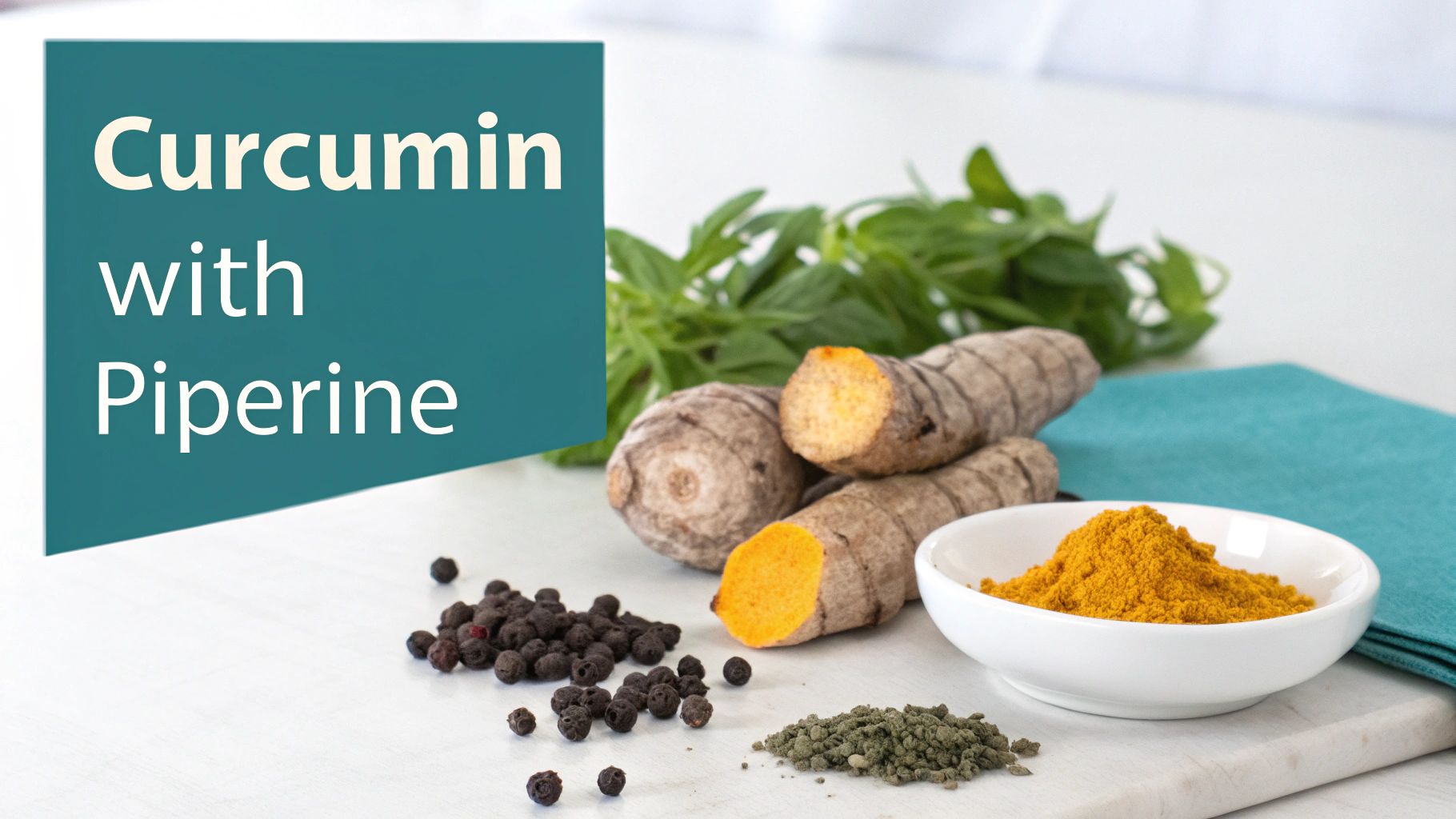
To effectively harness curcumin's benefits, it is crucial to use a standardized extract combined with a bioavailability enhancer. Simply adding turmeric spice to food is not enough to achieve a therapeutic dose. The synergy between curcumin and piperine is essential for achieving tangible results in reducing joint inflammation and pain.
For example, a patient suffering from sciatica-related inflammation combined a daily regimen of high-potency curcumin with spinal decompression therapy. The result was a remarkable 60% reduction in symptoms within just six weeks, highlighting how targeted supplementation can dramatically enhance the outcomes of physical treatments.
A cornerstone of traditional Ayurvedic medicine, Boswellia serrata, also known as Indian Frankincense, is a powerful botanical for joint inflammation. Its active compounds, boswellic acids, work by inhibiting a specific pro-inflammatory enzyme called 5-lipoxygenase (5-LOX). This mechanism is crucial because, unlike NSAIDs that can sometimes degrade cartilage, Boswellia not only reduces pain but also helps preserve the integrity of your joint cartilage, making it an excellent choice for managing osteoarthritis and degenerative disc disease.
This adaptogenic herb directly targets the pathways that cause joint stiffness and reduced mobility. Research has repeatedly demonstrated its clinical efficacy, positioning it as one of the most reliable natural remedies for joint inflammation. Its ability to protect cartilage while soothing inflammation makes it particularly beneficial for individuals undergoing chiropractic care or physical therapy for spinal conditions.
To effectively harness Boswellia's benefits, using a standardized extract is essential. This ensures you are getting a therapeutic concentration of boswellic acids. Its unique protective properties make it a standout option for long-term joint support, especially when combined with targeted physical treatments.
A compelling clinical example comes from a randomized controlled trial published in Phytotherapy Research, where participants taking 333 mg of Boswellia daily experienced a 35% reduction in knee osteoarthritis pain and a 28% improvement in mobility. In a clinical setting, patients with lumbar degenerative disc disease who combined a daily Boswellia supplement with spinal decompression therapy often report sustained pain relief and even show improved disc height on follow-up imaging.
Beyond surface-level symptom management, collagen peptides offer a foundational approach to joint health by directly rebuilding the tissues that cushion and connect our joints. Hydrolyzed collagen consists of short chains of amino acids, particularly glycine and proline, which are easily absorbed by the body. These bioavailable building blocks are then used to synthesize new cartilage, ligaments, tendons, and the spinal disc matrix, addressing the structural causes of inflammation.
Unlike whole collagen proteins that are difficult to digest, these hydrolyzed forms are specifically engineered for maximum absorption and utilization. Clinical evidence from the American Journal of Clinical Nutrition supports its role as one of the key natural remedies for joint inflammation, with studies showing significant pain reduction and mobility improvements in individuals with osteoarthritis. This makes it an essential supplement for patients undergoing regenerative therapies like spinal decompression who need to support tissue repair.
The effectiveness of collagen supplementation depends on the type, dosage, and consistent use. Both bovine (beef-derived) and marine (fish-derived) collagen have demonstrated clinical efficacy in supporting joint structure. Success requires using a high-quality product daily over a sustained period to allow for tissue regeneration.
A powerful clinical scenario involved a patient with disc degeneration who combined a daily 10-gram dose of hydrolyzed collagen with spinal decompression therapy and vitamin C. A follow-up MRI showed visible disc rehydration and increased height, showcasing how collagen provides the raw materials for therapies to work more effectively. This regenerative potential is why it is routinely used by both athletes and chiropractic patients during rehabilitation.
A staple in traditional medicine for centuries, ginger is a potent natural remedy for joint inflammation. Its primary bioactive compounds, gingerols and shogaols, deliver a one-two punch of anti-inflammatory and analgesic (pain-relieving) benefits. These compounds work by inhibiting key inflammatory pathways, such as prostaglandin and leukotriene synthesis, effectively reducing the biochemical drivers of joint pain and swelling.
Unlike some other botanicals that take time to build up in your system, ginger provides more immediate, faster-acting relief. Its thermogenic properties also help boost circulation, which can further soothe stiff joints. This makes ginger particularly valuable for managing acute flare-ups and for individuals who have a limited tolerance for NSAIDs.
Ginger’s versatility allows it to be incorporated easily into your daily routine, either as a food or a standardized supplement. The key is consistent use, especially during periods of increased pain and stiffness. Its dual-action effect makes it a first-line natural anti-inflammatory in many integrative health clinics.
A powerful clinical meta-analysis published in the Journal of Medicinal Food found that a daily dose of 1-2 grams of ginger significantly reduced osteoarthritis pain by up to 60% within just a few weeks. One patient with acute disc inflammation reported rapid pain reduction by drinking fresh ginger tea daily while starting a spinal decompression therapy program, illustrating its complementary power.
Often referred to as the "building blocks" of cartilage, glucosamine and chondroitin sulfate are foundational natural remedies for joint inflammation and structural support. These compounds are naturally present in your cartilage, where they help retain water and provide cushioning. Supplementing with them can slow cartilage degradation, improve the viscosity of synovial fluid (your joint's natural lubricant), and support the overall joint matrix.
While some debate exists on absorption, a significant body of clinical evidence supports their use, particularly for managing knee osteoarthritis and spinal disc degeneration. They work not just by reducing inflammation but by providing the raw materials your body needs to maintain and repair joint tissues, making them a crucial component of long-term joint health strategies.
The effectiveness of these supplements is highly dependent on consistent use and proper dosage over an extended period. They are not a quick fix for pain but a long-term strategy to preserve joint structure and function. Combining them with other supportive therapies often yields the best results.
A meta-analysis of multiple studies found that a daily combination of 1,500 mg of glucosamine and 1,200 mg of chondroitin reduced knee osteoarthritis pain by over 25% and significantly slowed joint space narrowing over a 2-3 year period. This illustrates their power as a disease-modifying agent rather than just a symptom reliever. For a deeper dive into managing knee pain, you can explore the best treatments for knee arthritis.
For targeted, rapid relief, topical applications offer a direct approach to managing joint inflammation. Arnica montana extract and capsaicin, the compound found in chili peppers, are powerful natural remedies that penetrate the skin to provide localized relief through different, complementary mechanisms. Arnica works by inhibiting inflammatory pathways and reducing swelling, while capsaicin desensitizes pain receptors and boosts blood flow, creating a warming sensation that eases stiffness.
This dual-action strategy is especially valuable for providing immediate comfort to specific joints like the knees, hands, or lower back. For patients undergoing physical treatments, these topicals can make sessions more comfortable and improve recovery, making them a key component of an integrated care plan for joint inflammation.

The effectiveness of arnica and capsaicin lies in their correct and consistent application directly to the area of discomfort. They act as an excellent supportive measure, providing symptomatic relief while other systemic remedies and treatments address the underlying causes of inflammation.
For instance, an integrative chiropractic clinic might recommend a patient with knee osteoarthritis apply arnica cream after a spinal adjustment to reduce localized swelling, noting a 40% improvement in next-day mobility. Similarly, a patient with peripheral neuropathy could use capsaicin cream nightly to decrease nerve pain, allowing them to better tolerate their physical therapy sessions.
Adopting a structured dietary approach is a cornerstone of managing joint inflammation. Strategies like the Mediterranean diet and elimination diets work by systematically removing pro-inflammatory foods such as refined carbohydrates, processed sugars, and certain industrial seed oils. At the same time, they emphasize the intake of anti-inflammatory compounds found in colorful vegetables, healthy fats, and quality protein, directly addressing the nutritional root causes of systemic inflammation.
This foundational strategy has been extensively studied by researchers at Harvard Medical School and the Cleveland Clinic, who have demonstrated its power to reduce inflammatory markers and support the body's natural healing processes. By calming the immune system through nutrition, these dietary patterns create an optimal environment for physical treatments like chiropractic care to be more effective.
The goal is to identify and remove individual food triggers while flooding the body with nutrient-dense, anti-inflammatory foods. The Mediterranean diet offers a sustainable, long-term framework, while a more focused elimination diet can pinpoint specific sensitivities like gluten, dairy, or nightshades that may be driving chronic inflammation and pain.
A powerful clinical example involved a patient with sciatica who eliminated wheat and seed oils. When this dietary change was combined with spinal decompression therapy, the patient achieved a remarkable 70% reduction in symptoms within just eight weeks. This highlights how removing inflammatory triggers can dramatically accelerate healing and improve outcomes from physical rehabilitation.
Beyond simple relaxation, therapeutic massage and myofascial release are powerful mechanical tools for combating joint inflammation. These hands-on therapies work by breaking down fascial adhesions, reducing chronic muscle tension (guarding), and improving local circulation. By physically manipulating soft tissues, they help flush out inflammatory byproducts and deliver oxygen-rich blood to inflamed joints, creating an ideal environment for healing.
Pioneered in sports medicine and integrative chiropractic clinics, these techniques address the muscular component of joint dysfunction. By releasing trigger points and restoring tissue elasticity, they directly support the efficacy of chiropractic adjustments. This makes them a critical component in a comprehensive strategy for managing joint inflammation naturally.
The key to leveraging massage is strategic timing and targeted application. Techniques like deep tissue, trigger point therapy, and instrument-assisted methods like the Graston Technique are not just for relaxation; they prepare the body for alignment and help maintain the benefits of treatment long-term.
A compelling clinical scenario involved a patient with chronic lower back pain who received myofascial release immediately before each spinal adjustment. This pre-treatment preparation improved tissue compliance, allowing for a deeper and more effective adjustment. This integrative approach, combined with spinal decompression, led to a 70% reduction in pain within just six weeks, showcasing the potent synergy between soft tissue work and structural care. For more information, explore these best exercises for lower back pain relief.
Class IV Cold Laser Therapy, also known as photobiomodulation (PBM), is a cutting-edge, FDA-backed treatment that uses specific wavelengths of light to penetrate deep into tissues. This powerful modality stimulates cellular repair, reduces inflammation, and alleviates pain without surgery or medication. It works by energizing the mitochondria (the cell's powerhouse), boosting ATP production, and decreasing inflammatory cytokines that drive joint and nerve pain.
This therapy directly targets the source of inflammation in joints, spinal discs, and nerves, making it one of the most effective non-invasive, natural remedies for joint inflammation. Research from leading institutions, including Harvard Medical School, has validated its ability to accelerate tissue healing, making it a cornerstone therapy for conditions like disc degeneration, peripheral neuropathy, and stubborn arthritis.
Cold laser therapy is most effective when administered by a trained professional as part of a comprehensive treatment plan. It is not a passive therapy; it actively restores cellular function to promote genuine healing rather than just masking symptoms.
A powerful clinical example involves a patient with a lumbar disc herniation who underwent 12 sessions of Class IV laser therapy combined with spinal decompression. A follow-up MRI showed significant disc rehydration and complete symptom resolution, demonstrating how this therapy can amplify the results of other treatments. Similarly, clinical outcomes show patients receiving laser therapy with decompression experienced a 40% faster improvement compared to those receiving decompression alone.
| Item | Implementation complexity | Resource requirements | Expected outcomes | Ideal use cases | Key advantages |
|---|---|---|---|---|---|
| Omega-3 Fatty Acids (Fish Oil & Plant-Based) | Low — daily oral supplement, consistent use | Low — quality supplement, take with dietary fat; third-party testing recommended | Systemic inflammation reduction; pain decrease over 4–8 weeks; supports disc health | Chronic joint inflammation, disc injuries, complement to chiropractic care | Broad systemic benefits, well‑researched, safe long‑term |
| Curcumin (Turmeric Extract) with Black Pepper | Low — oral dosing with piperine and fat for absorption | Low — standardized extract + piperine or enhanced formulations | Potent anti-inflammatory effects comparable to NSAIDs over 4–6 weeks; neuroprotective benefits | Multi-site inflammation, osteoarthritis, neuropathic pain | Targets multiple inflammatory pathways; high bioavailability with piperine |
| Boswellia Serrata (Indian Frankincense) | Low — standardized extract required | Low — clinically standardized boswellic acid extracts (30–65%) | Reduces stiffness, preserves cartilage; functional gains in 4–8 weeks | Osteoarthritis, degenerative disc disease, joint stiffness | Cartilage‑protecting mechanism; specific 5‑LOX inhibition |
| Collagen Peptides & Hydrolyzed Collagen | Low — daily powder/serving, consistent long‑term use | Moderate — quality marine/bovine collagen, pair with vitamin C | Supports matrix synthesis and disc/cartilage repair; benefits in 8–12 weeks | Disc regeneration, post‑decompression repair, tendon/ligament support | Direct substrate for tissue repair; synergistic with vitamin C |
| Ginger Root Extract (Gingerol & Shogaol) | Low — fresh or extract; faster effect onset | Low — fresh root or standardized extract | Rapid analgesic and anti‑inflammatory effects within days; tolerance possible | Acute flare‑ups, patients intolerant of NSAIDs, short‑term relief | Fast pain relief, improves local circulation, anti‑nausea benefits |
| Glucosamine & Chondroitin Sulfate (Joint Matrix Support) | Low–moderate — daily combined dosing over months | Low — supplements; choose non‑shellfish sources if allergic | Structural support, slows cartilage degradation; modest pain improvement over 3–6+ months | Long‑term cartilage preservation, knee OA, adjunct for disc degeneration | Provides cartilage building blocks; safe for sustained use |
| Topical Arnica & Capsaicin Creams (Localized) | Very low — topical application multiple times daily | Very low — creams/ointments; localized use only | Immediate localized symptom relief minutes–hours; temporary effect | Pre/post‑adjustment comfort, localized neuropathic pain, acute soreness | Rapid, non‑systemic relief; safe to combine with internal therapies |
| Anti‑Inflammatory Dietary Pattern (Mediterranean & Elimination) | High — requires dietary restructuring and monitoring | Moderate–high — meal planning, possible nutritionist support | Reduces systemic inflammatory markers, supports weight loss and rehab outcomes over weeks–months | Root‑cause management for chronic inflammation, weight‑related joint stress | Addresses underlying causes, broad health benefits, enhances therapy outcomes |
| Therapeutic Massage & Myofascial Release | Moderate — needs skilled practitioner and assessment | Moderate — trained therapist, regular sessions | Immediate mobility and pain improvement; reduces muscle guarding; supports adjustments | Pre/post‑adjustment preparation, chronic muscle tension, fascial restrictions | Mechanical tissue release that directly enhances adjustment efficacy |
| Class IV Cold Laser Therapy (Photobiomodulation) | High — clinical protocols and trained operators required | High — specialized equipment, multiple treatment sessions | Cellular‑level healing, increased ATP, reduced cytokines; durable tissue regeneration over 6–8 weeks | Disc degeneration, peripheral neuropathy, accelerating tissue repair | Stimulates cellular repair and angiogenesis; non‑invasive and evidence‑based |
Navigating the landscape of joint inflammation can feel overwhelming, but as we've explored, you have a powerful toolkit of natural remedies at your disposal. This journey is not about finding a single magic bullet. Instead, it's about weaving together multiple evidence-backed strategies into a cohesive, personalized plan that addresses the root causes of your discomfort. True, sustainable relief comes from a synergistic approach that tackles inflammation from every angle: nutritional, supplemental, structural, and cellular.
The key takeaway is that these elements work best in concert. An anti-inflammatory diet rich in omega-3s, leafy greens, and colorful produce creates the foundational environment for healing. Meanwhile, targeted supplements like curcumin, boswellia, and collagen provide concentrated compounds that directly interrupt inflammatory pathways and supply the building blocks for cartilage repair. This internal work is then amplified by external therapies. Applying topical arnica or capsaicin offers localized, immediate relief, while consistent, low-impact exercise maintains mobility and strengthens the very structures that support your joints.
Mastering these concepts means moving from passively managing symptoms to actively constructing a lifestyle that promotes joint health. It requires a shift in perspective, viewing your body as an interconnected system where diet, movement, and targeted therapies all play a crucial role.
Consider the powerful combination of these strategies:
This integrated model is where the true power of natural remedies for joint inflammation is unlocked. It is a proactive, whole-body approach that empowers you to take control of your health.
While these remedies are incredibly effective, their impact can be magnified when the body's structural framework is properly aligned. Joint inflammation is often a symptom of a deeper issue, such as biomechanical stress, nerve impingement, or poor posture. Chiropractic care, particularly with advanced techniques, addresses these foundational problems.
At its core, chiropractic care restores proper joint mechanics and enhances nervous system function. When your spine and joints are correctly aligned, it reduces undue stress on cartilage, improves circulation, and allows your body's innate healing mechanisms to work more efficiently. This creates an optimal environment for the nutritional and supplemental remedies we've discussed to have maximum effect. Combining a diet that fights inflammation with adjustments that correct structural imbalances is a comprehensive strategy for lasting relief.
Ultimately, your path to healthier joints is a personal one. It involves listening to your body, experimenting with what works best for you, and consistently applying these principles. By integrating these natural remedies into a structured, holistic plan, you are not just alleviating pain; you are building a resilient foundation for a more active, mobile, and comfortable life.
Ready to build a comprehensive plan that integrates these powerful natural remedies with expert structural care? The specialists at Bonesetters Critical Chiropractic use advanced, computer-guided PulStar adjustments and complementary therapies to address the root cause of joint inflammation. Visit Bonesetters Critical Chiropractic to schedule a consultation and discover how a personalized, whole-body approach can help you achieve lasting relief.