

Chronic knee pain can feel like a constant, unwelcome companion, holding you back from the life you want to live. The good news is that Class IV laser therapy offers a powerful, non-invasive way to help your body heal itself—often without the need for drugs or surgery.
When your knee aches and feels stiff, even simple things like walking up the stairs or getting out of a chair can become a major challenge. For a long time, the options felt limited: pain pills that just hide the problem, steroid shots that wear off, or going under the knife. But what if you could get to the root of the pain by kickstarting your body's own repair crew?
Think of this guide as your personal introduction to how targeted light energy can bring about real, lasting relief. We'll break down the science in a way that makes sense, look at the benefits people are seeing every day, and show you exactly what to expect.
Picture the cells in your knee as tiny, rechargeable batteries. When an injury happens or chronic inflammation sets in, those batteries get drained, and the healing process grinds to a halt. Class IV laser therapy works like a high-tech charging station for those cells.
By delivering specific wavelengths of light deep into the damaged tissue, it stimulates the part of your cells responsible for producing energy—the mitochondria. This process, called photobiomodulation, gives your cells the fuel they need to get back to work.
This energy boost sets off a chain reaction of healing effects:
While laser therapy isn't a magic bullet for every knee problem, its versatility is one of its greatest strengths. It’s proven to be a game-changer for a whole range of conditions, helping people get back on their feet and reclaim their freedom of movement.
At Bonesetters, we've seen fantastic results for patients struggling with everything from osteoarthritis and meniscal tears to ligament sprains and lingering post-surgical pain. It’s an incredible option for anyone looking to avoid long-term medication or more invasive procedures.
In the sections ahead, we’ll get into the clinical evidence that backs this up and help you figure out if you might be a good candidate. We believe that when you understand your options, you get better results. Our goal is to give you everything you need to confidently take that next step toward leaving knee pain behind.
It sounds a bit like science fiction, doesn't it? The idea that focused light can heal something as complex as a knee joint. But the science is surprisingly straightforward and grounded in basic biology.
Think about how a plant uses sunlight for photosynthesis—it converts light into the energy it needs to grow. Class IV laser therapy works on a similar principle, but for your body's cells. It essentially gives your cells a concentrated dose of therapeutic light to supercharge their natural healing abilities.
This process is known as photobiomodulation (PBM). During a treatment, we use a specialized device to direct specific wavelengths of red and near-infrared light right to the source of your knee pain. This light passes harmlessly through your skin, reaching deep into the damaged tissues—the worn-out cartilage, strained ligaments, or inflamed muscles.
Once inside, this light energy zeros in on the mitochondria. If you remember from high school biology, mitochondria are the tiny "power plants" inside every cell. They produce an energy molecule called ATP (adenosine triphosphate), which is the fuel that drives all cellular activity, especially repair. When you have an injury or chronic inflammation, these power plants get overwhelmed and can't keep up, slowing the healing process to a crawl.
Laser therapy acts like a jumper cable for these drained cellular batteries. It gives the mitochondria a massive boost, ramping up ATP production and flooding the injured area with the energy needed to rebuild and recover.
This surge in cellular energy isn't just a one-off event. It kicks off a powerful chain reaction of healing responses throughout the entire knee joint. With enough fuel in the tank, your body can finally get ahead of the damage and start making real, lasting repairs instead of just masking the pain.
Here’s a breakdown of the three main ways this process gets you back on your feet.
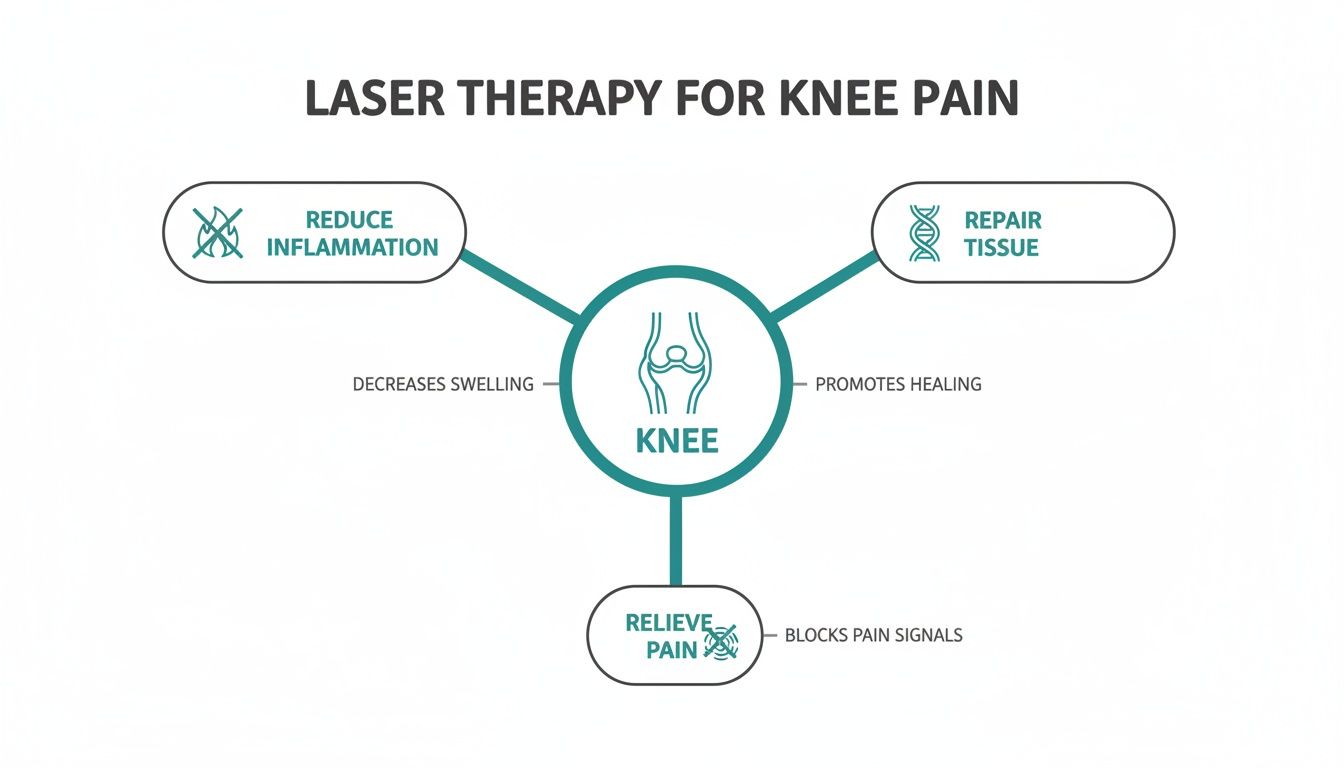
This approach is what makes laser therapy so effective—it tackles the root causes of knee pain from multiple angles at the same time.
It's important to know that not all therapeutic lasers are the same. The key difference comes down to power, which dictates how deep the light can penetrate and how effectively it can treat the problem.
Class III lasers, often called "low-level" or "cold lasers," are much less powerful. They're great for superficial issues like skin conditions or trigger points just below the surface. While they have their place, their limited depth just can’t reach the deep, complex structures of the knee. We talk more about this type of treatment in our guide to cold laser therapy for back pain.
Class IV lasers, on the other hand, are the gold standard for treating deep-seated musculoskeletal conditions. Their higher power allows the therapeutic light to penetrate deep into the knee joint, reaching hard-to-heal areas like the meniscus, ACL, and the cartilage under the kneecap. This deep reach means faster treatment times and much more significant, lasting results for chronic knee pain.
The incredible results from this technology are fueling a huge demand. The market for laser-powered knee pain devices is expected to jump from USD 0.74 billion in 2024 to USD 1.93 billion by 2031. This isn't surprising when you consider that over 300 million people worldwide suffer from osteoarthritis and are desperate for safe, effective alternatives to addictive pain meds and invasive surgery. You can dig into the numbers yourself in this report on laser knee pain devices.
Understanding this science makes it clear why Class IV laser therapy has become a cornerstone of modern, non-invasive pain management.
It’s one thing to understand the science behind how laser therapy works, but it's another to see the proof. What really matters are the results, and thankfully, the shift from theory to real-world outcomes is backed by a solid and growing body of clinical research. This isn't just a promising new idea; it's a treatment validated by scientific studies that show real, measurable improvements for people just like you.
For years, researchers have been digging into how photobiomodulation—the technical term for this light-based therapy—affects joint health. Time and again, the findings point toward significant benefits. Laser therapy has moved from being a niche "alternative" option to a respected solution for musculoskeletal pain, and these studies give us the hard data to confirm what we see in our clinic every day.

Knee osteoarthritis is one of the most common and frustrating conditions we treat. It often traps people in a painful cycle of stiffness and declining mobility. It's also one of the most well-researched areas for laser therapy, with a pile of studies showing its positive impact.
One landmark study on high-intensity laser therapy for knee osteoarthritis produced some pretty striking results. Patients received just seven treatment sessions and felt immediate pain reduction after each one. But the real story was the cumulative effect—the benefits lasted long after the treatments stopped. The study reported that these pain-slashing effects were sustained for up to three months, which blew the results from the placebo (sham) treatments out of the water. You can dig into the full research on high-intensity laser therapy's lasting effects yourself.
This is the kind of evidence that gets us excited. It proves that laser therapy for knee pain offers more than just a temporary patch; it kicks off a durable healing response that can effectively manage a chronic condition.
Lowering a pain score is great, but what does that mean for your daily life? A truly effective treatment should help you move better and reduce your reliance on medication. This is where laser therapy really shines.
Across the board, researchers consistently see several key improvements in patients:
By getting to the root of the problem—the underlying inflammation and cellular dysfunction—laser therapy helps restore the joint's natural function. This empowers you to regain control and break free from the limits that chronic knee pain has put on your life.
The benefits of laser therapy for knee pain aren't just for chronic conditions like arthritis. The evidence also strongly supports its use for acute injuries and post-surgical recovery, where the main goal is to heal as quickly and efficiently as possible. For things like meniscal tears, ligament sprains, or recovery after a knee replacement, laser therapy has proven to be a game-changer.
In these cases, clinical findings show that treatment can:
When you look at all this clinical evidence together, it makes a compelling case. Laser therapy is a scientifically validated treatment that offers a safe, effective, and non-invasive path toward lasting knee pain relief.
While laser therapy is a fantastic option for many people struggling with knee pain, it's not a magic bullet for everyone. Figuring out if it’s the right choice for you is the critical first step. The best way to know for sure is a professional evaluation, but understanding who benefits most can help you go into that conversation feeling confident and informed.
Laser therapy is incredibly versatile. It’s a great choice for people looking for a drug-free, non-invasive way to heal, and it often works to either avoid or support more aggressive treatments.
So, who really sees the best results?
Generally speaking, if your knee pain is coming from inflammation, damaged tissue, or just a healing process that has stalled out, you are probably an excellent candidate. This therapy is all about giving your body's cells the energy they need to get back to the business of repairing themselves.
We often see the most significant improvements in these groups:
The common thread here is the desire to fix the root cause of the pain—cellular damage and inflammation—instead of just masking symptoms. Laser therapy works with your body, empowering its natural healing abilities.
Your safety is always our number one priority, and there are a few specific situations where laser therapy is not recommended. These contraindications are in place to protect your health and ensure we only use the treatment when it’s both safe and effective.
It is crucial to let your practitioner know if any of these apply to you:
When you’re weighing your options for knee pain, it’s helpful to see where laser therapy fits in. Every treatment has its place, but the laser fills a unique role as a non-invasive tool that actually helps your body regenerate.
| Treatment | How It Works | Best For | Things to Consider |
|---|---|---|---|
| Laser Therapy | Stimulates cellular repair, reduces inflammation. | Chronic pain, acute injuries, post-op recovery. | Benefits are cumulative; requires several sessions. |
| Steroid Injections | Delivers a strong, but temporary, anti-inflammatory. | Severe inflammatory flare-ups. | Can weaken tissue over time; relief is temporary. |
| Physical Therapy | Strengthens muscles, improves joint mechanics. | Long-term stability and better function. | Requires active patient participation and effort. |
| NSAIDs | Blocks pain and inflammation signals body-wide. | Short-term pain management. | Can cause stomach and kidney side effects with use. |
Unlike injections that wear off or medications that can bring unwanted side effects, laser therapy plays well with other treatments. For instance, by reducing pain and inflammation, it can make your physical therapy sessions much more productive and comfortable. This synergy is key. While laser therapy is a powerful tool on its own, it’s even better as part of a complete, well-rounded care plan.
For a closer look at another energy-based treatment, you can check out our guide on what is therapeutic ultrasound and see how it can complement a recovery plan.
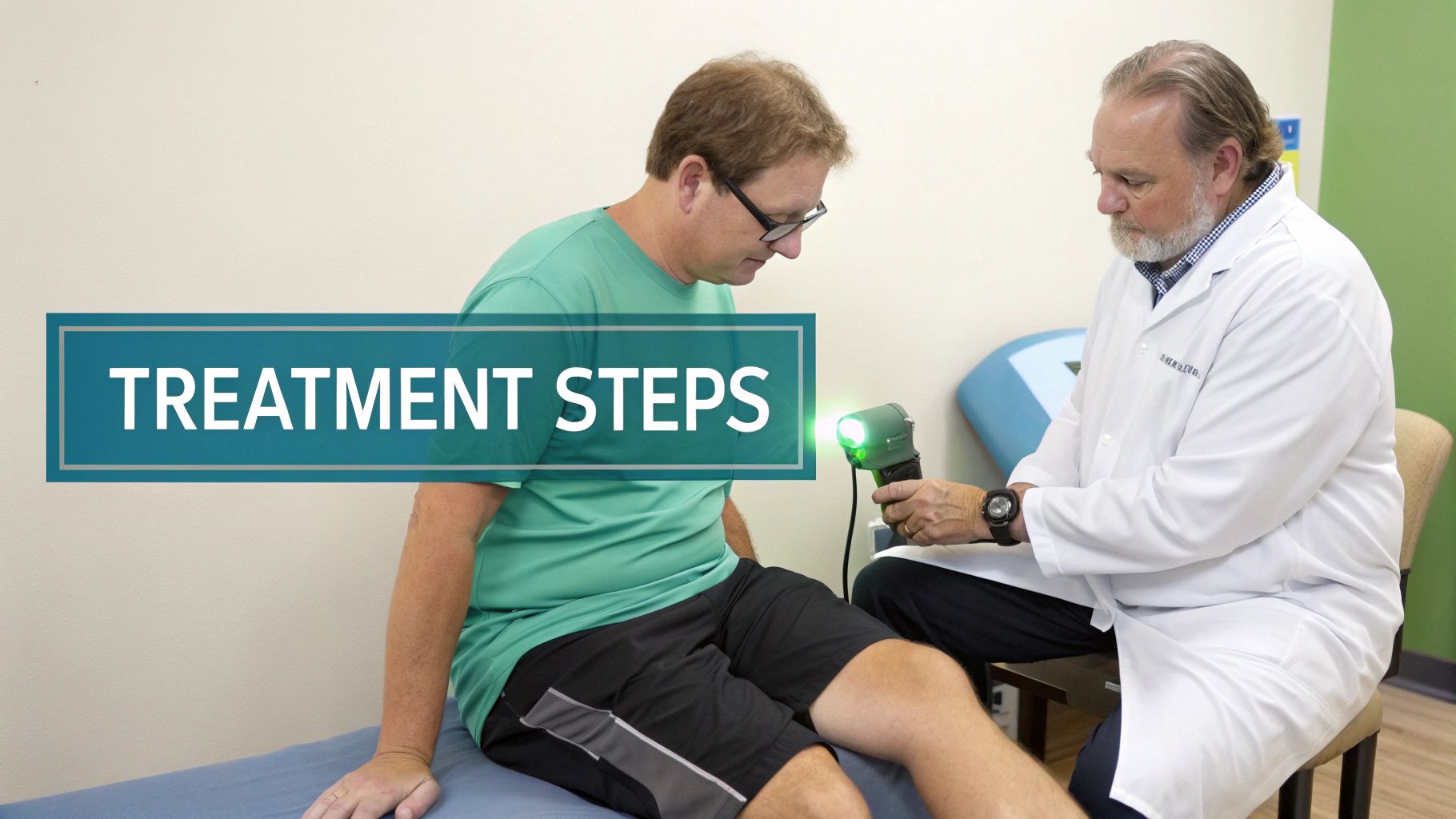
It’s completely normal to feel a bit curious or even nervous before trying a new treatment. We get it. That's why we want to walk you through exactly what a laser therapy for knee pain session looks and feels like, so you can walk in feeling confident and comfortable.
The whole process is designed to be calm, efficient, and honestly, pretty relaxing. You’ll be in a private room, and the treatment itself is completely painless. No needles, no discomfort—just focused healing.
We’ll start with a quick chat to see how you’re feeling and discuss any changes in your symptoms. Then, we'll get you settled comfortably, either sitting or lying down, to give us clear access to your knee.
Your practitioner will use a handheld device, moving it slowly and methodically over the areas where you feel pain and inflammation. As the laser does its work, most people feel a gentle, soothing warmth spreading through the tissue. It’s a pleasant sensation that tells you the light energy is getting deep into the cells to kickstart the healing process.
A typical session for knee pain is surprisingly quick, lasting only about 5 to 15 minutes. There’s absolutely no downtime, so you can get right back to your day immediately after you’re done.
This efficiency and effectiveness are big reasons why laser therapy is exploding in popularity for musculoskeletal pain. In fact, the global market was valued at USD 5.22 billion in 2024 and is projected to hit USD 7.95 billion by 2032. This isn’t just some passing trend; it's a response to a massive need, especially with conditions like osteoarthritis affecting over 500 million people worldwide who are looking for better, non-invasive solutions. You can dive deeper into the numbers with this in-depth analysis of the laser therapy market.
It’s important to understand how the healing journey unfolds. While the warmth during the session feels great and you might notice some immediate relief, the real magic happens at a cellular level over a series of treatments.
Think of it like tending to a garden. You don't see a plant grow stronger the second you water it, but with consistent care, it flourishes. Laser therapy is like that—it gives your cells the energy boost they need to repair and regenerate, and the results build with each session.
Here’s a general idea of what that looks like:
Many people report feeling a definite improvement after just a few visits. But finishing the entire recommended course is key to getting deep, lasting results and preventing the pain from creeping back in.
Once your session is over, you’re good to go—no major restrictions. In fact, you’ll likely walk out feeling a bit less stiff and with some welcome relief. To get the most out of every treatment, there are a few simple things you can do to support your body's healing process.
Post-Treatment Best Practices
By following these simple steps, you'll amplify the benefits of each session and get back to living with less pain, faster.
It's only natural to have questions when you're exploring a new treatment for your knee pain. You want to know what to expect and feel confident in your decision. We've gathered the most common questions we hear from patients right here, answered in plain English.
Let's clear up any uncertainties so you can feel good about your path forward.
This is usually the first thing people want to know, and the answer is a resounding yes, it's safe. Class IV laser therapy is an FDA-cleared treatment with a fantastic safety record, especially when it's done by a trained professional. Nothing pierces the skin, so it’s completely non-invasive.
As for how it feels? Not at all painful. In fact, most people find it quite relaxing. They typically describe the sensation as a gentle, soothing warmth spreading through the knee. It's a comfortable feeling that lets you know the light energy is getting deep into your tissues to kickstart the healing process.
There's no one-size-fits-all answer here, because your knee is unique. The right number of sessions really depends on your specific condition and whether it's acute (a brand-new injury) or chronic (something you've been dealing with for a while).
But to give you a general idea:
We'll figure out the best plan for you during your initial consultation. Typically, we'll see you two or three times a week to keep the healing momentum going.
The real magic is in consistency. Each treatment builds on the one before it, creating a cumulative healing effect right down at the cellular level. Following the plan is your best bet for getting the full, long-term benefits.
This is where things can get a little tricky. While the clinical evidence for laser therapy is strong and growing, insurance companies can be slow to catch up.
Right now, many insurance plans still classify laser therapy as an out-of-pocket expense. The good news is that this is starting to change as they see how effective it is at helping people avoid costly surgeries and long-term medications. We always tell our patients to check directly with their insurance provider to get the final word on their policy.
We don't want cost to be a barrier, so we offer flexible payment plans and treatment packages to make it manageable. Our team is happy to walk you through the options.
Everyone wants to know when they'll get relief, and understandably so. Many patients tell us they notice a reduction in pain and stiffness after just one session. That initial improvement happens because the laser immediately starts calming inflammation and easing pain signals.
But it’s important to see the bigger picture. The true, lasting benefits are cumulative. The real work—repairing damaged cells and restoring function—unfolds over a series of treatments. You can expect to feel more significant, durable changes after about 3-5 consistent sessions.
Think of it this way: the first session helps put out the "fire" of acute inflammation. The sessions that follow are all about rebuilding and strengthening the area so the pain doesn't come roaring back.
Ready to find out if you’re a candidate for this advanced, non-surgical treatment? At Bonesetters, we don’t just treat symptoms—we address the root cause of your pain to deliver lasting results. Schedule your consultation today and take the first step toward reclaiming a life free from knee pain. Learn more at https://bonesetters.org.