
If you've been searching for a way to get lasting relief from stubborn pain, electrical muscle stimulation might be the answer. It’s a powerful, non-surgical tool that modern chiropractors use to help your body heal from the inside out. In a nutshell, we use EMS to send gentle electrical pulses directly to your muscles, causing them to contract. This simple process can significantly reduce pain, calm down inflammation, and get you on the fast track to recovery.
Think of your body's muscular system as a complex orchestra. After an injury, some instruments (your muscles) start playing out of tune, leading to painful spasms and guarding. At the same time, other muscles can become quiet and weak because you're not using them. Electrical muscle stimulation (EMS) acts like the conductor, gently guiding this orchestra back into harmony. It helps retrain muscles that have forgotten how to work properly and calms down the ones that are overactive and causing you pain.
This guide will pull back the curtain on how electrical muscle stimulation chiropractic care really works. We'll break down the science behind it, explore the specific conditions it treats, and walk you through what to expect during a session. Our goal is to give you a clear, straightforward understanding of this therapy, showing how we move beyond temporary fixes to get to the root cause of your pain. By combining smart technology with proven chiropractic principles, we can help restore your body's function and promote true, long-term healing.
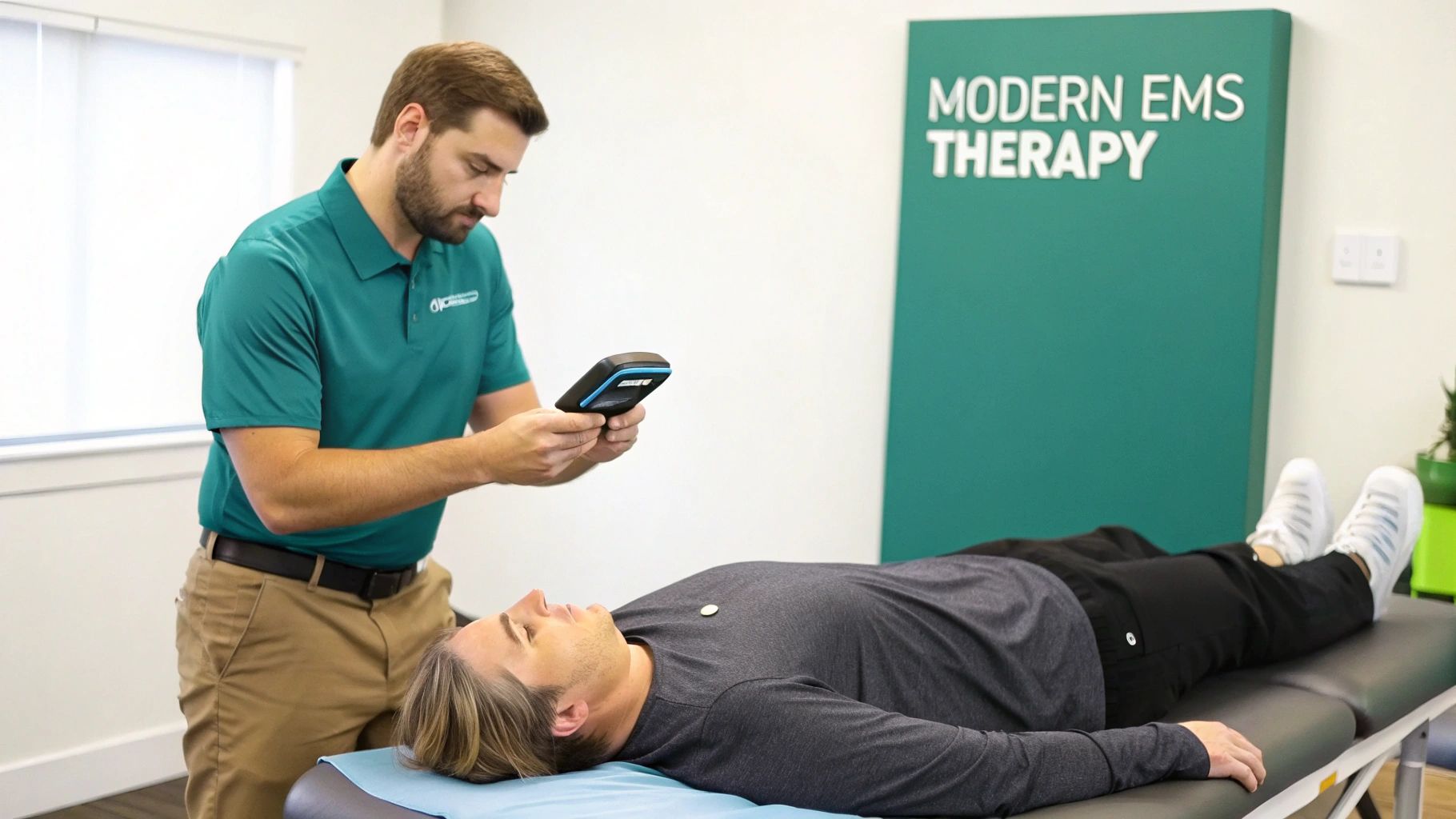
EMS therapy isn't just about masking symptoms; it’s an active player in your healing process. When we bring it into a modern chiropractic plan, it offers several key advantages that work together to speed up your recovery. It’s less of a standalone treatment and more of a foundational tool that makes everything else we do, like spinal adjustments, that much more effective.
The primary benefits you can expect include:
By combining targeted electrical muscle stimulation with precise chiropractic adjustments, we create an environment where the body can heal more efficiently. It's about relaxing the guarded tissues first so the foundational structural work can be more effective and lasting.
Here's a quick look at how these advantages come together to support your recovery.
| Benefit | How It Helps Your Recovery |
|---|---|
| Pain Relief | Triggers the release of natural pain-relieving endorphins and interrupts pain signals sent to the brain. |
| Reduced Inflammation | Improves circulation to flush out swelling and waste products from the injured area. |
| Muscle Re-education | Retrains weak or atrophied muscles to contract properly, restoring strength and stability. |
| Decreased Spasms | Helps relax chronically tight muscles that contribute to pain and limited mobility. |
As you can see, integrating EMS is a strategic approach designed to tackle pain and dysfunction from multiple angles, setting the stage for a more complete and resilient recovery.
To really get how electrical muscle stimulation works, let's first look at how your own body moves. When you think about lifting your arm, your brain doesn't just magically make it happen. It sends a tiny electrical current down your spinal cord, through a web of nerves, to the exact muscle fibers needed. This signal tells them to contract, and poof—you’ve moved. It's a lightning-fast process we never even think about.
Electrical muscle stimulation (EMS) basically taps into that same system. But instead of the signal starting in your brain, it comes from a specialized medical device. This gives your chiropractor the ability to zero in on specific muscles that are painful, locked in a spasm, or have gotten weak after an injury.
During an electrical muscle stimulation chiropractic session, we place soft, sticky pads—called electrodes—on the skin right over the muscle that's giving you trouble. The EMS unit then sends controlled, gentle electrical impulses through those pads. These pulses are designed to perfectly mimic the signals from your nervous system, causing the muscle to contract and then relax, over and over again.
This isn't just a random twitch, though. It’s a very precise therapeutic action. We carefully adjust the intensity, frequency, and timing of these contractions to match exactly what your body needs to start healing.
The whole idea behind EMS is to trigger a healing response that your body is struggling to achieve on its own, usually because of pain or injury. It’s a way to hit the reset button on the pain-spasm cycle, giving the muscle a chance to recover.
This cycle of contracting and relaxing does several incredibly important things all at once:
On top of the physical pumping action, EMS has a profound effect on your nervous system and how you perceive pain.
First, the impulses can actually block pain signals from reaching your brain. Think of it as creating some gentle "static" on the line between the sore spot and your brain. The mild tingling you feel from the EMS device essentially drowns out the pain message, which is why you often feel relief almost immediately.
Second—and this is the really powerful part—the stimulation encourages your body to release its own natural painkillers, called endorphins. These are chemicals that act a lot like morphine, giving you a sense of relief and well-being that can last long after the treatment is over. You can find a more detailed look into what e-stim therapy is and how it functions.
Finally, EMS is a game-changer for "re-educating" muscles. After an injury or surgery, it’s common for muscles to become weak or shut down, a condition called muscle atrophy. The nerve pathways that fire those muscles get rusty, making it tough to build back strength.
EMS creates a perfect muscle contraction without putting any strain on a sensitive joint or healing tissue. This passive work helps re-establish that crucial mind-muscle connection, essentially reminding the nerves and muscles how to talk to each other again. It wakes up dormant muscles and starts rebuilding their strength, laying the groundwork for a full recovery and helping prevent the same injury from happening again.
Electrical Muscle Stimulation is a fantastic tool, but it truly shines when it’s part of a bigger game plan. Think of it as the perfect opening act at a concert—it gets the crowd warmed up and ready for the main event.
Here at Bonesetters, we never use EMS as a standalone solution. Instead, we weave it into a comprehensive chiropractic plan where it works in concert with other treatments. This approach helps accelerate your healing and makes every other part of your care more effective.
The real goal is synergy. By layering different therapies in a specific sequence, we can tackle your condition from all sides. We relax tight muscles, correct underlying joint misalignments, and then retrain the area for better strength and stability. It's about fixing the root cause, not just chasing symptoms.
One of the best uses for electrical muscle stimulation chiropractic care is prepping your body for a spinal adjustment. If your muscles are knotted up in a tight, protective spasm, they'll instinctively fight against the adjustment. This can make the process less comfortable and, frankly, less effective.
It’s like trying to straighten a gate with rusty, frozen hinges. You have to force it, and the results probably won't last.
EMS solves this problem beautifully. We apply gentle electrical currents to those guarded muscles, coaxing them to let go of their tension. This simple step calms the nervous system and makes the surrounding tissue more pliable. When it's time for the adjustment, your body is relaxed and receptive, allowing for a much more precise and gentle alignment. To see why this preparation is so vital, you can learn more about how chiropractic adjustments work.
Modern chiropractic care is much more than just adjustments. At our clinic, we pair EMS with other state-of-the-art therapies to create a powerful healing environment tailored to your specific needs.
Here are a few ways we build a synergistic treatment plan:
This chart shows how an external signal from EMS kicks off a biological response that leads directly to relief.
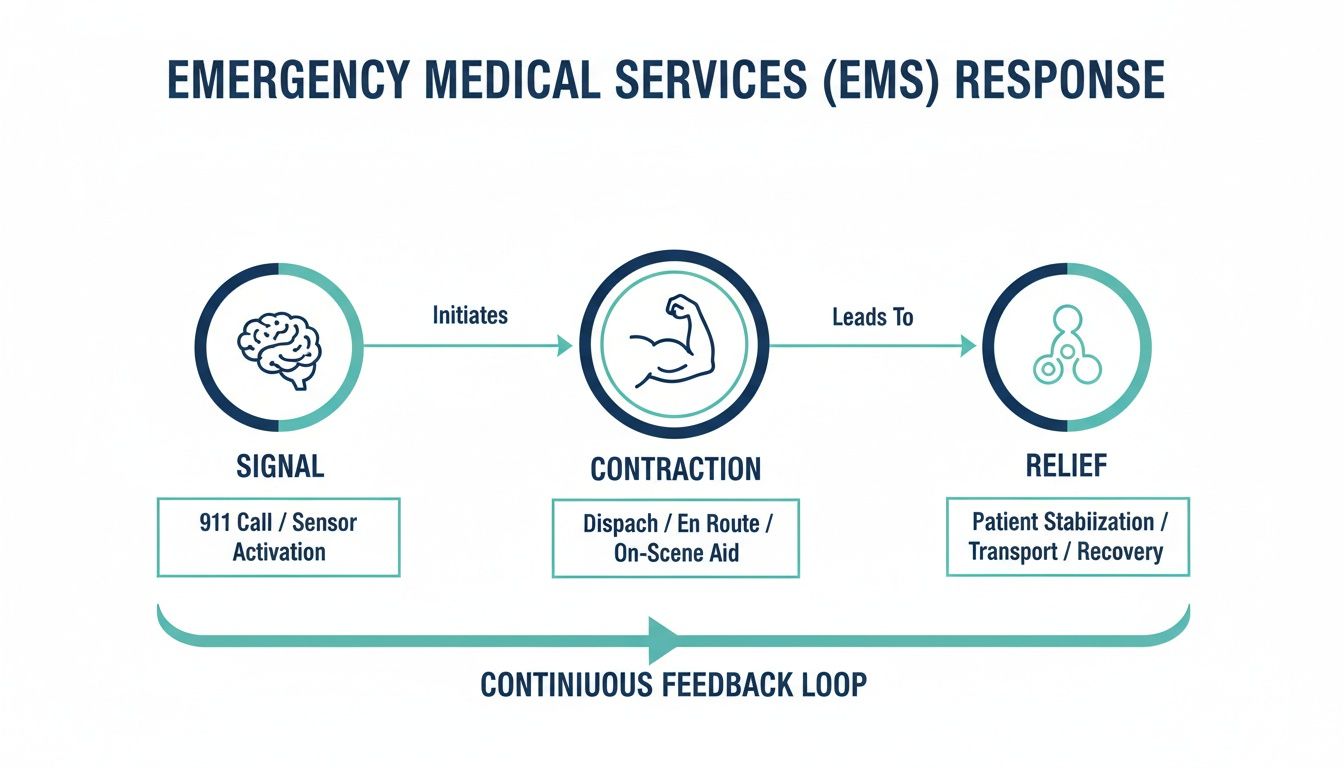
The image breaks down a simple yet powerful chain reaction: an external signal prompts a muscle contraction, which in turn flips the switch on the body's own pain-relief systems.
Not all electrical stimulation is the same. For really stubborn and complex issues like peripheral neuropathy, we bring out a more advanced technology called Horizontal Stimulation Therapy.
Traditional EMS sends current in just one direction. Horizontal Therapy, on the other hand, uses two different medium-frequency currents at the same time, which intersect deep inside the targeted tissue.
Horizontal Therapy creates a bioelectrical field right at the cellular level. This enhances metabolic activity and helps repair damaged nerve fibers and tissues in a way that conventional EMS cannot, making it a cornerstone of our neuropathy treatment protocols.
This deeper penetration and cellular-level effect are what make it a game-changer for conditions involving nerve damage or poor microcirculation. It helps improve nerve signaling, reduce numbness and tingling, and promote real healing in tissues that other therapies simply can't reach. By having these specialized tools in our arsenal, we can design personalized plans that deliver real, lasting results for even the most challenging cases.
Theory is great, but when you're in pain, the only thing that matters is getting real results. The power of electrical muscle stimulation chiropractic care really shines when we apply it to those stubborn, persistent conditions that can completely derail your life. This isn't about just masking the pain for a few hours; it's about creating the right conditions in your body to genuinely heal and get you moving again.

This therapy is so effective because it directly targets the roadblocks preventing your body from healing itself. By zeroing in on specific muscle groups and nerve pathways, we can break those vicious cycles of pain and inflammation, paving the way for lasting recovery.
Anyone who’s had sciatica knows that sharp, radiating pain that shoots from your lower back down your leg. A common culprit is a tight, spasming piriformis muscle—a small but mighty muscle buried deep in your glutes. When it tightens up, it can literally clamp down on the sciatic nerve, triggering that agonizing pain.
This is where EMS becomes a game-changer. We place electrode pads right over the piriformis muscle and send in gentle electrical pulses that do two critical things:
By calming down this one key muscle, we can often relieve sciatica symptoms right at the source. For related issues like herniated discs, you can learn more about our other approaches in our guide to non-surgical disc herniation treatment.
Chronic low back pain often gets stuck in a frustrating "pain-spasm" loop. It starts with an injury, and your muscles instinctively tighten up to protect the area. But that constant tension cuts off blood flow, leading to more inflammation and pain... which, you guessed it, makes the muscles spasm even more.
Electrical muscle stimulation directly interrupts this destructive cycle. It works by artificially fatiguing those spasming muscles until they have no choice but to relax. At the same time, it prompts your body to release endorphins—your own natural painkillers—giving you immediate relief and calming the whole nervous system down.
This one-two punch allows us to get the overactive muscles to stand down and reduce pain, creating the perfect window for chiropractic adjustments and other therapies to do their work.
Peripheral neuropathy is a condition involving damage to the nerves outside your brain and spinal cord. It often leads to weakness, numbness, and that awful burning pain, usually in the hands and feet. A huge part of the problem is poor microcirculation, meaning the blood flow in your tiniest vessels is compromised. Damaged nerves are being starved of the oxygen and nutrients they desperately need.
This is where advanced forms of electrical muscle stimulation, like the Horizontal Therapy we use, come in. This therapy goes deeper than standard EMS to stimulate your tissues right down at the cellular level. It works to improve that crucial microcirculation, getting vital nutrients to the damaged nerve endings. This process can help re-establish nerve signals, reduce painful symptoms, and bring back feeling over time.
And the science backs this up. A major 2023 meta-analysis looked at 381 different trials and found that electrical stimulation had a statistically significant positive effect on pain compared to both placebos and standard care like medication. This held true for all different kinds of pain, confirming just how versatile and valuable this therapy is.
Walking into a new kind of therapy appointment can feel a little intimidating if you don't know what's coming. Let's walk through exactly what an electrical muscle stimulation chiropractic session feels like so you can feel completely at ease. The whole experience is designed to be comfortable, controlled, and a genuinely relaxing part of your recovery.
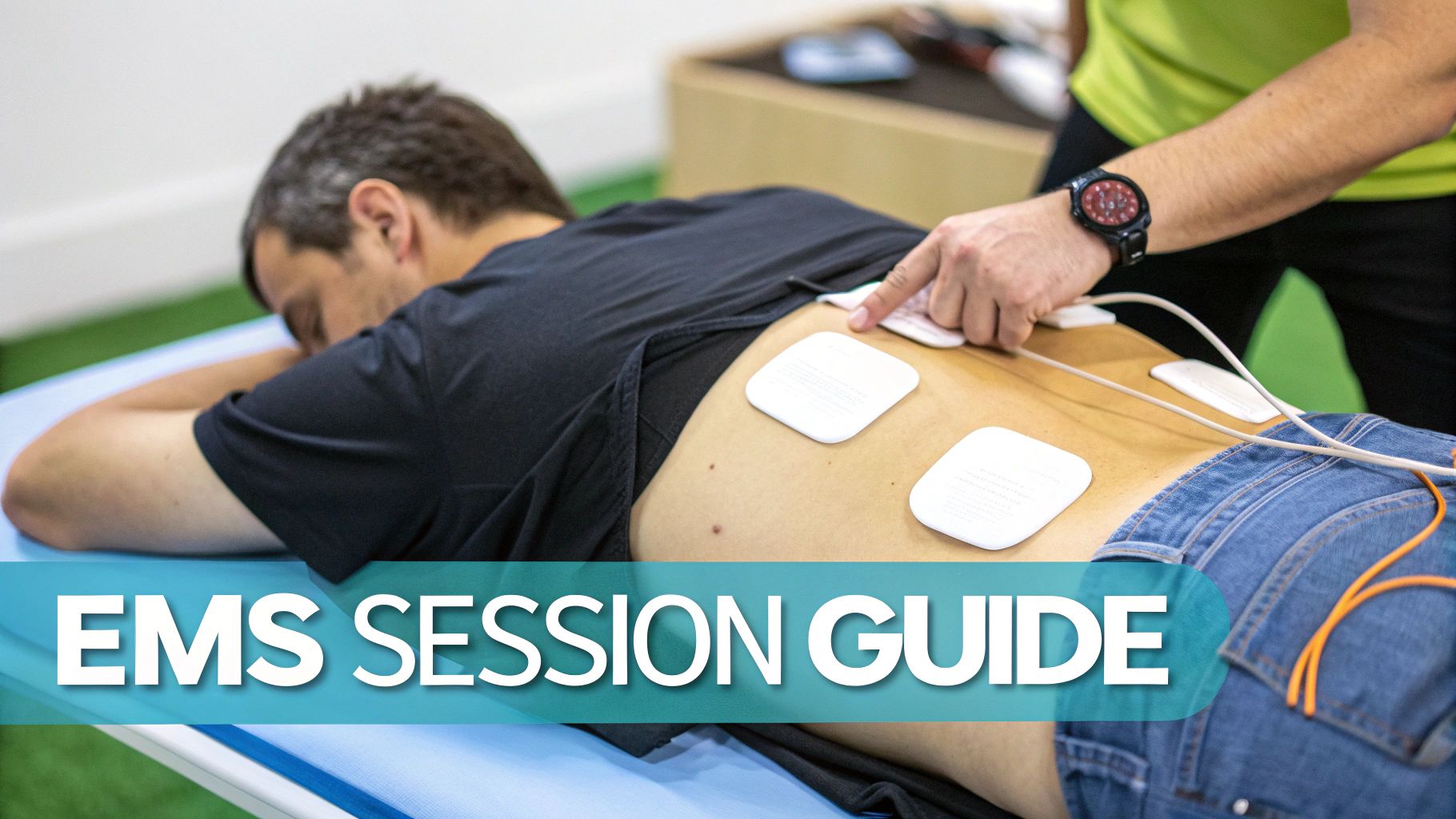
From the moment we start to the moment we finish, you are in complete control. Our goal is to find that sweet spot where the sensation is therapeutic and brings relief, not discomfort.
First things first, your chiropractor will do a quick assessment to pinpoint the exact muscles that are causing your pain or are stuck in a cycle of tightness. This step is key—it ensures we're targeting the therapy right where your body needs it the most.
After we’ve mapped out the target areas, we’ll place soft, sticky electrode pads directly on your skin over those muscles. These pads are hooked up to the EMS machine, which your chiropractor operates. The whole setup takes just a minute and is totally non-invasive.
When the therapy starts, your chiropractor will gradually turn up the intensity. You won’t feel a sudden shock or jolt. Instead, patients usually describe the feeling in a few common ways:
We’ll find a level that creates a noticeable but comfortable muscle contraction. It should feel productive, almost like the muscle is doing the work for you, but never painful. We'll be checking in with you the entire time to make sure you're comfortable.
The most important thing to remember is that you are always in the driver's seat. Your feedback guides the entire treatment. If a sensation ever feels too strong, we can dial it back instantly to find that perfect therapeutic level.
A typical EMS session is fairly short, usually lasting between 10 to 20 minutes. The exact time depends on your specific condition and overall treatment plan. We often use it right before a chiropractic adjustment because it helps relax the surrounding muscles, making the alignment smoother and more effective.
Once the session is over, we'll remove the pads, and you're good to go. Most people notice an immediate sense of relief—less pain and a feeling of lightness in the area we treated. You might have a faint tingling sensation left over, much like the feeling after a good stretch, but it fades quickly. It's a simple, soothing, and incredibly effective step on your path back to feeling great.
We've covered a lot of ground on how electrical muscle stimulation works within a chiropractic setting. It’s not just about temporary relief; it's a safe, research-backed method that gets to the heart of your pain, helping your body rebuild and heal from the inside out. This is all about restoring your body's own incredible ability to recover.
If you're tired of being held back by pain and are looking for a non-surgical solution that actually works, the next move is to come in for a comprehensive consultation. Think of it less as an appointment and more as the first real step toward getting your life back.
During your first visit, we'll sit down and really dig into your health history and what you're experiencing. This detailed assessment is crucial—it tells us whether you’re a good candidate for this type of care and gives us the information we need to build a treatment plan that’s tailored specifically for you.
A solid diagnosis is everything. Our first priority is to pinpoint exactly what's causing your pain. From there, we can map out a targeted, effective plan to fix it.
Your plan will likely involve more than just electrical muscle stimulation. We often combine it with other advanced therapies to create a powerful healing synergy. The goals are always clear and simple:
Taking action is a choice to stop managing pain and start overcoming it. It's an investment in yourself and in a future where you're back in control. Scheduling your consultation is how that journey begins.
It's completely normal to have questions when you're considering a new type of therapy. Being well-informed is the first step toward feeling confident in your treatment. We've compiled the questions we hear most often about electrical muscle stimulation in our chiropractic practice to give you clear, straightforward answers.
Not at all. In fact, one of the ground rules of this therapy is that it must be comfortable. Most people describe the feeling as a gentle tingle, a rhythmic pulse, or a deep buzzing as their muscles engage and release. It's a strange but productive sensation, never a painful one.
We have complete control over the intensity. The whole point is to find that sweet spot where the muscle contraction is strong enough to be effective but still well within your comfort zone. We'll talk with you throughout the session, adjusting the levels to make sure the experience is both relaxing and doing its job.
This is a fantastic and crucial question. While they both use electricity, their goals are worlds apart. It’s like comparing a garden hose to a pressure washer—both use water, but for completely different purposes.
A TENS (Transcutaneous Electrical Nerve Stimulation) unit you can buy at a drugstore is designed for one thing: to mask pain. It sends signals that distract your nerves, essentially scrambling the pain messages before they can get to your brain. It's a clever sensory trick, but it’s temporary.
Professional EMS, however, is built to create deep, therapeutic muscle contractions. This isn't about masking pain; it's about fixing the problem that's causing it. This process:
Plus, the professional machines we use are significantly more powerful and precise than anything available over-the-counter, allowing us to target tissues much more deeply and effectively.
There's no single answer here, as every person and every condition is unique. How many sessions you'll need depends on what we're treating, how severe it is, and how long you've been dealing with the issue. For a recent, acute injury, some people feel a world of difference after just one or two sessions.
For more stubborn, chronic problems like peripheral neuropathy or a disc injury that's been bothering you for years, EMS is a key part of a larger plan. True, lasting healing doesn't happen overnight.
When you come in for your initial consultation, we'll map out a personalized care plan just for you. This roadmap will give you a clear idea of the recommended frequency and duration of treatments, so you'll know exactly what to expect on your recovery journey.
EMS is incredibly safe for most people, but there are a few situations where it isn't the right choice. That's why we always start with a thorough health history before beginning any new treatment—to make sure it's a safe and smart option for you.
Generally, we don't recommend EMS for individuals with:
We also steer clear of placing the pads over any open wounds, active infections, or areas with known cancerous lesions. For pregnant women, we avoid using EMS over the abdomen and lower back. Your safety is always our number one priority, and we take every precaution to ensure your treatment is both secure and effective.
Ready to find out if this powerful, non-invasive therapy can offer the relief you've been looking for? At Bonesetters, we blend advanced technology with hands-on expertise to get to the root cause of your pain. Schedule your comprehensive consultation today and take the first real step toward getting back to your life.