

A natural approach to diabetic neuropathy isn't about just quieting the symptoms. It’s about getting to the very source of the problem—repairing the nerve damage by controlling blood sugar, supplying the specific nutrients nerves need to rebuild, and using advanced, non-invasive therapies to speed up the healing process.
The entire goal is to stop masking the pain, tingling, and numbness and start addressing the reasons they're happening in the first place.

To really understand how you can heal from diabetic neuropathy, you first have to get a clear picture of what’s going on inside your body, without all the confusing medical jargon. The easiest way to think about it is to imagine your nerves as the body's complex electrical wiring system.
This network sends countless signals every single second. It carries messages from your brain down to your toes telling them to move, and from your skin back up to your brain to signal if something is hot, cold, or sharp. It's a brilliant communication network that lets you feel and interact with the world around you.
Now, when you have diabetes, persistently high blood sugar acts like a constant power surge flooding this delicate wiring. Just like a real electrical surge can fry sensitive electronics, excess sugar in the bloodstream is toxic to your nerve fibers.
Over time, this "sugar surge" starts to corrode the protective coating around your nerves (called the myelin sheath) and damages the nerve fibers themselves. This makes the signals go haywire—they might misfire, get crossed, or just stop being sent at all. This is the real root of everything you're feeling.
That relentless tingling, numbness, and burning pain of diabetic peripheral neuropathy (DPN) isn't some rare side effect. It strikes about 50% of all diabetes mellitus patients worldwide, making it one of the most common complications of the disease.
When your nerves can't send clear signals anymore, your body's communication system starts to break down. This chaos leads directly to the confusing and often painful sensations of neuropathy:
This is far more than a minor inconvenience. The impact of painful diabetic neuropathy is massive, affecting 10-20% of all people with diabetes and a shocking 40-50% of those already diagnosed with neuropathy. It can severely disrupt sleep, mobility, and your overall quality of life.
Thinking of neuropathy as a "wiring problem" is incredibly empowering. It shifts the condition from some mysterious, irreversible sentence to a physical problem that you can actually address. By shutting off the power surge (controlling your blood sugar) and giving your body the right tools to repair the wires (targeted natural treatments), you can create the environment for real healing to finally begin.

While we can talk about targeted supplements and advanced therapies all day, they’re only truly effective when built on one non-negotiable foundation: stabilizing your blood sugar. This is, without a doubt, the single most critical step in any natural treatment plan for diabetic neuropathy.
Think of it this way: you wouldn't start rewiring a house while a power surge is still frying the circuits. You have to shut off the damaging current first. Gaining control over your glucose levels does just that—it stops the ongoing assault on your nerves, creating the stable environment they desperately need to begin healing.
Without this crucial first step, any other treatment is just fighting an uphill battle. The good news is that this is where your power lies, and it all comes down to three actionable pillars: diet, exercise, and weight management.
The food on your plate can either fuel the fire of inflammation and nerve damage or provide the essential building blocks for repair. The entire goal is to choose foods that nourish your body without causing the dramatic glucose spikes that are so toxic to delicate nerve fibers.
This is where a low-glycemic, anti-inflammatory diet becomes your first line of defense. It’s all about focusing on whole, unprocessed foods that your body can manage easily. This isn't about deprivation; it's about making smart, strategic swaps that support nerve health and give you stable energy all day long.
Your plate should be built around:
By making these foods the stars of your meals, you directly reduce the inflammatory burden on your body, giving your nerves a real fighting chance to recover.
Exercise is so much more than just burning calories. It’s one of the most powerful tools we have for improving how the body uses insulin. When you get your muscles moving, they become more sensitive to insulin, meaning your body needs less of it to shuttle glucose out of your bloodstream and into your cells for energy.
This improved insulin sensitivity naturally helps lower your blood sugar levels. What's more, consistent movement boosts circulation, delivering vital oxygen and nutrients to those nerve endings in your hands and feet that are often starved of good blood flow.
The key here isn't to run a marathon. In fact, gentle, consistent activity is far more beneficial for nerve health. Even just 20-30 minutes of brisk walking most days of the week can make a significant difference in your glycemic control and nerve function.
Consider trying activities like:
These low-impact options are safe for most people dealing with neuropathy. They’re highly effective at enhancing blood flow and lowering glucose without putting excessive strain on sensitive joints.
Carrying extra weight, particularly around your midsection, is a major contributor to insulin resistance and systemic inflammation—two of the primary drivers of nerve damage. By achieving and maintaining a healthy weight, you can dramatically reduce this burden on your system.
Here's the encouraging part: you don't have to lose a ton of weight to see results. Losing as little as 5-10% of your body weight can lead to significant improvements in blood sugar control and may even slow the progression of neuropathy.
This weight loss helps cool down the chronic inflammation that irritates nerves. It also eases the physical pressure on the nerves in your lower back and legs, which can directly contribute to your symptoms. When you combine a nutrient-dense diet with regular, gentle exercise, you create a powerful synergy that makes weight management far more achievable and sustainable. It’s the foundational strategy that supports every other part of your plan, paving the way for lasting relief and true nerve repair.

Once you’ve started to get your blood sugar on a more even keel, the next step is to give your body the specific raw materials it needs to start the repair process. Think of it like this: stabilizing blood sugar stops the ongoing damage, but these nutrients are the specialized crew that comes in to actually fix the frayed wiring.
We’re not talking about a random multivitamin here. These are compounds with solid clinical evidence behind them for their roles in protecting, rebuilding, and improving the function of your nerves. Adding them to your routine can be a game-changer, but it’s absolutely critical to work with a healthcare professional who understands them. Self-prescribing can be a waste of money at best and risky at worst, so getting the right forms and dosages for you is key.
If there's one supplement that consistently rises to the top in neuropathy research, it's Alpha-Lipoic Acid (ALA). This stuff is a true powerhouse. What makes it so unique is that it works in both water and fat environments in the body, which means it can get inside virtually every cell—including your delicate nerve cells—to do its job.
Its main function is to fight oxidative stress. High blood sugar creates a storm of free radicals that essentially cause your nerves to "rust" from the inside out. ALA is one of the best nutrients for neutralizing this cellular corrosion, shielding nerves from further damage.
But it does more than just play defense. Studies have shown ALA can actually improve blood flow to the nerves and even help your body use glucose better. For many people, this translates into a real, noticeable reduction in the burning, pain, and numbness that makes neuropathy so miserable.
While ALA acts as the protective shield, B vitamins are the actual bricks and mortar for nerve repair. Your entire nervous system is incredibly dependent on this family of vitamins to maintain its structure and transmit signals properly.
Three B vitamins stand out as particularly crucial for nerve health:
These vitamins don't work in isolation; they're a team. A shortfall in one can throw the whole system off balance. This is why a high-quality B-complex supplement is often a cornerstone of natural nerve support, and it's a key strategy we cover in our guide on reversing peripheral neuropathy naturally.
For a clearer picture of how these and other key supplements can fit into a plan, the table below provides a helpful summary.
This table outlines some of the most studied natural compounds, what they do for your nerves, and the typical dosages seen in research. Remember, this is for informational purposes—always consult your doctor before starting any new supplement.
| Supplement | How It Helps Nerve Health | Common Dosage Range |
|---|---|---|
| Alpha-Lipoic Acid (ALA) | Acts as a powerful antioxidant, protecting nerves from oxidative damage and improving blood flow. | 300-600 mg per day |
| B-Complex (B1, B6, B12) | Supports myelin sheath integrity, neurotransmitter production, and nerve cell energy metabolism. | Varies; look for a balanced complex with active forms. |
| Acetyl-L-Carnitine (ALCAR) | Helps produce energy within nerve cells and may aid in regenerating nerve fibers. | 1,000-2,000 mg per day |
| Vitamin D | Reduces chronic inflammation, creating a better environment for nerve healing and function. | 2,000-5,000 IU per day (based on blood levels) |
It's crucial to see these supplements not as individual "magic pills," but as part of a coordinated effort to provide your body with everything it needs to heal.
Acetyl-L-Carnitine (ALCAR) is another fascinating nutrient that gets right to the heart of nerve cell energy. You can think of it as a specialized shuttle service, carrying fuel (fatty acids) into the mitochondria, which are the tiny power plants inside your nerve cells.
When high blood sugar damages nerves, their ability to produce energy plummets. ALCAR helps get the power back on, giving these cells the fuel they desperately need to begin repairing themselves.
What’s really exciting is that some research suggests ALCAR doesn't just reduce pain—it may actually help regenerate damaged nerve fibers over time. This makes it a critical tool for anyone looking for true functional recovery, not just symptom management.
We usually hear about Vitamin D in the context of strong bones, but it's also a master regulator of the immune system and a potent anti-inflammatory agent. This is incredibly important because chronic, low-grade inflammation is a major driver of pain and damage in diabetic neuropathy.
By ensuring your Vitamin D levels are optimal, you can help quiet this inflammatory storm, creating a calmer internal environment where your nerves can actually begin to heal. Since so many people with diabetes are deficient in this critical vitamin, getting your levels checked and supplementing under a doctor's care is a simple but powerful step.
The scale of this problem is immense; diabetic neuropathy affects up to 50% of diabetes patients globally. Even with good glucose control, many still suffer. One study from Saudi Arabia found a 44.1% prevalence of neuropathy, and of those patients, a staggering 73.1% reported a low quality of life—a risk that neuropathy increases by nearly four times. This is why an approach that goes beyond just blood sugar is so essential.
By layering these strategic nutrients on top of your foundational lifestyle changes, you give your body a powerful toolkit to fight back against nerve damage and reclaim your quality of life.
When diet and supplements aren't enough, we can bring in some powerful, non-invasive therapies to really accelerate healing. These aren't just about masking symptoms; they work on a cellular level to calm down pain signals, fight inflammation, and actually help repair the nerves themselves.
Think of it this way: your diet and supplements are the raw materials—the lumber and nails—for rebuilding damaged nerves. These advanced therapies are like the skilled construction crew with the power tools, making the entire repair process faster and far more efficient. They represent a real, evidence-based path forward for recovering function and finding relief.
One of the most exciting tools we have for nerve regeneration is Class IV Cold Laser Therapy. This might sound like something out of a sci-fi movie, but it's a well-researched medical treatment that uses specific wavelengths of light to get deep into damaged tissues, right where the hurt nerves are.
Imagine your damaged nerve cells are like tiny factories that have lost power. The light from the laser acts like a jump-start, delivering a specific form of energy (ATP) directly to the mitochondria, which are the powerhouses inside every cell. This jolt of energy wakes them up, reduces the inflammation that's strangling them, and kick-starts their natural repair processes.
The results are twofold:
For many, this therapy becomes a cornerstone of their recovery because it directly addresses the cellular breakdown that causes neuropathy in the first place. We've got a much deeper explanation of the science behind Class IV Cold Laser Therapy on our site if you want to learn more.
Another fantastic approach involves essentially retraining your nerves to stop screaming in pain. Therapies like Horizontal Therapy and other forms of electrical stimulation use very gentle electrical currents to speak to your nervous system in a language it understands.
This isn't a painful shock at all. The specific frequencies used can do a couple of things at once. First, they can scramble the pain signals traveling up from your hands and feet, giving you immediate relief. It’s a bit like turning up static to drown out an annoying radio station.
But more importantly, this kind of stimulation prompts your body to release its own natural painkillers, like endorphins. It’s a way of teaching your system to manage pain from the inside, which can reduce the need for medication. Over time, this helps re-educate those nerve pathways to function more normally.
Finally, we can't ignore the superhighway that connects your brain to your hands and feet: your spine. If there's a roadblock on that highway—like a compressed disc or a misaligned vertebra—the signals just can't get through clearly.
Spinal decompression is a gentle, non-surgical therapy that works to clear those roadblocks. Using a specialized table, it carefully stretches the spine to create a negative pressure inside the discs. This can help pull back bulging discs that are pinching major nerve roots, restoring the vital flow of communication to your limbs.
Many people with diabetic neuropathy also have underlying spinal issues that make their symptoms much worse. By opening up these critical nerve pathways, we ensure that the healing signals, nutrients, and oxygen-rich blood can actually get down to the damaged nerves in the feet and hands. This makes every other treatment you're doing that much more effective.
Taking back control from diabetic neuropathy isn’t about finding one magic bullet. It’s about building a smart, layered plan that tackles the problem from every possible angle. This is where we pull all the pieces together into a practical framework you can start using right away.
Think of it like building a house. You can’t put up walls and a roof before you’ve poured a solid foundation. In the same way, you can't expect supplements or advanced therapies to do much good if the root cause of the damage—high blood sugar—is still raging. To get real results, your plan has to be built in a logical order, with each step supporting the next.
This approach puts you in the driver's seat. You’ll move from just managing symptoms to actively rebuilding your nerve health from the ground up.
The first and most critical step is always the same: stabilize your blood sugar. We've already seen how high glucose acts like a power surge, frying your delicate nerve endings. Everything else you do is a waste of time and money if this foundational issue isn't managed with total consistency.
Your first job is to get laser-focused on:
Mastering these habits is the non-negotiable price of admission for nerve repair. It’s what stops the damage in its tracks and creates the right internal environment for healing to finally begin.
Next, you need to find the right guide for your journey. Trying to self-diagnose and piece together a treatment plan from the internet is a recipe for frustration and can even be unsafe. A practitioner who truly understands neuropathy can give you an accurate diagnosis, confirming the cause of your symptoms and ruling out any other culprits.
A personalized plan isn't a luxury; it's a necessity. An expert can tailor recommendations—from the right supplement dosages to specific therapy protocols—to your body's unique situation. This ensures safety and dramatically increases your odds of success.
This professional guidance is what turns a collection of good ideas into a powerful, targeted strategy. Think of them as your co-pilot, helping you navigate the complexities of your condition and make smart, informed decisions about your care.
Once your foundational lifestyle is solid and you're working with a professional, it's time to layer in additional support. This is where targeted nutrients and advanced therapies come in. They act as powerful accelerators, giving your body's natural healing processes a serious boost.
The process often follows a clear progression, stimulating nerve healing from multiple directions at once. This multi-pronged approach is key to getting the best results.
This diagram shows how different therapies can be combined into a comprehensive nerve healing protocol.
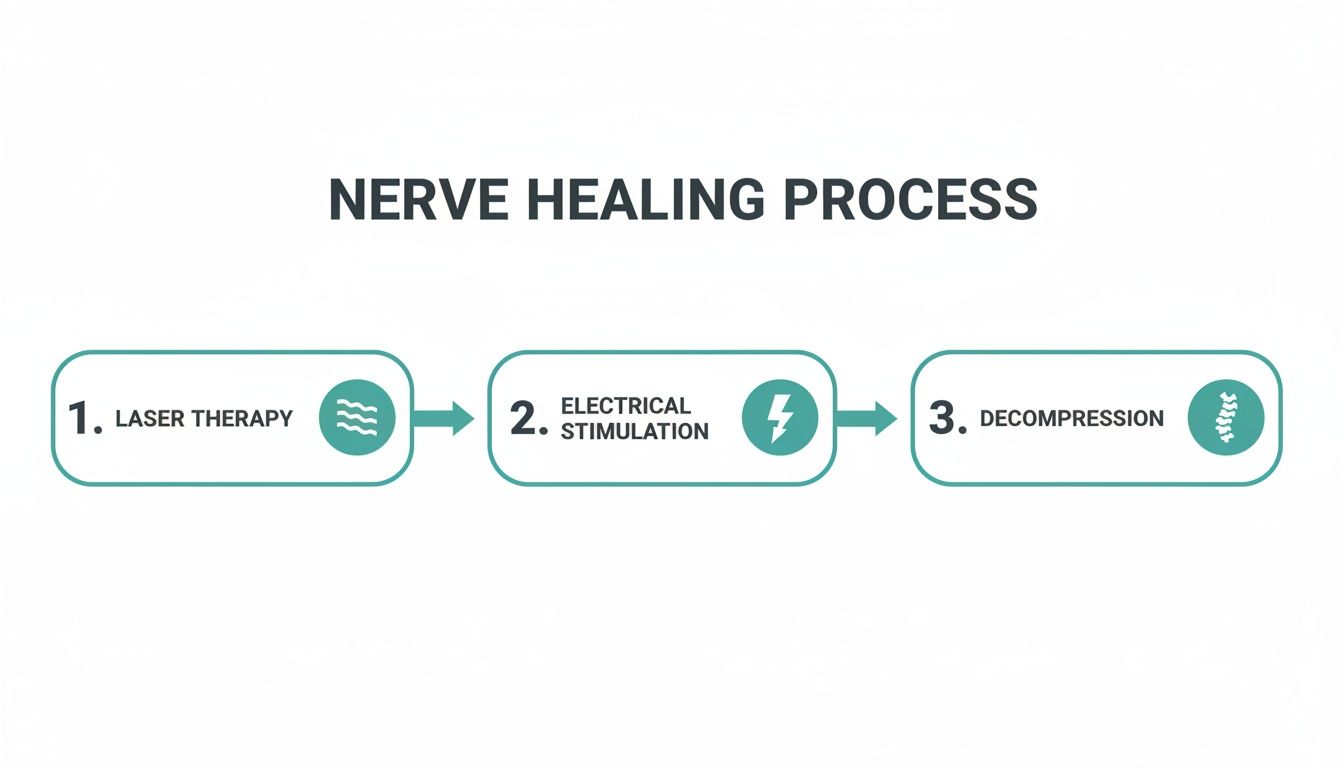
By combining therapies like laser, electrical stimulation, and decompression, a plan can address cellular energy, pain signals, and physical nerve pathway blockages all at the same time.
Your practitioner might recommend a combination of supports, including:
Finally, a successful plan is a living, breathing thing. It needs to be monitored and adjusted along the way. One of the easiest ways to do this is by keeping a simple symptom journal. Every day, just take a moment to rate your pain, tingling, or numbness on a scale of 1 to 10.
This simple habit gives you and your practitioner real-world data on what’s working. Are your symptoms getting better after starting a new supplement? Is the pain less frequent after a few laser treatments? This feedback is priceless for fine-tuning your plan and keeping you motivated.
Remember, progress isn't always a straight line—it often comes in waves. Tracking your journey helps you see the bigger picture and empowers you to stay the course toward lasting relief.
Starting any new health plan raises a lot of questions. When you’re dealing with something as persistent as diabetic neuropathy, you want to be sure you’re on the right track. Let's walk through some of the most common questions we hear from patients, so you can move forward with confidence and a clear picture of what the healing process really looks like.
This is usually the first thing people want to know, and the honest answer is: it’s different for everyone. How long you’ve had neuropathy, the extent of the nerve damage, and—most importantly—how consistent you are with your plan all play a huge role. True nerve repair is a marathon, not a sprint.
That said, progress tends to happen in stages.
The most important thing is to shift your mindset. You're not looking for a quick fix; you're committing to a long-term healing strategy. Progress won't always be a straight line, which is why keeping a simple symptom journal can be so powerful. It helps you see the gradual, positive trend over time.
Absolutely. In fact, for many people, an integrative approach is the best path forward. Natural treatments can work alongside prescription medications like gabapentin or pregabalin. Think of it this way: the medications help manage the most severe symptoms right now, while the natural therapies get to work on addressing the root cause of the problem.
But this isn't something to try on your own. It must be done with careful supervision from your healthcare providers.
Certain supplements can interact with medications or change how your body responds to them. For example, ALA is known to improve insulin sensitivity. While that’s a fantastic outcome, it might mean your doctor needs to adjust your diabetes medication to prevent your blood sugar from dropping too low (hypoglycemia).
Keep an open line of communication between all of your doctors. Your prescribing physician has to know about every supplement and therapy you’re using. This ensures your entire plan is safe, coordinated, and working together for your benefit, without any risky interactions. Never change your medication dose without their direct guidance.
The word "natural" can be a bit misleading. While the nutrients and therapies in this guide have a strong safety profile when used correctly, "natural" doesn't automatically mean "harmless." Real safety comes from professional guidance and a plan built specifically for you.
Here’s what you need to keep in mind:
The single best way to ensure your plan is both safe and effective is to work with an experienced clinic that truly understands the complexities of diabetic neuropathy.
If there's one piece of advice you take away from this entire guide, let it be this: the single most important, non-negotiable first step is to get strict, consistent control of your blood sugar levels.
Everything else is built on this foundation.
High blood sugar is the toxic "power surge" that fries your nerve endings and causes the damage in the first place. Trying to heal with supplements while your glucose is still out of control is like trying to patch a roof in the middle of a hurricane. You're fighting an overwhelming force.
But once you calm that storm by stabilizing your blood sugar through diet and lifestyle, every other treatment becomes exponentially more effective. You finally stop the assault on your nerves and create the environment your body needs to begin the slow but rewarding work of repair.
At Bonesetters Critical Chiropractic, we specialize in creating personalized, evidence-based recovery plans that address the root causes of diabetic neuropathy. If you're ready to move beyond symptom management and start a real healing journey with advanced, non-invasive therapies, we are here to help. Explore our comprehensive approach to nerve health and schedule your consultation at https://bonesetters.org.