
When you're trapped in a cycle of chronic pain, it's easy to feel like you've tried everything. Most treatments just seem to put a temporary band-aid on the problem, masking the symptoms without ever getting to the real issue. Cold laser therapy for pain relief is different. It's a non-invasive approach, backed by solid science, that actually works with your body to heal the source of the pain.
Instead of just muting pain signals, this technology gives your own cells the energy boost they need to repair damage, calm inflammation, and deliver relief that actually lasts.
Searching for an effective way to manage chronic pain can be downright exhausting. Conventional options often present a frustrating choice: take medications with a laundry list of side effects, or consider invasive procedures that come with serious risks and long, painful recoveries. It's a choice that leaves many feeling stuck, as if they have to pick between living with the pain or disrupting their entire life for a "fix."
But there is another way.
Cold laser therapy, or Class IV laser therapy as it's also known, marks a significant leap forward in how we can treat persistent pain. It offers a gentle but incredibly potent option for people who haven't found relief elsewhere. Think of it like this: we're using focused light to wake up and energize your body's own internal repair crew on a cellular level. That's really the core of what this treatment does.
The fundamental difference here is the approach. Painkillers simply block signals from getting to your brain. Surgery physically alters structures in your body. Cold laser therapy, on the other hand, goes right to the source of the trouble—the damaged cells themselves.
It provides those injured cells with a specific type of light energy they can use to heal. This process targets the underlying problems that are actually causing your pain, like:
This focus on genuine, biological healing is what makes cold laser therapy a game-changer. It’s not a temporary patch. It's a method designed to restore function and provide durable, long-term relief. By working in harmony with your body’s own biology, it helps you get back your mobility and reclaim your life from conditions that once felt impossible to manage.
The goal is to move beyond simply managing pain and instead foster an environment where the body can truly heal. This therapy doesn't just quiet the noise of symptoms; it helps repair the mechanism causing them.
For anyone looking for a safe, effective, and non-surgical way to recover from debilitating back pain, knee arthritis, or neuropathy, understanding this technology is the first step. It represents real hope and a practical path toward lasting comfort and a better quality of life.
To really grasp how cold laser therapy can offer lasting pain relief, we need to zoom in and look at what’s happening inside your body’s cells. Think of your cells as tiny, rechargeable batteries. When you're injured or dealing with a chronic condition, these cellular batteries get drained. This slowdown is what stalls your natural healing process, trapping you in a frustrating cycle of pain and inflammation.
Cold laser therapy gets right to the heart of the problem by sending focused light energy directly into these depleted cells. This process is called photobiomodulation, but a simpler way to think of it is like plugging your cells into a supercharger. The light penetrates deep into your tissues, targeting the little powerhouses inside your cells known as mitochondria.
Mitochondria are responsible for producing almost all the energy your cells need to function, repair themselves, and regenerate. When they absorb the specific wavelengths of light from the laser, their energy production kicks into high gear.
This sudden surge in cellular energy—what scientists call ATP (adenosine triphosphate)—sets off a chain reaction of positive biological effects. It’s like giving your body's own "repair crew" the fuel it needs to get to work, which speeds up healing in a few critical ways.
First, it directly targets and reduces inflammation at the source. The light energy helps to dial down the production of inflammatory chemicals, which calms down irritated tissues and eases the swelling that often presses on nerves and causes pain.
At the same time, the therapy improves circulation to the affected area. It encourages the growth of new capillaries, which bring a fresh supply of oxygen and essential nutrients to the damaged tissue. This improved blood flow also helps to efficiently clear out metabolic waste products that can hinder healing.
This flowchart shows how the treatment helps break the cycle of chronic pain.
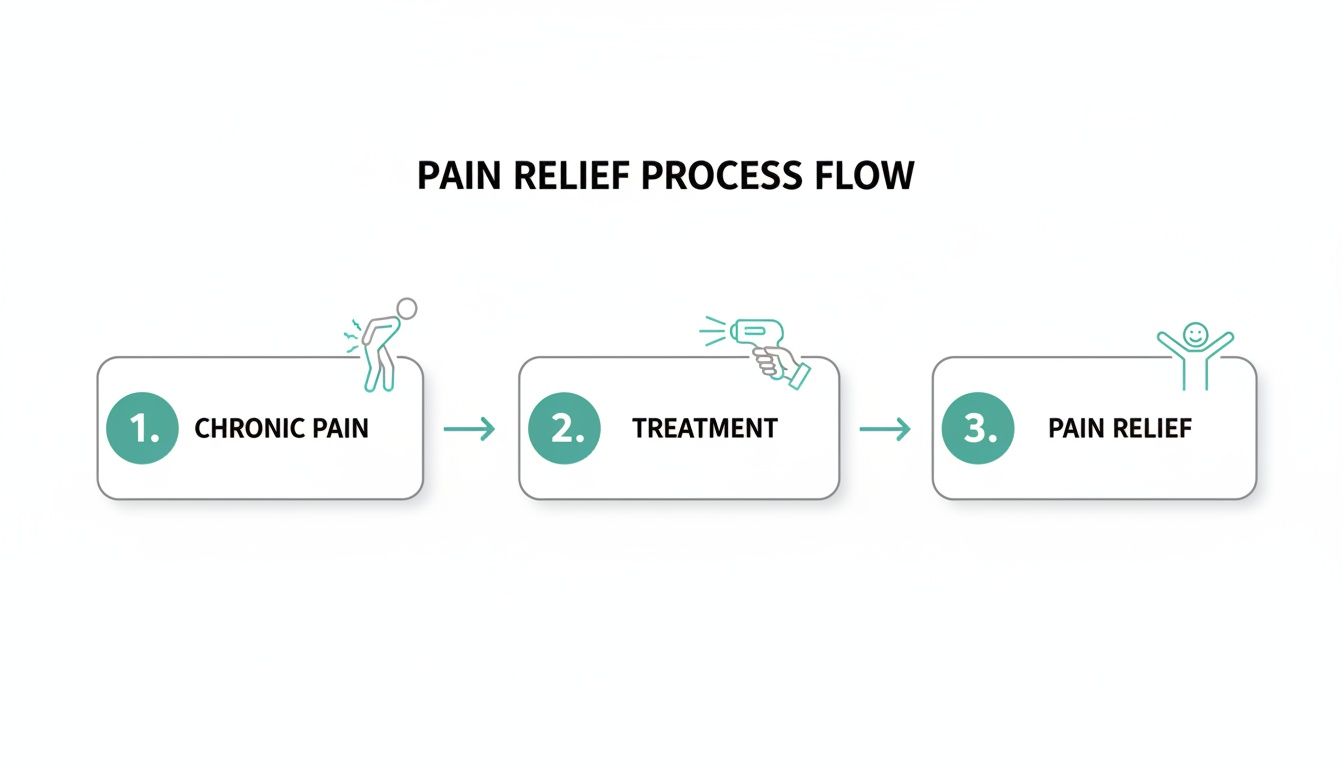
As you can see, the journey from chronic pain to recovery is made possible by intervening with a treatment that helps the body heal itself.
This isn’t just a theory; this cellular approach is backed by solid clinical evidence. Landmark studies have shown just how powerful this therapy can be for stubborn conditions like chronic low back pain.
For instance, in one FDA-cleared study, patients treated with a specific 635 nm laser experienced significant relief as the light stimulated cellular function and dramatically cut down inflammation. A key trial found that a high percentage of patients achieved at least a 35% reduction in pain, far outperforming the placebo group with no side effects reported.
This lines up with what we see in broader research, which shows an impressive 86% efficacy rate for pain relief in groups treated with laser therapy. For perspective, that’s nearly double the 50% rate seen with a placebo and more than double the 40% relief rate from NSAIDs in many studies. You can find more of these details in the published research reports about cold laser therapy effectiveness.
By triggering the body's own healing mechanisms, cold laser therapy does more than just mask symptoms. It addresses the root cause of the pain, promoting genuine, long-term tissue repair.
This biological jump-start translates into real-world benefits for people suffering from chronic pain. The accelerated healing process leads to:
Ultimately, cold laser therapy gives your body the tools it needs to heal itself more effectively. By delivering a direct energy boost to the cells that need it most, it helps break the cycle of chronic pain and inflammation, leading to better function and a much-improved quality of life. For a deeper dive into the mechanics, you can learn more about how cold laser therapy works in our detailed guide.
The science is fascinating, but let's get down to what really matters: how does this translate into real-world pain relief? This is where Class IV laser therapy truly comes into its own, especially for stubborn, chronic conditions that involve deep-seated inflammation, damaged nerves, or joints that are breaking down.
It’s not a magic bullet for everything, but for certain problems, its ability to get in there and kickstart healing at the source makes it an incredibly effective tool.
We see fantastic results with three of the most persistent types of pain: chronic back pain from discs or sciatica, osteoarthritic knee pain, and peripheral neuropathy. Let's break down exactly how the targeted light energy gets to the root cause of each.

If you're dealing with chronic back pain—especially sciatica or a herniated disc—you know it's often driven by relentless inflammation around your spinal nerves. A bulging disc puts physical pressure on a nerve root, which triggers a constant inflammatory cascade and sends that searing pain down your leg. The body just can't get enough resources to the area to calm things down and heal.
This is where cold laser therapy is a game-changer. The light energy is able to penetrate deep into the tissues around the spine, right to the inflamed nerve roots and damaged disc.
By dramatically reducing inflammation, the laser essentially "takes the pressure off" that compressed nerve. This not only eases the sharp, shooting pain of sciatica but also energizes the cells in the surrounding muscles and ligaments, helping them repair and stabilize the entire area.
This one-two punch of calming inflammation while accelerating tissue repair is what helps break the cycle of chronic back pain. Instead of just masking symptoms, we’re creating an environment where the body can finally heal the underlying injury. If this sounds like you, our in-depth guide on cold laser therapy for back pain has even more detail.
Osteoarthritis (OA) in the knee is a tough one. It’s a degenerative process where the smooth, protective cartilage wears away, leading to inflammation, stiffness, and that dreaded bone-on-bone pain. It affects millions, turning simple things like walking or taking the stairs into a painful ordeal.
For people battling knee OA, cold laser therapy is a proven, non-surgical powerhouse. We use it to target the knee joint with light energy that gets to work in three key ways:
The evidence for this is rock-solid. A major meta-analysis looking at over 1,000 patients found that laser therapy significantly cut knee OA pain and improved daily function, with the positive effects lasting for months after the treatments ended. It's a compelling option for anyone hoping to put off or avoid joint replacement surgery. You can dig into the full study on LLLT for knee osteoarthritis to see the data for yourself.
Peripheral neuropathy is an incredibly frustrating condition. It shows up as tingling, burning, numbness, or sharp, stabbing pains, usually in the hands and feet. This happens when the delicate nerves far from the spinal cord get damaged, messing up the signals they send to the brain. Diabetes and chemotherapy are common culprits, but other health issues can cause it, too.
Cold laser therapy offers a unique advantage here because it works directly at the cellular level to help repair those damaged nerve fibers. The nerve cells absorb the light energy, which stimulates them to regenerate and function better.
This cellular boost helps in several critical ways:
This regenerative approach offers real hope for dialing down the debilitating symptoms of neuropathy and bringing back sensation, helping people regain their balance and get back to living their lives.
To put it all together, here is a quick look at how laser therapy addresses these common issues.
| Condition | Primary Target | Key Therapeutic Effect |
|---|---|---|
| Back & Disc Pain | Inflamed Nerve Roots, Damaged Disc | Reduces deep inflammation, accelerates tissue repair around the spine. |
| Knee Osteoarthritis | Degraded Cartilage, Inflamed Joint Capsule | Calms joint inflammation, supports cartilage health, improves circulation. |
| Peripheral Neuropathy | Damaged Nerve Fibers, Poor Microcirculation | Stimulates nerve regeneration, enhances blood flow to the nerves. |
This table highlights how the therapy is precisely targeted to the underlying biological problem, which is why it can be so effective where other treatments may have failed.
Walking into a clinic for a new type of treatment can feel a bit uncertain. If you're wondering what to expect from your first cold laser therapy session, we want to pull back the curtain and show you just how simple and comfortable the process is.
The biggest question on most people’s minds is, "Does it hurt?" The answer is a clear and simple no. One of the best things about this therapy is that it's completely painless.
Most patients don’t feel anything at all. A few people mention a gentle, soothing warmth spreading over the treatment area as the light gets to work, but there’s absolutely no burning, stinging, or discomfort.
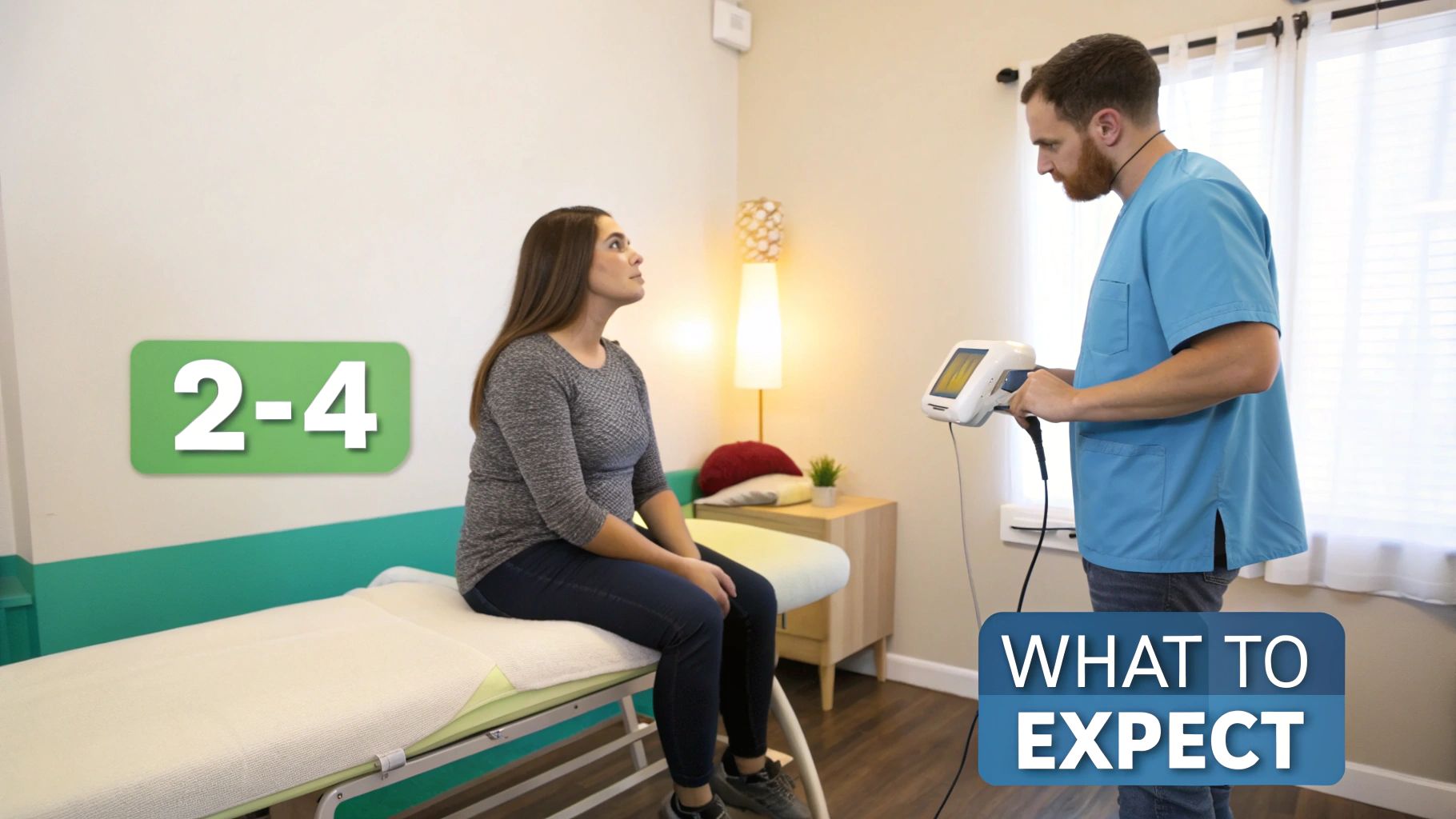
Your session will be quick, direct, and surprisingly relaxing. We'll get you settled in a comfortable position, either sitting or lying down, so we can easily access the area we're treating.
The entire process is remarkably efficient. A typical session is over in just 5 to 15 minutes, depending on the size of the area and the condition we’re addressing.
It’s helpful to think of cold laser therapy as a cumulative process. It’s a lot like exercise—one trip to the gym is good, but consistent workouts are what create real, lasting change. Each laser session builds on the one before it, steadily kickstarting your body's own healing and repair mechanisms.
While some patients feel a definite improvement after just one or two sessions, the real, durable results come from completing a full course of treatment. The aim isn't just temporary relief; it's to generate sustained healing at the cellular level.
Because no two people—or injuries—are the same, your treatment plan will be designed just for you. The number and frequency of your sessions will depend on a few things:
For chronic pain, a typical plan might involve a couple of sessions per week for several weeks. This consistent frequency gives your cells the steady stream of energy they need to dial down inflammation, repair damaged tissue, and deliver lasting pain relief.
While cold laser therapy is a fantastic tool for pain relief, its true potential is unlocked when we make it part of a broader, integrated treatment plan.
Think about it like building a house. You wouldn't show up with just a hammer and expect to get the job done right. You need a full toolkit—saws, drills, levels—because each tool has a specific, crucial role in building a solid, lasting structure.
Treating chronic pain is no different. A single therapy might give you some temporary relief, but it rarely addresses all the interconnected factors causing your pain. For a truly successful outcome, you need a multi-faceted approach that tackles the problem from every angle.
This is exactly why we combine the cellular healing power of our Class IV laser with other proven therapies. It's about creating a powerful synergy where each treatment amplifies the effects of the others, leading to faster, more complete, and more durable results.
Pain is almost never a simple, one-dimensional issue. Take a herniated disc, for instance. The problem isn't just the damaged disc itself. It also involves intense inflammation, direct pressure on a nerve, and protective muscle guarding that locks up your spine. Just using the laser to reduce inflammation is a huge step forward, but it doesn't fix the underlying structural problem that's causing the inflammation to begin with.
This is where our combined approach really makes a difference. We can use:
By layering these treatments, we're addressing both the physiological source of your pain (the inflammation) and the biomechanical root cause (the nerve pressure and joint dysfunction) all at the same time.
An integrated strategy ensures we aren't just chasing symptoms. We are fundamentally correcting the underlying structural and cellular issues to create a stable foundation for long-term health and pain-free movement.
This whole-body philosophy creates a healing environment that makes each individual therapy more powerful. Decompression opens up the area, making it more receptive to the laser. In turn, the laser's anti-inflammatory power makes the adjustments more effective and comfortable for you.
The need for this kind of comprehensive, non-surgical solution has never been more urgent. With a rise in musculoskeletal problems and an aging population, people are actively looking for effective, drug-free ways to manage pain.
The market reflects this demand. The cold laser therapy industry is projected to hit USD 126.9 million in 2025 and is on track to reach USD 196.5 million by 2035. The U.S. alone accounts for over 42% of that market. You can read the research about the growing cold laser therapy market to see the full projections.
At Bonesetters, Dr. Leonard Hayes is at the forefront of this shift, combining our Class IV laser with protocols backed by top institutions like Harvard and the Cleveland Clinic. This allows us to successfully treat complex sciatica, autoimmune pains, and even the burning and tingling of peripheral neuropathy.
This growth isn't just about new technology; it represents a clear move away from the risks of opioids and surgery toward treatments that promote real, lasting healing. For many of our patients, especially those suffering from stubborn nerve-related pain, this combined approach is the key to finally finding the relief they've been searching for.
To learn more about how we address nerve pain specifically, check out our guide on chiropractic treatment for neuropathy.
It’s completely normal to have questions when you’re considering a new treatment. And when it comes to something like Class IV laser therapy, you want real answers to make a confident decision about your health.
Let's walk through some of the most common questions we hear from our patients every day. My goal here is to cut through the noise and give you the straightforward information you’re looking for.
Yes, it’s incredibly safe. When performed by a trained professional, Class IV laser therapy is an FDA-cleared treatment with an outstanding safety record and virtually no side effects.
There's a reason we call it "cold" laser. The light energy we use is at a specific wavelength that doesn't generate heat, so there’s no risk of burning or damaging tissue. Instead, the light works on a cellular level to kickstart your body’s own natural healing processes—a process known as photobiomodulation.
Most people don’t feel anything at all during a session. Some might notice a gentle, soothing warmth over the area being treated, but that’s it. There’s absolutely zero downtime, so you can head right back to your daily life as soon as your appointment is over.
While it's safe for the vast majority of people, we do have a few standard precautions. We avoid treating directly over known cancerous lesions, the thyroid gland, or on anyone who is pregnant. That’s why we always start with a thorough health history to make sure it's the right fit for you before we even begin.
This is a great question, because the type of laser used makes a massive difference in the results, especially for deep, chronic pain. The main distinction between a Class IV laser and other types, like a Class IIIb, comes down to two things: power and penetration depth.
A Class IV laser delivers a much higher dose of light energy (photons) far deeper into your body's tissues, and it does it much faster.
Think of it like watering a big oak tree with deep roots. A small watering can (a Class IIIb laser) might only dampen the surface. But a high-pressure garden hose (a Class IV laser) can deliver enough water to soak the ground all the way down to the deepest roots where the tree needs it most.
That power is absolutely essential for treating issues located deep inside the body, like:
While less powerful lasers have their place for superficial problems like skin issues or a minor ankle sprain, a Class IV laser has the strength to reach and heal those deep, damaged tissues. This leads to much faster and more profound relief for the complex conditions we see every day.
This ability to treat more tissue, at a greater depth, in less time is what makes Class IV lasers the gold standard for serious, non-surgical pain management.
Everyone’s healing journey is a bit different, so the timeline really depends on your specific condition, how severe it is, and how long you’ve been living with it. It’s not uncommon for patients to report feeling a noticeable difference in their pain and movement after just the first few sessions.
But it’s important to see the bigger picture. Laser therapy isn't a band-aid that just covers up symptoms; it’s stimulating your body to actually repair itself. That kind of real, deep healing is a cumulative process that takes time. Each treatment builds on the one before it, steadily reducing inflammation and regenerating damaged cells.
That's why we create a complete treatment plan, usually spanning several weeks, to get you the best, most durable results possible. And because we're focused on healing the root cause—the damaged tissue itself—rather than just masking pain signals, the relief you get is often long-term.
When we combine laser therapy with our other treatments that address the underlying biomechanical problems, the results last even longer. We’re not just chasing pain; we’re fixing the problem that caused it.
This is one of the most practical and important questions we get. The honest answer is: it’s inconsistent.
Even though Class IV laser therapy is FDA-cleared for a whole host of pain and inflammatory conditions, some insurance companies still label it as "investigational" or "experimental," which is their way of saying they don't cover it. Coverage can be all over the map, varying from one provider to the next and even between different plans from the same company.
We always tell our patients to check directly with their insurance provider to know for sure what their plan covers. Our team is always here to help by providing any treatment codes or letters of medical necessity you might need to submit a claim for reimbursement.
Many of our patients end up seeing this treatment as a smart investment in their long-term health. When you weigh the cost against major surgery—with all its risks and long recovery—or a lifetime of expensive medications and their side effects, many find that laser therapy is a far more cost-effective and sensible path back to living a full, pain-free life.
At Bonesetters, our integrated approach ensures you receive the most effective care for your specific condition. If you're ready to explore a non-surgical solution for your chronic pain, schedule your consultation today.
Learn more and book your appointment at https://bonesetters.org.