If you're dealing with persistent back pain, you know the drill. It's a frustrating cycle of temporary fixes that never quite seem to last, leaving you right back where you started. Cold laser therapy for back pain is a completely different approach. It’s a non-invasive, drug-free option that uses the power of focused light to kickstart your body’s own healing mechanisms.
The goal here isn't to just quiet the symptoms for a little while. It's about getting to the heart of the problem—things like deep-seated inflammation and damaged tissue—to create lasting relief.
Living with chronic pain can feel like it shrinks your world. Simple things we take for granted, like sitting at a desk for a few hours, walking the dog, or even just picking up your kids, suddenly become major hurdles.
For years, the main solutions felt like a tough choice: either rely on pain medications that often bring a host of side effects or consider surgery, which comes with its own risks and long, painful recovery periods. But what if there was another way to get back to living your life?
This guide is here to walk you through that alternative path: Cold Laser Therapy. You might also hear it called Low-Level Laser Therapy (LLLT) or its scientific name, photobiomodulation. We’re going to skip the dense medical jargon and give you a straight-forward look at how this technology actually works.
Think of this as your complete roadmap. We'll show you how targeted light energy can empower your body's natural healing abilities. It's not about masking pain; it's about helping your body fix the underlying problem.
We want you to have total clarity so you can make the best decision for your own health. We'll break down every part of the treatment, from the science behind it to what you can realistically expect.
Here’s a look at what we’ll cover:
By the time you finish reading, you’ll have a full picture of how this therapy can help you get back to a life that isn’t defined by back pain.
It might sound like something straight out of science fiction, but the idea that light can heal deep tissue damage is very real. The process is officially called photobiomodulation, and it's the engine that drives cold laser therapy for back pain.
Think of your injured cells like tiny, drained batteries. They simply don't have enough power to do their most important job: repairing themselves. A Class IV cold laser acts like a specialized charger for these exhausted cells.
During a session, we apply specific, calibrated wavelengths of light to the skin over your back. This light passes harmlessly through the outer layers to reach the damaged muscles, ligaments, or even spinal discs deep underneath.
This chart shows how we can break the cycle of managing pain with medication by using non-invasive therapies to restore mobility.
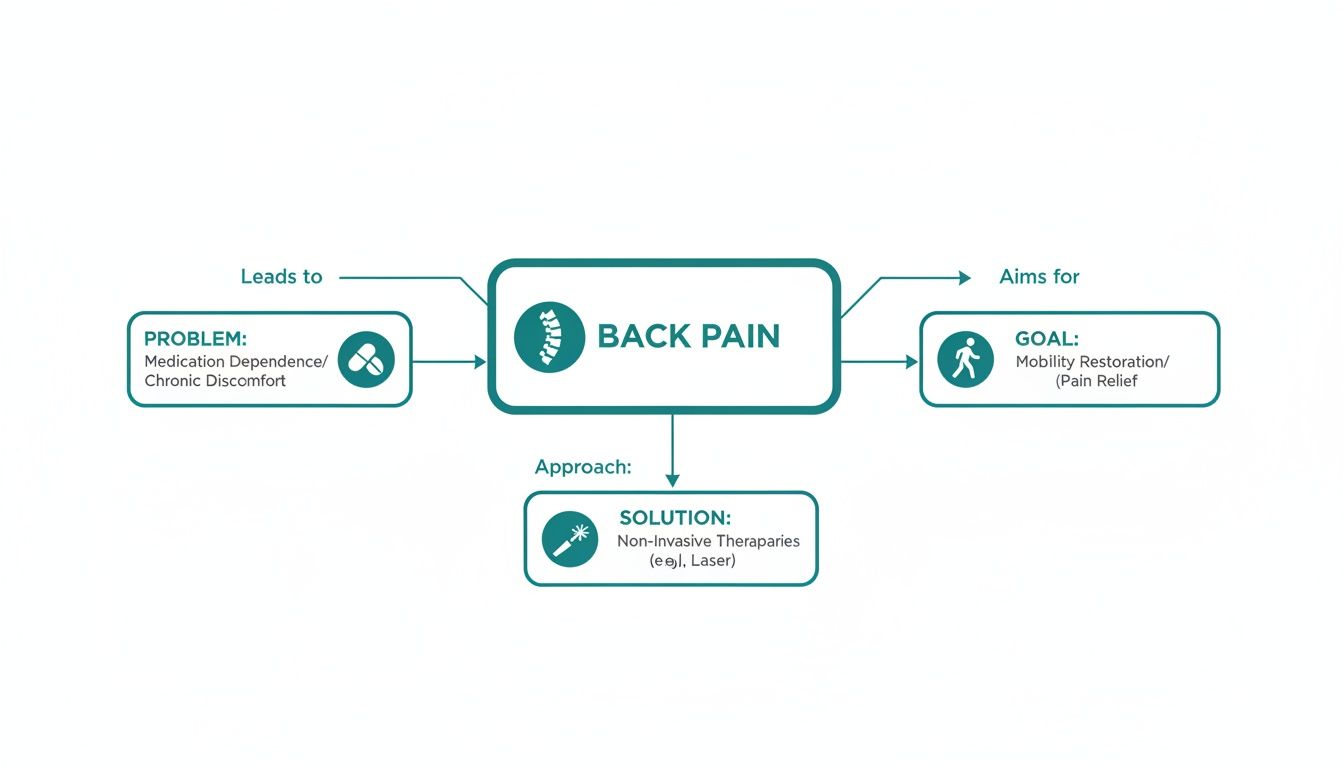
The goal isn't just to stop the pain signals but to address the root cause of the problem and get you moving freely again.
Once the light energy reaches your damaged cells, it's absorbed by a specific component inside called the mitochondria. You can think of mitochondria as the microscopic power plants that fuel every single cell in your body.
This light gives these tiny power plants a major boost, triggering them to ramp up production of a critical energy molecule known as ATP (adenosine triphosphate). ATP is the universal fuel for nearly every function our cells perform, from contracting a muscle to regenerating tissue.
This surge in available energy is the key. It provides the resources your cells were missing, finally allowing them to get back to the work of healing.
This isn't a temporary fix or a way to mask symptoms. Photobiomodulation works from the inside out, empowering your body to repair the source of the pain at a cellular level. It’s about restoring function, not just silencing pain signals.
With this newfound energy, a cascade of beneficial biological effects kicks into gear, directly addressing the underlying causes of your back pain.
The spike in ATP production triggers several healing responses at once. This multi-pronged attack on pain and inflammation is what makes the therapy so effective for complex issues like chronic low back pain.
Here’s a breakdown of what that cellular energy surge accomplishes:
This scientifically-backed process explains how a treatment that feels like little more than a warm light can produce such profound results. By recharging your cells, we're essentially flipping the switch on your body's own advanced repair systems.
The clinical evidence for this approach is compelling. For instance, one randomized trial found that 80% of subjects treated with a low-level laser achieved at least a 30% reduction in their pain scores, compared to just 28% in the placebo group. You can read more about the findings of this back pain management study to see the data for yourself.
Trying a new therapy can feel a bit daunting, especially when you're already worn down by back pain. We get it. That's why we want to walk you through exactly what a cold laser therapy for back pain session looks like at Bonesetters, so you know what to expect and can feel completely at ease.
The whole process is designed to be calm and comfortable. There are no loud machines, no needles, and absolutely no pain involved.
Everything starts with a conversation. Before we even think about treatment, one of our clinicians will sit down with you to get the full picture. We’ll talk about your back pain history, what your symptoms feel like, and what you hope to achieve.
This initial assessment is vital. It helps us zero in on the specific areas of inflammation or tissue damage that are causing your trouble. By truly understanding the root of the problem, we can map out a treatment plan that’s built just for you.
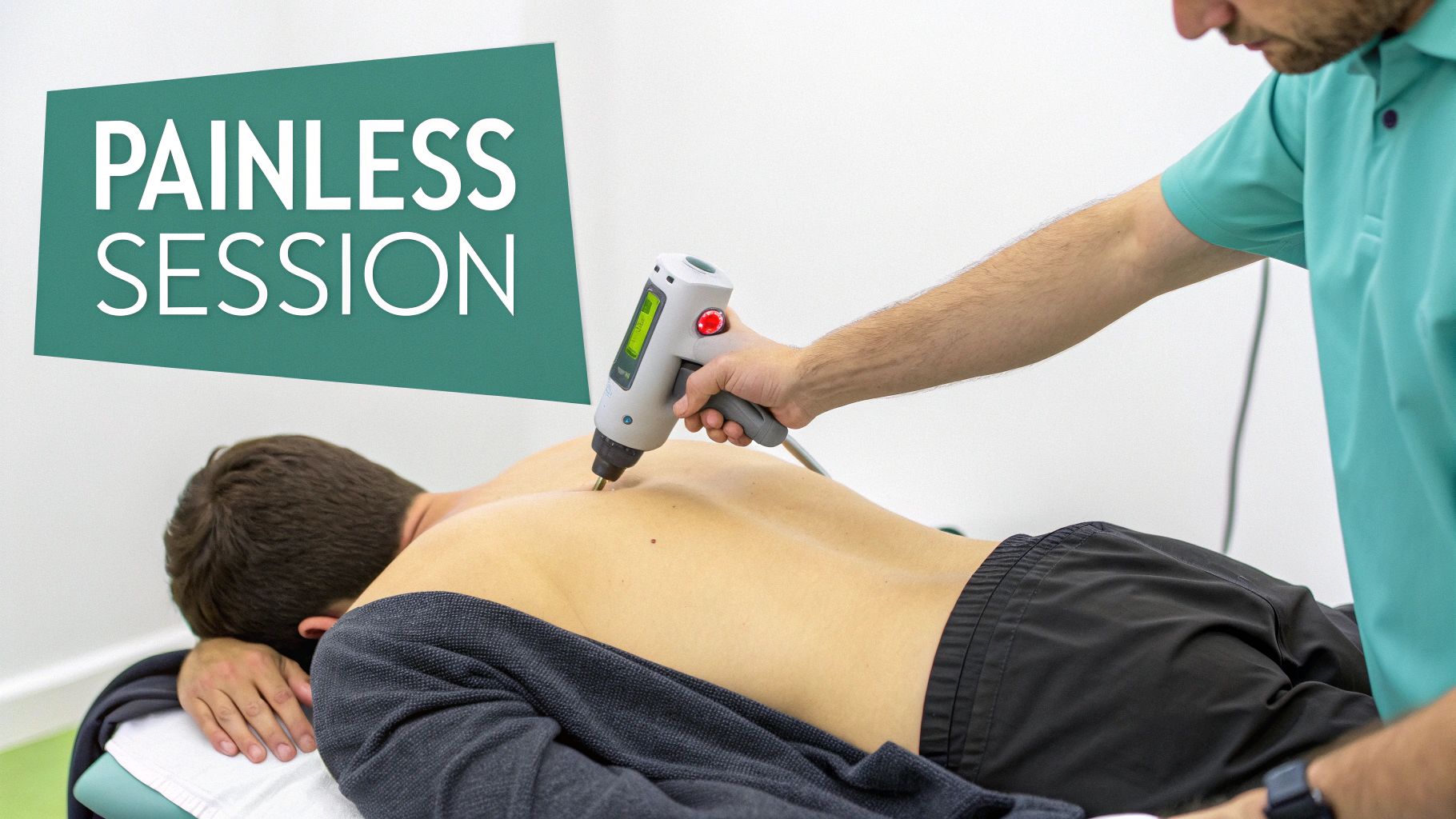
Once we have your personalized plan, the session can begin. We'll have you lie down in a comfortable, relaxed position. Your clinician will then use a handheld device—it looks something like a small wand—to administer the light therapy.
The device is placed directly on the skin over the targeted part of your back. As the clinician moves it slowly and deliberately across the area, it delivers specific wavelengths of light that penetrate deep into your tissues without breaking the skin.
"Does it hurt?" This is the number one question we hear, and the answer is always a firm "no." The procedure is completely painless. Most people say they don't feel anything at all, though some mention a gentle, soothing warmth as the light energy gets to work boosting circulation.
A single session is surprisingly quick, usually lasting between 5 and 15 minutes. The exact time depends on the size of the area we're treating and the specifics of your condition.
Some people feel a bit of relief after just one or two sessions, but it's important to see this therapy for what it is: a cumulative process. It’s a lot like exercise—one trip to the gym won't make you strong overnight. Healing on a cellular level is a gradual process that requires consistency.
A typical treatment schedule is broken down into phases to deliver meaningful, lasting results. We've found this structured approach gives your body the best chance to heal.
Here’s a general idea of what a full course of therapy might look like, so you can understand the time and commitment involved.
| Phase | Frequency | Duration | Primary Goal |
|---|---|---|---|
| Initial Phase | 2-3 times per week | 2-4 weeks | Rapidly reduce inflammation and initiate the cellular repair process. |
| Healing & Repair Phase | 1-2 times per week | 4-6 weeks | Support tissue regeneration and restore function. |
| Maintenance Phase | Every 1-4 weeks | As needed | Maintain results and prevent future flare-ups of chronic conditions. |
This multi-phase approach isn't just our preference; it's backed by solid evidence. Research shows that while quick improvements are nice, treatment plans with more than 10 sessions often lead to much more significant and lasting pain reduction. You can read more about the research on treatment schedules for low back pain to see how consistency pays off.
Of course, cold laser therapy is just one tool in our toolbox. To get a better sense of other non-invasive options, you can also explore our guide on therapeutic ultrasound.
The best part? There is zero downtime after a session. You can get right back to your day as soon as you walk out the door.
When you’re looking for a way to treat back pain without surgery, the number of options can feel a bit overwhelming. From physical therapy to chiropractic care, each one offers something different. Understanding where cold laser therapy for back pain fits into the picture is the key to making a smart choice for your health.
The biggest difference comes down to how it works. While many therapies focus on getting your bones aligned or making your muscles stronger, cold laser therapy goes straight to the cellular level. It’s a biological approach that gets right to the source, helping to repair the underlying tissue damage and inflammation that are actually causing your pain.
This unique action makes it a powerful treatment on its own, but it also plays incredibly well with other therapies, often speeding up their results.
To make things clearer, here’s a quick rundown of how cold laser therapy stacks up against some of the other common non-surgical treatments you might be considering.
| Treatment | Mechanism | Best For | Patient Experience |
|---|---|---|---|
| Cold Laser Therapy | Uses specific light wavelengths to stimulate cellular repair, reduce inflammation, and block pain signals. | Deep tissue inflammation, nerve pain, muscle spasms, and accelerating healing for various injuries. | Painless, non-invasive, and often described as a gentle warming sensation. Sessions are quick. |
| Chiropractic Adjustments | Focuses on restoring proper joint motion and spinal alignment through manual manipulation. | Joint restrictions, misalignments, and relieving pressure on the nervous system. | A quick, targeted thrust to the joint, often producing a "popping" sound. Relief can be immediate. |
| Spinal Decompression | Gently stretches the spine to create negative pressure, helping to retract bulging discs and hydrate them. | Herniated or bulging discs, sciatica, degenerative disc disease, and spinal stenosis. | A gentle, cyclical pulling sensation. Patients are secured to a table and often find it relaxing. |
| Physical Therapy | Uses targeted exercises and stretches to improve strength, flexibility, stability, and function. | Muscle weakness, poor posture, post-injury rehabilitation, and improving long-term stability. | An active process requiring patient participation. Can be challenging but is crucial for lasting results. |
Ultimately, the best approach often involves a combination of therapies tailored to your specific condition, addressing both the structural and biological causes of your pain.
Chiropractic adjustments are a true cornerstone of back care. The goal is to restore proper movement to spinal joints that have become stiff or stuck. By improving these mechanics, we can take pressure off nerves and reduce pain.
Cold laser therapy is the perfect partner for this. While an adjustment is fixing the structure of your spine, the laser is working on the biology of the tissues around it. If inflammation and muscle spasms are fighting against the adjustment, the laser can calm everything down first, making the structural work more effective and helping the results last longer.
Think of it this way: a chiropractic adjustment is like realigning a door that's stuck in its frame. Cold laser therapy is like oiling the rusty hinges and repairing the warped wood. You really need both for the door to swing smoothly again.
Physical therapy (PT) is all about building strength, stability, and flexibility through very specific exercises. A physical therapist guides you through movements designed to support your spine and fix any muscle imbalances that contribute to your pain.
This is a vital part of long-term recovery, but let’s be honest—it’s hard to do your exercises when you’re in pain. If it hurts too much, you can’t get the full benefit, and progress can feel painfully slow.
This is where cold laser therapy really shines. By bringing down pain and inflammation, it creates a crucial window of opportunity for you to actually do your PT exercises correctly and without flare-ups. It helps heal the very tissues you’re trying to strengthen, leading to faster, more meaningful results. For another way we manage pain signals, you can read more about how electrical stimulation (E-Stim) therapy works.
Spinal decompression therapy is specifically designed to take pressure off your spinal discs. It works by gently stretching the spine, which creates a vacuum-like effect inside the disc. This can help pull back in any bulging or herniated material and, just as importantly, draw in the oxygen and nutrients a disc needs to heal.
Decompression is fantastic for disc problems like sciatica or degenerative disc disease. When you pair it with cold laser therapy, you get a powerful one-two punch.
By reducing inflammation in the nerve roots and ligaments around the disc, the laser makes the decompression treatment more comfortable and boosts its regenerative power. The two therapies work together, tackling both the mechanical and the biological sides of the injury.
Choosing the right path forward always begins with an accurate diagnosis. Here at Bonesetters, we don’t do "one-size-fits-all" treatment. By getting to the root cause of your back pain, we can build a personalized plan that combines the best of these advanced therapies to get you out of pain and back to your life.
Deciding how to tackle your back pain is a big deal, and it's a very personal journey. While we've seen fantastic results with cold laser therapy for back pain, it's important to be realistic—it isn't a silver bullet for every single person or condition. The first, and most critical, step is figuring out if it's the right fit for you.
At its core, this therapy is designed to get at the root causes of stubborn pain, like chronic inflammation and damage at the cellular level. If that sounds like the source of your back issues, there's a very good chance you're an excellent candidate. The light energy helps break that frustrating cycle of inflammation and gives your body's own healing mechanisms the boost they need to get back on track.
The people who see the most profound and lasting results tend to have one thing in common: their pain comes from tissues that are inflamed, injured, or struggling to heal. This makes cold laser therapy particularly effective for a whole host of common back problems.
You’re likely a great candidate if you’re dealing with:
Put simply, if your back problem involves cellular stress, inflammation, and tissues that need help repairing themselves, this therapy is built for the job.
Cold laser therapy isn’t about just putting a band-aid on your symptoms. It's about giving your body the specific energy it needs to heal itself from the inside out. It jump-starts the repair work your cells have been struggling to finish on their own.
By going after the biological source of the pain, we can often achieve relief that lasts, rather than the temporary fixes you might have experienced before. This is what helps you get your mobility back and return to the life you want to live.
Knowing who this therapy is for is only half the equation. It's just as important to understand when it's not the right move. Your safety is our number one priority, and there are a few specific situations (known as contraindications) where cold laser therapy for back pain should be avoided. We believe in being completely upfront about this.
We will not perform this therapy under these conditions:
These rules are here for one reason: to ensure every patient gets care that is safe and effective. A thorough, honest conversation with your provider is key. During your first consultation at Bonesetters, we'll go through a detailed assessment to make absolutely certain you're a perfect candidate before we even think about starting a treatment plan. This way, you can feel confident that your path to feeling better is both successful and secure.
So, we've walked through how cold laser therapy for back pain works. It's not magic, but it is a powerful, science-backed way to get your life back on track. By using targeted light energy, we can get right to the cellular level, essentially giving your body the tools it needs to heal itself from the inside out.
The real goal here is to get at the root causes of your pain—that deep, nagging inflammation—and speed up tissue repair without resorting to drugs or surgery.
If what you've read here sounds familiar, if you're tired of just "managing" your back pain, then the next step is a simple conversation. The journey away from chronic pain always starts with one well-informed decision.
The goal isn't just to mask the pain; it's to restore your function. True, lasting relief happens when we fix the underlying biological problems, letting you move with the freedom and confidence you've been missing.
Everything starts with a thorough consultation. This is where we figure out if cold laser therapy is truly the best fit for your specific condition. It's not a one-size-fits-all solution, and a specialist needs to create a personalized plan that lays out your treatment schedule and sets clear, realistic expectations. This ensures your care is built around your body's needs and what you want to achieve.
We also know that back pain is rarely simple. Often, it involves nerve issues like sciatica, which requires its own specific approach. For a deeper dive into that, you can learn more about how to relieve sciatica pain naturally in our other guide.
Here at Bonesetters, we pair advanced diagnostics with a genuine understanding of spinal health to build a recovery plan you can feel good about. Taking that first step to schedule a consultation isn't just another appointment—it's an investment in a future with less pain and more freedom. It’s time to stop chasing symptoms and start healing for good.
It's completely normal to have questions when you're thinking about a new treatment for your back pain. Knowing the practical side of things—what it feels like, how long it takes, and the cost—is just as crucial as understanding the science. We want you to walk in feeling confident, so let's tackle the most common questions we hear from patients every day.
This is your straightforward guide to the patient experience, what a treatment plan really looks like, and the logistics of a therapy that can genuinely change things for the better.
Yes, it’s completely painless. This is usually the first thing people ask, and for good reason. The word "laser" often makes people think of the high-powered surgical lasers that cut tissue, but a ‘cold’ laser is a totally different kind of technology.
It uses a very low intensity of light that doesn't generate any heat. As the light energy passes through your skin, you won't feel any discomfort or damage. Most of our patients say they feel absolutely nothing during a session. A few people might notice a very subtle, gentle warmth in the area, but that's just a positive sign of increased blood flow—one of the therapy's main goals.
The entire procedure is non-invasive. There are no needles, no incisions, and absolutely no downtime. You can get up from the treatment table and head right back to your day.
This gentle approach makes it a fantastic choice for anyone who's wary of more aggressive treatments or simply wants a comfortable, relaxing path to healing.
The benefits of cold laser therapy are cumulative, meaning they build on each other with every session. I like to compare it to watering a plant—one good watering helps, but it’s the consistent care over time that allows it to flourish and truly heal.
While some people feel a bit of relief after just one or two visits, that's not the norm. For real, lasting improvement, you need a proper course of treatment. For chronic back problems, a typical plan usually falls somewhere between 6 to 12 sessions.
Of course, the exact number depends entirely on you:
This is a big, practical question, and the honest answer is: it depends. The landscape for insurance coverage is definitely changing, and more providers are starting to recognize the value of photobiomodulation. However, many plans still don't include cold laser therapy in their coverage.
We always advise our patients to call their insurance provider directly before starting care. That’s the only way to get a definite answer about your specific policy. Our team is also happy to help you with this process and can give you any documentation you might need. If your insurance doesn't cover the treatment, we offer flexible payment options and treatment packages to make sure you can get the care you need without the financial stress.
At Bonesetters, our focus is always on you and creating a plan that gets to the root cause of your pain. If you're curious to see how cold laser therapy could work for you, we'd love to sit down and talk. You can learn more about how we do things at https://bonesetters.org.