
Yes, absolutely. Chiropractic treatment for neuropathy can be incredibly effective because it targets the structural problems that often cause nerve irritation in the first place—things like spinal misalignments or disc issues. Instead of just chasing symptoms with medication, chiropractic care focuses on restoring proper nerve function, taking pressure off the nerves, and boosting circulation to help the body heal itself.

If you're living with the constant tingling, burning, or numbness of peripheral neuropathy, you know it’s more than just a minor annoyance. It can completely disrupt your life, making simple tasks feel monumental. The search for lasting relief can be frustrating, especially when most conventional treatments only offer medications that mask the pain, often with their own set of side effects.
But there’s another way to look at the problem, one that sees the body as a whole, interconnected system.
Think of your nervous system as your body's electrical grid. It sends critical messages from your brain out to every single part of you. Neuropathy is what happens when that wiring gets frayed or damaged. The signals get scrambled, and you experience the confusing mix of pain, weakness, and numbness.
At Bonesetters Critical Chiropractic, Dr. Leonard Hayes starts with a simple but powerful idea: this "faulty wiring" is very often caused by a mechanical problem. The real issue isn't always where you feel the pain. It frequently traces back to a spot where a nerve is being compressed, choked, or starved of the blood supply it needs to stay healthy.
We see a few common culprits behind this nerve interference all the time:
It's a lot like how sciatica can be caused by a tight muscle compressing the sciatic nerve. If you want to see another example of how muscle and joint issues can affect nerves, you can learn more about how chiropractic care helps with Piriformis Syndrome in our related guide.
Our entire approach is about finding that source of interference and correcting it. When we fix the underlying structural problem, we're giving the nerve a fighting chance to heal itself, which leads to real, sustainable relief.
Dr. Hayes takes a whole-body view that avoids temporary fixes. By combining precise, computer-guided adjustments with other advanced therapies, we work to create the ideal environment for your nerves to regenerate and start working properly again. This is where we can offer real hope, especially for those who feel like they've already tried everything else.
To get a handle on how a chiropractic treatment for neuropathy works, picture your nervous system as a complex electrical grid, with your spine acting as the main power line. When you have a structural problem—a misaligned vertebra or a bulging disc—it's like kinking a garden hose. The flow of vital nerve signals gets choked off, leading to all those frustrating and painful neuropathy symptoms.
Chiropractic care doesn't just chase those symptoms; we go straight to the source to "unkink the hose." Our goal is to correct the mechanical issues that are compressing, irritating, or starving your nerves of the blood flow they need to survive. When we restore proper alignment and movement, we create an environment where your body can finally start to heal itself.
The foundation of our approach is using precise adjustments and therapies to take the pressure off the affected nerves. Think about it: when a vertebra is out of place or a disc is bulging, it can physically pinch the nerve root where it exits the spine. That compression creates static on the line, garbling the communication between your brain and your limbs.
We use gentle, targeted techniques to guide those misaligned joints back into their proper position. This isn't about forceful cracking; it's about carefully restoring the spine’s natural function.
By creating more space and relieving that constant pressure, we’re essentially opening up the communication channels again. This allows nerve signals to travel freely, which is the absolute first step toward reducing symptoms like numbness, tingling, and those sharp, shooting pains.
This direct approach helps calm down irritated nerves and sets the stage for real, lasting healing.
Just like any other part of your body, your nerves need a steady supply of oxygen and nutrients to function and repair themselves. When a nerve is compressed, that vital blood flow is severely restricted. It’s like the nerve is being starved, which prevents it from healing and is often why neuropathy symptoms stick around or get worse.
Our therapies are designed to improve circulation right where it’s needed most:
By giving circulation a major boost, we make sure those damaged nerves are getting all the resources they need to start regenerating.
Chronic inflammation is a vicious cycle with nerve damage—it’s both a cause and a result. It creates a toxic environment that further irritates the nerves and puts the brakes on any potential recovery. A huge part of our job is to break that cycle.
When we correct the structural problems, the body's inflammatory response naturally calms down. With joints moving properly and nerves no longer being choked, the constant irritation that triggers inflammation finally subsides. This calming effect is crucial because it allows your body's own healing mechanisms to take over.
This is why chiropractic spinal manipulative therapy (CSMT) can be so effective. Take radicular low back pain, for example—a condition often tied to neuropathy. One study found that patients receiving CSMT had 56% reduced odds of needing a prescription for nerve pain medication like gabapentin compared to those just getting usual medical care.
Ultimately, chiropractic treatment for neuropathy is all about removing the physical roadblocks so your body can get back to the business of healing itself.
When it comes to treating neuropathy today, chiropractic care has moved well beyond the traditional adjustment. At Bonesetters Critical Chiropractic, we bring together a powerful collection of evidence-based technologies, each designed to tackle nerve damage from a different angle. This multi-pronged approach creates a healing synergy that offers a much better chance at real, lasting relief.
Think of it like this: if your nerves are a wilting plant, just propping up the stem won't save it. You also have to improve the soil, give it the right amount of sunlight, and make sure it's getting water. Our advanced therapies work together to create that perfect healing environment for your nerves.
Every tool in our clinic plays a very specific, crucial part in restoring nerve function. Let's break down the key treatments we use and see exactly how they help you get back on your feet.
One of the most important tools we have is the FDA-backed PulStar system. This isn't your old-school manual adjustment. The PulStar takes the guesswork out of the equation by using a computer-guided impulse to analyze and treat spinal misalignments. Forget any popping or twisting; instead, the PulStar delivers a series of gentle, incredibly precise taps right where they're needed.
This method is a game-changer for neuropathy patients for a few key reasons:
By restoring proper joint movement with such precision, the PulStar directly relieves the underlying nerve pressure that's so often at the root of neuropathic pain.
Class IV cold laser therapy, also known as low-level laser therapy (LLLT), is a powerhouse for nerve regeneration. It's a non-invasive treatment that uses specific wavelengths of light to reach deep into your tissues, kickstarting healing right at the cellular level. You can almost think of it as a turbocharger for your cells' tiny power plants (the mitochondria).
This process, called photobiomodulation, gives your damaged nerve cells the raw energy they need to repair themselves. The therapy is fantastic for reducing inflammation, boosting blood flow, and speeding up the whole healing process—all without any heat, sound, or vibration. You can get a deeper look into how it works in our guide on cold laser therapy for back pain.
By giving cells a jolt of energy and calming down the inflammatory storm, cold laser therapy helps break the cycle of chronic nerve irritation. It's like giving your body the metabolic boost it needs to start rebuilding those damaged nerve pathways.
The flowchart below shows how everything connects—how a structural problem in the spine can be the first domino to fall, leading to the nerve pressure that causes neuropathy.
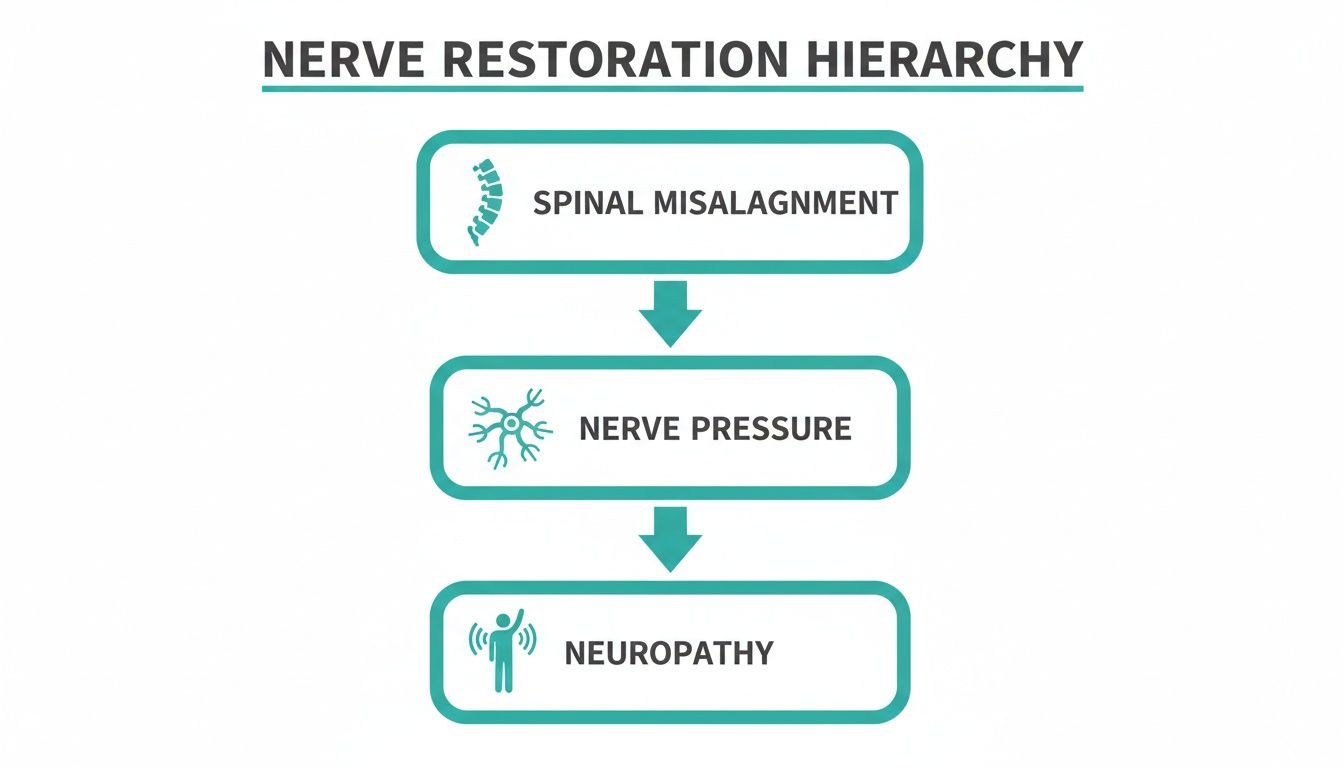
As you can see, neuropathy often starts with a physical misalignment. That misalignment creates nerve compression, which ultimately leads to the pain, numbness, and tingling.
To offer a clearer picture of our toolkit, here’s a breakdown of the advanced technologies we use to help our neuropathy patients.
| Treatment Modality | How It Works for Neuropathy | Primary Benefits |
|---|---|---|
| PulStar System | Uses computer-guided impulses to gently and precisely correct spinal misalignments, relieving direct pressure on nerve roots. | Pinpoint accuracy, gentle application, and provides real-time feedback on joint mobility improvements. |
| Class IV Cold Laser | Delivers specific light wavelengths to damaged cells, stimulating mitochondrial energy production (photobiomodulation). | Reduces inflammation, boosts blood flow, and accelerates nerve cell repair and regeneration. |
| Spinal Decompression | Creates negative pressure in the spinal discs through gentle, controlled stretching of the spine. | Retracts bulging/herniated discs off nerves and pulls in oxygen and nutrients to promote healing. |
| Horizontal Therapy | Uses specific electrical frequencies to stimulate circulation and improve cellular metabolism in the affected areas. | Re-educates nerve signaling pathways, enhances blood flow, and nourishes damaged nerve tissues. |
Each of these therapies plays a distinct but complementary role in our comprehensive approach to treating peripheral neuropathy.
Two other workhorses in our neuropathy protocol are spinal decompression and horizontal stimulation therapy. They work in different ways, but their shared goal is to create a healthier environment for your nerves to heal.
Spinal decompression involves a specialized table that applies a gentle, controlled stretch to your spine. This action creates a vacuum effect (negative pressure) inside the discs, which can help pull back any bulging or herniated material that’s pushing on a nerve. It also floods the area with a fresh supply of oxygen, water, and nutrients, rehydrating the discs and giving the nerves what they need to thrive.
Horizontal stimulation therapy, on the other hand, uses specific electrical frequencies to improve local circulation and kickstart cellular metabolism. It helps "retrain" damaged nerves to fire their signals correctly again while simultaneously increasing blood flow to bring nourishment to those delicate tissues.
Peripheral neuropathy is a massive health problem, especially in the diabetic community, where it stands as the third most common neurological disorder and impacts about 50% of people with diabetes across the globe.
But there's good news. Chiropractic advancements like low-level laser therapy are showing incredible promise. In fact, these therapies have achieved a 97% success rate in promoting nerve repair by improving blood flow and encouraging the growth of new, healthy blood vessels. In one study with 472 patients, an amazing 74% reported immediate relief after just their first session, with an average pain reduction of 40%.
Figuring out if a health approach is a good fit for you is the first, and most important, step. While our chiropractic treatment for neuropathy isn't for everyone, it’s been a game-changer for so many people who felt they were out of options. Here at Bonesetters Critical Chiropractic, we’ve learned to spot the key signs that tell us someone is likely to respond well to our care.
First and foremost, this approach is built for people who have already been diagnosed with peripheral neuropathy. It doesn’t matter so much what caused it—our protocols are designed to be flexible and address many different underlying triggers.
You might be a perfect candidate if you’re living with stubborn symptoms like:
We find our care resonates most with people who've felt stuck or disappointed by the standard medical route. Maybe you’ve been on medications that came with a whole host of side effects but offered very little real relief. Or perhaps you’ve been told the only things left to try are invasive surgeries you’re just not ready for.
We see the best outcomes in people who are actively looking for a drug-free, non-surgical way to get better. They want to do more than just mask the pain; they want to get to the root of the nerve damage and help their body heal.
It's important to remember just how common this is. Among people dealing with chronic pain for more than three months, 9.8% have peripheral neuropathy. Think about that—for every 10 people in chronic pain, one is dealing with nerve pain. What’s truly telling is how many of these individuals seek out chiropractic help. A staggering 50% of those diagnosed with neuropathic pain use chiropractic treatments, which is a massive jump from the 7.4% of the general U.S. adult population who see a chiropractor. If you're curious about this trend, you can discover more insights about neuropathy and chiropractic use on PMC.
Ultimately, the best candidates are those who are ready to be active partners in their own recovery. They get that real healing isn't a passive process—it's about correcting the structural problems that are getting in the way, so the body can finally do what it’s designed to do: heal itself.
Our detailed neuropathy protocol has brought relief to people with many different forms of this condition. If your diagnosis falls into one of these categories, our therapies might be especially well-suited for you.
While we see fantastic results, your safety is always our number one concern. Some complex situations might require us to work alongside your medical doctor. During your first visit, Dr. Hayes will perform a comprehensive evaluation to make sure you're a good candidate and give you a clear, honest picture of what you can expect from your care with us.

Starting any new treatment can feel a little intimidating, especially when you're already dealing with the day-to-day frustrations of neuropathy. That’s why we make sure your journey at Bonesetters Critical Chiropractic is clear, collaborative, and easy to understand from the moment you walk in. Think of this as a true partnership between you and Dr. Hayes, with a single, shared goal: getting your life back.
It all starts with our comprehensive initial consultation. This isn't just a quick chat about your symptoms; it's a deep dive to figure out why you're having them in the first place. We take the time to really listen, going over your health history, the specifics of your symptoms, and how this condition is truly affecting your life.
This first visit is absolutely crucial. We don't guess when it comes to your health. Instead, we use advanced diagnostics to get a precise, objective picture of what’s going on inside your body.
Your journey begins with a detailed exam, which often includes a thorough neurological assessment and functional movement tests. These aren't just routine checks; they help us pinpoint the exact areas where your nerves are struggling. We meticulously map out the patterns of your numbness, tingling, and pain to trace them back to their source, whether it's an issue in your spine or somewhere else.
We use modern diagnostic tools to see what's happening beneath the surface. This allows Dr. Hayes to build a highly specific and effective chiropractic treatment for neuropathy just for you. This in-depth analysis is what sets our care apart—we move beyond just managing symptoms to directly address the underlying structural problem causing the nerve irritation.
Your personalized treatment plan is not a one-size-fits-all protocol. It is a dynamic roadmap tailored specifically to the findings of your examination, designed to adapt as your body begins to heal and respond to care.
This initial deep dive is what allows us to set realistic expectations and create a treatment strategy with the highest probability of success.
After we have a complete picture of your condition, Dr. Hayes will sit down with you and explain his findings. He’ll then lay out a personalized treatment plan that details the specific therapies we’ll use, how often you’ll need to come in, and a realistic timeline for your recovery.
Your care plan will likely be a combination of several advanced modalities, including:
In the beginning, you can expect your visits to be more frequent, often two to three times per week. This initial intensive phase is designed to build momentum, calm down inflammation, and really kickstart the healing process. As you start to feel better and your body stabilizes, we'll gradually reduce the frequency of your visits.
Throughout your time with us, we're constantly tracking your progress. This isn’t just a matter of asking, "How are you feeling?" We use a mix of objective measurements—like testing your balance, strength, and sensation—and your own personal feedback to make sure the plan is working.
We'll regularly reassess how you're doing, but your input is just as valuable. After all, you are the expert on your own body. What you tell us helps us fine-tune your treatment every step of the way.
This is a team effort, and you are an active participant in your own healing. Dr. Hayes will also give you lifestyle advice and therapeutic exercises you can do at home to support your recovery and prevent problems from coming back. Our goal isn't just to get you out of pain; it's to empower you with the knowledge and tools to stay healthy for the long run.
Living with the constant tingling, burning, or numbness of peripheral neuropathy can feel like a daily battle. But as we've walked through in this guide, you don't have to just accept this as your new normal. An effective chiropractic treatment for neuropathy offers a real, non-surgical path that gets to the source of the problem, instead of just masking the symptoms with medication.
At Bonesetters Critical Chiropractic, our evidence-based approach gives you a clear roadmap toward restoring nerve function. We focus on what’s actually causing the nerve irritation in the first place—things like spinal misalignments or disc compression—to create an environment where your body can finally begin to heal itself. The goal here is simple: to put you back in control of your own health.
If you take away just one thing, let it be this: you have powerful options beyond endless prescriptions and invasive surgery. True, lasting relief often comes from correcting the underlying structural issues that are causing the nerve damage.
This is your chance to stop just managing the symptoms and start actively working toward a solution that brings back your quality of life.
The journey back to feeling good starts with understanding what's going on. You've now seen how specific, gentle therapies can make a world of difference for nerve health. Our protocol is designed to get results by combining a few key elements that work together:
This isn't something that just happens to you; it's a partnership. We work with you not only to treat the symptoms you're feeling now but also to give you the knowledge and tools to stay healthy for the long haul.
Now is the time to take action. The first step is always the hardest, and that's simply deciding to seek a different kind of help. We encourage you to take that step today.
Schedule your comprehensive consultation with Dr. Leonard Hayes at Bonesetters Critical Chiropractic. This is your chance to get all your questions answered, have a thorough evaluation, and see for yourself if our modern, non-surgical care is the answer you’ve been looking for. Don't wait for things to get worse. Take your first step toward lasting relief and start reclaiming your comfort and your health.
It's completely normal to have questions when you're considering a new approach to managing neuropathy. You want to know what to expect, if it's safe, and what the process looks like. We believe in being completely open and transparent, so we've gathered some of the most common questions we hear from patients just like you.
Our aim is to give you all the information you need to feel confident and comfortable as you explore your options at Bonesetters Critical Chiropractic.
Yes, absolutely. In the hands of a qualified specialist using the right techniques, chiropractic care for neuropathy is incredibly safe. At our clinic, we use gentle, precise methods that are a world away from aggressive twisting or popping. A great example is the FDA-backed PulStar system we use—it’s a computer-guided tool that allows us to make targeted adjustments exactly where they’re needed, without any forceful movements.
Before any treatment ever begins, Dr. Hayes performs a comprehensive initial exam to make sure you're a good candidate. This careful, measured approach makes our care a much safer path than relying on long-term pain medications with their side effects or considering the risks that come with surgery.
This is probably the most common question we get, and the honest answer is: it depends. The timeline for results is unique to you and depends on things like how severe your neuropathy is, how long you’ve been dealing with it, and what’s causing it in the first place.
That being said, many of our patients start to notice positive changes within the first few weeks of consistent care. These early wins might be a decrease in the burning sensation or finding that the tingling isn't as constant as it used to be.
Our goal isn't a quick fix that just masks the pain. We're focused on creating lasting change by addressing the root of the problem and promoting genuine nerve healing.
Dr. Hayes will give you a realistic timeline based on your specific situation during your initial consultation. We'll track your progress at every visit and fine-tune your plan as we go to make sure you're getting the best results possible.
Insurance can be tricky, as coverage varies wildly from one provider and plan to another. Many insurance plans do cover general chiropractic adjustments, but the specialized therapies we use for neuropathy, like Class IV cold laser therapy or spinal decompression, often fall under different coverage rules.
Don't worry, though—our team at Bonesetters Critical Chiropractic is here to help you navigate it.
The biggest difference is our focus. We're not interested in just managing your symptoms; we want to find and correct the underlying reason your nerves are in distress. We don't have a one-size-fits-all solution. Instead, we have a whole toolbox of advanced, non-surgical technologies right here in our clinic, which allows us to build a plan that's truly designed for you.
Dr. Leonard Hayes integrates therapies like computer-guided adjustments, Class IV laser therapy, and spinal decompression with critical functional and nutritional support. This multi-faceted strategy helps your body heal from the inside out. It’s this comprehensive, whole-body protocol that helps us get real, measurable, long-term results—even for patients who have tried everything else without success.
Ready to see if our evidence-based approach can finally bring you relief from neuropathy pain? The team at Bonesetters Critical Chiropractic is here to help you take that first step.