
Chiropractic care for seniors is a safe, gentle, and non-invasive way to handle the pains and mobility issues that often come with age. The focus is on using specific, evidence-based techniques to get you moving better, feeling better, and living a more independent life.
As the years go by, things like persistent aches, stiffness, and trouble getting around can start to feel like an unwelcome but permanent part of life. These problems can really get in the way, making it tough to enjoy simple things like gardening or keeping up with the grandkids. Because of this, many older adults are now looking past quick fixes like pain pills for a more lasting solution that addresses the root of the problem.
This is exactly where modern chiropractic care comes in.

When we talk about chiropractic care for seniors today, we're not talking about aggressive, forceful adjustments. Instead, we use gentle, precise methods backed by research and specifically adapted for the needs of an aging body. The main goal is to get the spine and nervous system communicating properly again, which helps the body do what it does best—heal itself.
It's a bit like tuning up an engine. By restoring your body's natural alignment, we help everything function more smoothly from the inside out. This approach brings some incredible benefits for older adults:
This shift toward chiropractic isn't just something we're seeing in our clinic; it’s happening everywhere. The global chiropractic market was recently valued at around USD 19.96 billion and is expected to climb to USD 27.7 billion by 2034. What’s really telling is that the geriatric population makes up over 52.7% of that market. This shows a huge demand for effective, non-surgical pain relief among older adults.
One of the biggest drivers of this growth is that it's becoming easier to navigate health insurance for seniors, which makes this kind of care far more accessible. When financial barriers are removed, more people can get the consistent treatment they need to see real, long-term results.
This trend is about more than just numbers. It reflects a growing understanding that healthy aging isn't just about managing symptoms—it’s about proactively supporting your body’s ability to function at its best, so you can truly enjoy your golden years.
As we get older, our bodies certainly have stories to tell. Unfortunately, for many of us, those stories include chapters on chronic pain, stiffness, and conditions that stop us from enjoying our favorite activities. While these issues are incredibly common, they absolutely do not have to define your golden years. I've found that specialized chiropractic care offers a powerful way to manage these age-related conditions by getting to the root of the problem, not just masking the symptoms.
Let's walk through some of the most frequent challenges I see in my older patients and discuss how gentle, targeted care can bring real relief and get you moving again.
Persistent, nagging lower back pain is easily one of the top complaints among seniors. It often comes from a lifetime of wear and tear on the spinal discs and joints. This is the kind of ache that can turn simple things—like getting out of a chair or bending down to tie your shoes—into a major ordeal.
Think of the discs between your vertebrae as little jelly-filled shock absorbers. Over decades, they can start to thin out and lose their cushion, a process known as degenerative disc disease. This narrows the space between the bones, causing stiffness and pain. You can learn more about the specifics by exploring these treatment options for degenerative disc disease. In the clinic, we use gentle adjustments and therapies like spinal decompression to carefully create more space for these discs, which takes the pressure off and calms the inflammation causing all that pain.
Ever feel that sharp, shooting pain that zips from your lower back, through your hip, and all the way down your leg? That's sciatica, and it can be absolutely miserable. It happens when something pinches or irritates the sciatic nerve, which is the longest nerve in your entire body.
I like to use the garden hose analogy. Imagine your sciatic nerve is a hose. If a misaligned vertebra or a bulging disc puts a "kink" in it, the flow is blocked, and you get pain, numbness, or tingling down the line. Our job is to gently "unkink the hose." Through very precise adjustments, we can shift the spine just enough to relieve that pressure on the nerve, restoring proper function and stopping the pain at its source.
A revealing study of patients over 60 with chronic low back pain and sciatica showed that 60% of those who received chiropractic care reported significant pain relief. In contrast, only 20% of those in the standard medical care group said the same. It really drives home how effective this kind of targeted care can be.
Osteoarthritis is often called "wear-and-tear" arthritis, and that’s a spot-on description. Over time, the protective cartilage that cushions the ends of your bones wears down. The result is pain, swelling, and stiffness in joints like the knees, hips, and spine. This can make walking, climbing stairs, or even opening a jar a real struggle.
Now, chiropractic care can't turn back the clock and reverse arthritis, but it can make a world of difference in managing it. We use gentle mobilization techniques to keep the affected joints moving as freely as possible, which helps slow down the progression of stiffness. On top of that, advanced therapies like Class IV laser treatment can target inflammation deep within the joint, providing much-needed relief and better mobility without relying on medication.
Peripheral neuropathy—that tingling, burning, or numbness you might feel in your hands and feet—is another common issue. It happens when the nerves outside of your brain and spinal cord get damaged, messing up the signals they're trying to send. This can seriously affect your balance and unfortunately increases the risk of falls.
While neuropathy has many potential causes, spinal misalignments can sometimes be a contributing factor by pinching nerves right where they exit the spine. By gently correcting these alignment issues, we can often improve nerve signaling and circulation. We also use specialized treatments like horizontal stimulation therapy, which directly stimulates the damaged nerves to help reduce symptoms and, over time, restore sensation.
When most people think of a chiropractor, the first thing that comes to mind is often the idea of forceful twists or loud "cracking" sounds. While traditional manual adjustments certainly have their place, modern chiropractic care—especially for seniors—has come a long way.
Today, the focus is on gentle, precise, and technologically advanced treatments. These methods are designed specifically with the needs of an aging body in mind, ensuring every therapy is both safe and remarkably effective. We've moved beyond high-force techniques, instead using sophisticated tools to get better results with less stress on the body. It’s all about working smarter, not harder, to restore your body’s natural function.
Let's walk through some of the key evidence-based therapies that are making a real difference for older adults.
Imagine your spinal discs are like little jelly doughnuts cushioning the bones in your back. Over the years, constant pressure can squash these discs, causing them to bulge or break down. This is one of the most common sources of chronic back pain, sciatica, and that frustrating numbness or tingling.
Spinal decompression therapy is a fantastic non-surgical solution that gets right to the root of this problem. Think of it as creating "breathing room" for your spine. You lie comfortably on a specialized table as it applies a slow, controlled pulling force to gently stretch the spine. This creates a tiny bit of negative pressure inside the discs, which helps to:
The whole process is incredibly gentle. In fact, it’s so relaxing that many patients drift off to sleep during their sessions. It’s a powerful way to address the cause of disc-related pain without resorting to injections or surgery.
For seniors who might feel a bit nervous about manual adjustments, the PulStar system is a wonderful alternative. This FDA-cleared instrument is a "smart" adjustment tool that uses computer guidance to deliver targeted relief. Instead of a traditional pop or crack, it uses a series of light, precise impulses to gently nudge vertebrae back into alignment.
The system first analyzes your spine for any areas of stiffness or restricted movement, displaying the results right on a screen. This lets us see exactly where the problem is. From there, it delivers a series of gentle taps at just the right frequency until the joint is moving freely again. It’s all about precision and comfort.
This approach is particularly beneficial for older adults because it avoids any twisting or turning of the neck or back. The gentle, localized impulses make it a safe option even for patients with conditions like osteoporosis or advanced arthritis.
The infographic below shows how different chiropractic approaches can target common health concerns for seniors, like back pain, sciatica, and arthritis.
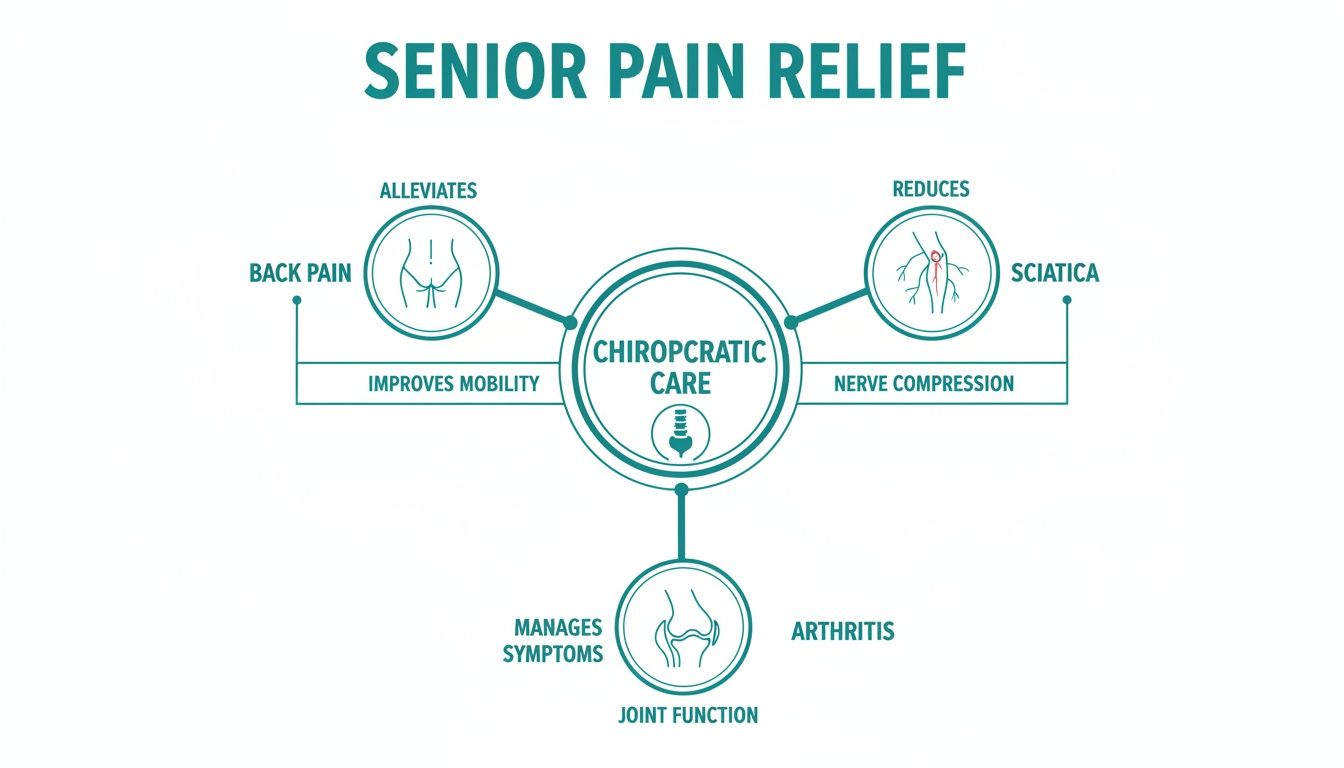
As you can see, the central goal is always to restore proper function. When your body works the way it's supposed to, you'll naturally find relief from a whole range of interconnected conditions that often pop up as we get older.
One of the most exciting advancements in pain management is Class IV laser therapy. This isn't a laser from a science-fiction movie; it's a therapeutic tool that uses specific wavelengths of light to penetrate deep into tissues and kickstart healing right at the cellular level. Best of all, it’s completely painless and non-invasive.
Think of it like photosynthesis for your cells. The light energy is absorbed and converted into chemical energy, which puts your body's natural healing processes into high gear. This brings several key benefits for seniors:
This therapy is incredibly versatile, helping with everything from an arthritic knee to the frustrating symptoms of peripheral neuropathy. To learn more about how it works, feel free to explore the benefits of cold laser therapy in our detailed guide. It's a fantastic, drug-free way to manage chronic pain and get back to doing what you love.
It’s the first question on everyone's mind, and rightly so: "Is this safe for me? Or for my mom?" It’s a completely fair and important question. When we talk about chiropractic care for older adults, the answer is a confident yes—as long as it’s performed by a professional who understands the unique needs of an aging body and uses gentle, modern techniques.
The term "spinal adjustment" might bring to mind forceful, cracking motions, but that’s an outdated picture. Today’s approach is all about precision and low-force applications. Safety isn’t just a consideration; it’s the bedrock of everything we do, shaping every single treatment plan from the ground up.
This commitment to your well-being begins the second you walk in the door. The single most important step to ensuring your care is both safe and effective is a comprehensive initial examination. We need to see the whole picture of your health, not just the part that hurts.
Before we even think about treatment, a deep dive into your unique health profile is essential. This isn't just a quick chat about your pain.
Our initial process always includes:
This meticulous evaluation helps us understand not just what hurts, but why it hurts. More importantly, it flags any situations where certain adjustments might not be the right fit, ensuring your care is perfectly and safely suited to you.
Honesty and transparency are crucial. While chiropractic care is incredibly safe for most seniors, there are specific situations—what we call contraindications—where some techniques need to be modified or avoided altogether.
An experienced chiropractor puts your well-being first, always. That means knowing when a different approach is better or when it’s time to refer you to another medical specialist. Your health is the only priority.
Some of these contraindications include:
The safety of modern chiropractic care for older adults isn't just something we claim—it's backed by solid evidence and real-world patient outcomes. The data clearly shows that when performed correctly, chiropractic is one of the safest treatments available for muscle and joint pain.
In fact, research has repeatedly demonstrated both the safety and effectiveness of chiropractic for seniors. Medicare data, for instance, shows the risk of stroke from adjustments in people aged 66-99 is far lower than from a typical primary care visit. Serious negative side effects are exceptionally rare, with rates ranging from 1 per 2 million manipulations to just 13 per 10,000 patients.
It's no wonder that 77% of patients describe their experience as 'very effective,' and Medicare's annual investment of over $400 million in chiropractic services reflects that trust. You can dive deeper into these figures by exploring some chiropractic facts and statistics.
Ultimately, it’s the combination of a detailed initial exam, a clear understanding of when not to treat, and the use of gentle, modern techniques that makes chiropractic a safe and powerful tool for healthy aging.
Walking into any new doctor's office can feel a little uncertain, and that’s perfectly normal. We get it. That’s why we’ve made sure your first visit with us is all about comfort, clear communication, and getting to know you as a person, not just a set of symptoms.

Think of this first appointment as the beginning of a partnership. Our main goal is to listen and understand everything about your health, your lifestyle, and what you want to get back to doing.
Before we do any kind of physical assessment, the most important step is simply talking. We'll sit down together, and you'll have our undivided attention. This is your chance to tell us your story—what’s been hurting, how it’s holding you back, and what you’re hoping to achieve.
We’ll have a friendly chat about a few key things:
This conversation is the bedrock of everything that follows. It allows us to connect the dots and truly understand the 'why' behind your symptoms.
After our talk, we’ll move on to a gentle but detailed physical and neurological exam. The whole point is to gather concrete information without ever pushing you past your comfort zone. It's a bit like a mechanic taking a look under the hood—we need to see how all the parts are moving and communicating with each other.
During this evaluation, we’ll carefully check a few areas:
This hands-on process gives us the objective data we need to pinpoint the source of your discomfort with real precision.
This detailed assessment is what makes our approach truly personalized chiropractic care for seniors. By understanding your body's specific mechanics, we can design a care plan that is not only effective but, above all, incredibly safe for you.
With the conversation and exam complete, we’ll put all the pieces of the puzzle together. We'll sit down with you again and explain what we’ve found in simple, everyday language—no confusing medical jargon, we promise. You'll see exactly how your story and our exam findings create a clear picture.
This is where we work together. We'll propose a treatment plan, explaining which of our gentle therapies we feel will help you most and why. You'll have plenty of time to ask questions and discuss every aspect of the plan. By the end of your first visit, you'll leave feeling heard, informed, and confident in the steps we’re about to take toward getting you moving and feeling better.
Your senior years are a time to be enjoyed, not endured. Too often, people accept chronic pain and stiffness as just another part of getting older, but it doesn't have to be that way. As we've seen, modern, gentle chiropractic care for seniors is about so much more than just managing symptoms—it's about getting to the root of the problem to restore your body's natural ability to move and heal.
Think of it less as a "fix" and more as a way to tune up your body's entire system. When your spine and nervous system can communicate properly, you start to see real, lasting relief from stubborn issues like back pain, sciatica, and arthritis. The real goal is to get you back to doing what you love, whether that's gardening for hours, playing with your grandkids, or just feeling more confident and steady on your feet.
Finding the right person to guide you on this journey is crucial. A chiropractor who truly understands the needs of older adults will take the time to listen to your history, perform a careful evaluation, and create a plan that puts your safety and comfort first. You should feel like an active participant in your own care. For more on what to look for, our article on how to choose a chiropractor is a great resource.
Chiropractic care isn’t a quick fix; it's a strategic partnership in your long-term wellness. It’s an investment in a future with less pain, more movement, and greater freedom to live the active, vibrant life you deserve.
A good partnership also extends beyond the clinic walls. Your chiropractor should offer practical advice for your daily life, from simple ergonomic tips to recommendations for things like maintaining proper spinal alignment during sleep, which helps support your body's healing even while you rest.
At the end of the day, you have the power to decide what your future looks like. Pain isn't a mandatory part of aging. By working with a dedicated chiropractic team, you're taking a powerful first step toward a healthier, more comfortable life.
It’s completely normal to have questions when you’re thinking about a new approach to your health, especially when it comes to chiropractic care in your later years. We get it. To put your mind at ease, here are some straightforward answers to the questions we hear most often from seniors and their families.
This is probably the number one concern we hear, and I’m happy to say the answer is a firm no. Gone are the days of forceful adjustments. We’ve moved far beyond that.
Our approach for seniors is built on gentle, low-force techniques. We often use sophisticated, FDA-cleared instruments that deliver incredibly precise, computer-guided adjustments—no twisting, popping, or cracking involved. Your comfort and safety are always our first thought.
Yes, in many cases, it does. Specifically, Medicare Part B helps cover manual manipulation of the spine if it’s medically necessary to fix a subluxation, which is just the clinical term for a spinal misalignment.
Now, it might not cover everything, like the initial exam or X-rays, but having that core coverage for the adjustments themselves makes a huge difference in keeping care accessible. It's always a good idea to double-check the specifics of your plan, and we can certainly help with that.
Our team is here to help you make sense of your coverage and any out-of-pocket costs. We never want financial worries to stand in the way of you feeling your best.
That's the million-dollar question, isn't it? Since every person is unique, there's no single timeline for healing. How quickly you see results really depends on your specific condition, how long you've been dealing with it, and your overall health.
With that said, many of our senior patients tell us they feel a real difference in their pain and mobility after just a handful of visits. We'll map out a personalized care plan with you that includes clear milestones, so you can see and feel the progress you're making along the way.
Nope, you don't. In most situations, a referral isn't necessary. Chiropractors are considered primary contact healthcare providers, meaning you can book an appointment with us directly.
However, we are big believers in teamwork. We think it’s incredibly important to keep an open line of communication with all of your healthcare providers. We’re more than happy to work alongside your primary care physician to make sure your care is coordinated and comprehensive. When everyone is on the same page, you get the best results.
At Bonesetters Critical Chiropractic, we're committed to helping you find real relief and get back to the life you want to live. If you’re ready to see what’s possible, let’s get started. Schedule your comprehensive evaluation with Dr. Hayes and our team today. You can learn more by visiting us at https://bonesetters.org.