
Yes, a chiropractor can often help with spinal stenosis. The short answer is that chiropractic care is a powerful, non-surgical approach focused on improving how your spine works, which in turn can reduce nerve pressure and manage your pain.
For many people, this means getting their mobility back and improving their day-to-day life, often without having to consider more invasive procedures.
To really get what's happening with spinal stenosis, imagine your spinal canal is a tunnel. That tunnel’s job is to protect your body's most important "electrical wiring"—the spinal cord and all the nerves that branch off from it. Spinal stenosis is what happens when that tunnel starts to get narrow, pinching those delicate nerves.
So, what causes this narrowing? It’s usually a combination of age-related changes:
When those nerves get squeezed, they can't send signals correctly. This is what causes the classic symptoms of spinal stenosis—pain, numbness, tingling, or weakness that often travels down the legs or arms.
The conventional medical route often starts with pain medication or steroid injections, and if those don't work, surgery might be recommended to physically widen the spinal canal. These options can certainly be necessary for some, but they come with drawbacks. Medications often just cover up the symptoms, and surgery is a major undertaking that permanently changes your anatomy.
Chiropractic care comes at the problem from a different angle. Instead of just chasing the pain, we focus on the underlying mechanical issues. The goal isn't to reverse the narrowing—we can't magically dissolve a bone spur—but to improve the function of the spine so much that the symptoms fade away.
The core idea is this: we restore healthy motion and calm inflammation. By improving the biomechanics of the spine, we can take just enough pressure off the compressed nerves to bring significant relief, all without drugs or surgery.
Think of it like a traffic jam inside a tunnel. Surgery is like blasting a whole new lane—it's a drastic, permanent change. Chiropractic care, on the other hand, is like getting a great traffic controller on the scene. We're not widening the tunnel, but we're making sure the cars (your vertebrae) are moving smoothly, staying in their lanes (proper alignment), and not causing pile-ups (joint restrictions). By improving how everything flows within the existing space, the jam—your nerve compression and pain—starts to clear up.
Understanding the different philosophies behind treatment can help you make an informed decision. While both approaches aim to relieve your pain, the "how" is fundamentally different.
| Aspect | Modern Chiropractic Care | Conventional Surgery |
|---|---|---|
| Core Principle | Improve spinal function and mechanics to reduce nerve pressure. | Physically alter spinal structures to create more space. |
| Primary Goal | Restore mobility, reduce inflammation, and provide long-term pain management. | Decompress the nerves by removing bone or disc material. |
| Common Outcome | Significant symptom relief, improved function, and enhanced quality of life. | Structural correction, but with risks and a long recovery period. |
Ultimately, whether a chiropractor can help with your specific case of spinal stenosis comes down to a thorough evaluation. But for a great number of people, it's a highly effective, evidence-based way to manage this tough condition and get back to an active, more comfortable life.
To get a handle on how a chiropractor can help with spinal stenosis, we need to connect the dots between the physical problem—that narrowed canal—and the techniques we use to manage it. Chiropractic care doesn't magically reverse the stenosis by, say, removing a bone spur. Instead, the entire focus is on improving how your spine functions and creating a better environment around it to take the pressure off those crowded nerves.
It's a strategy built on restoring natural motion and calming down the inflammation that causes all that pain.
Most of the time, the culprits behind stenosis are the classic signs of wear and tear. As spinal discs lose their height, ligaments thicken, or bone spurs form, they start encroaching on the space your nerves need. This is what leads to symptoms like sciatica or that sharp leg pain you feel when walking—it's the direct result of nerves being compressed and irritated.
This visual map helps simplify the journey from a pinched nerve to chiropractic relief.
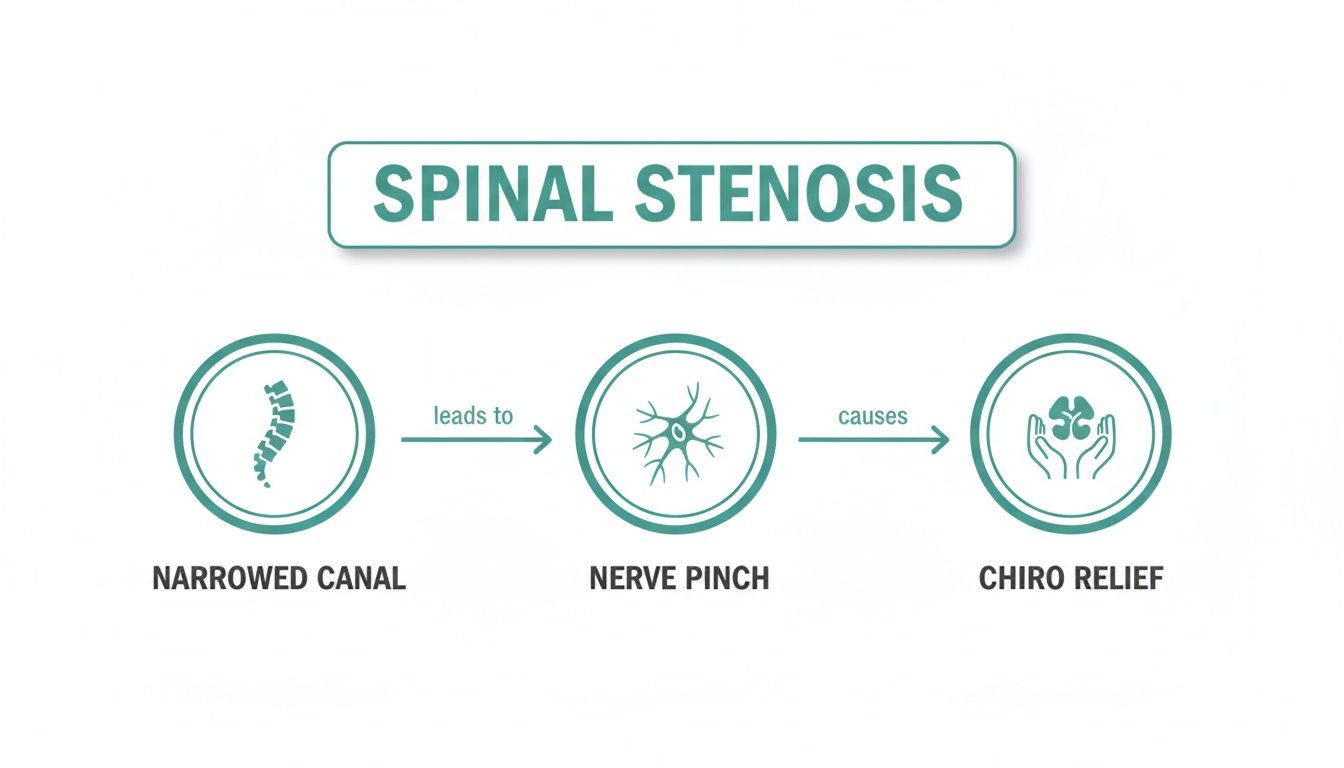
As you can see, the whole idea is to intervene right at the source of that nerve irritation. We're applying a functional solution to what is, at its core, a mechanical problem.
A cornerstone of the chiropractic approach is the spinal adjustment, sometimes called spinal manipulation. When individual vertebrae get "stuck" or misaligned, they contribute to the overall compression in your spinal canal. With gentle, specific adjustments, we can restore proper movement to these joints.
Think of it like un-jamming a stuck gear in a machine. By getting each segment of your spine moving the way it's supposed to, we reduce the mechanical stress on the whole system. This improved motion can subtly increase the space available for your nerves, which often provides critical relief. If you're curious about the mechanics, you can learn more here: https://bonesetters.org/how-do-chiropractic-adjustments-work/
For many people battling spinal stenosis, non-surgical spinal decompression is a game-changer. This therapy uses a specialized table that gently and precisely stretches the spine, creating negative pressure inside the discs.
This process delivers two huge benefits:
By decompressing the spine, we can effectively increase the space within the spinal canal without a single incision.
Inflammation is a massive pain-driver in spinal stenosis. When nerves get compressed, they get angry and inflamed, firing off pain signals. This is where advanced therapies like Class IV laser therapy come in, using specific wavelengths of light to penetrate deep into your tissues.
This light energy gives your cells a boost, helping to:
By directly targeting and calming inflammation, these therapies can provide significant pain relief and help create a better internal environment for long-term recovery.
While surgery certainly has its place, it's often best viewed as a last resort because of the risks and lengthy recovery. The research strongly supports trying non-surgical methods first. One study found that two years after fusion surgery, only 26% of patients had returned to work. In the non-surgical control groups, that number was 67%.
What's more, the surgical group faced a 27% reoperation rate and an 11% rate of permanent disability. That’s a stark contrast to just a 2% disability rate in the non-operative group. These numbers really highlight why a well-managed, conservative care plan is the smart first step for most people.
A comprehensive chiropractic plan will also include specific low impact strength training exercises to improve spinal stability and muscle support. By combining in-office treatments with at-home care, we build a robust framework for managing spinal stenosis and getting you back to your life.
While traditional spinal adjustments are the bedrock of chiropractic care, today's practice has a whole lot more to offer, especially for a complex condition like spinal stenosis. We now have an incredible suite of technologies that let us get right to the source of the problem with pinpoint accuracy.
These aren't just gadgets; they're evidence-based tools that allow us to create space, calm inflammation, and kickstart the body's healing processes in a way that manual techniques alone simply can't. Think of it like a skilled carpenter using hand tools for the broad strokes but switching to a laser level and a precision router for the intricate, delicate work. For stenosis, that delicate work means gently decompressing nerves and healing damaged tissues.
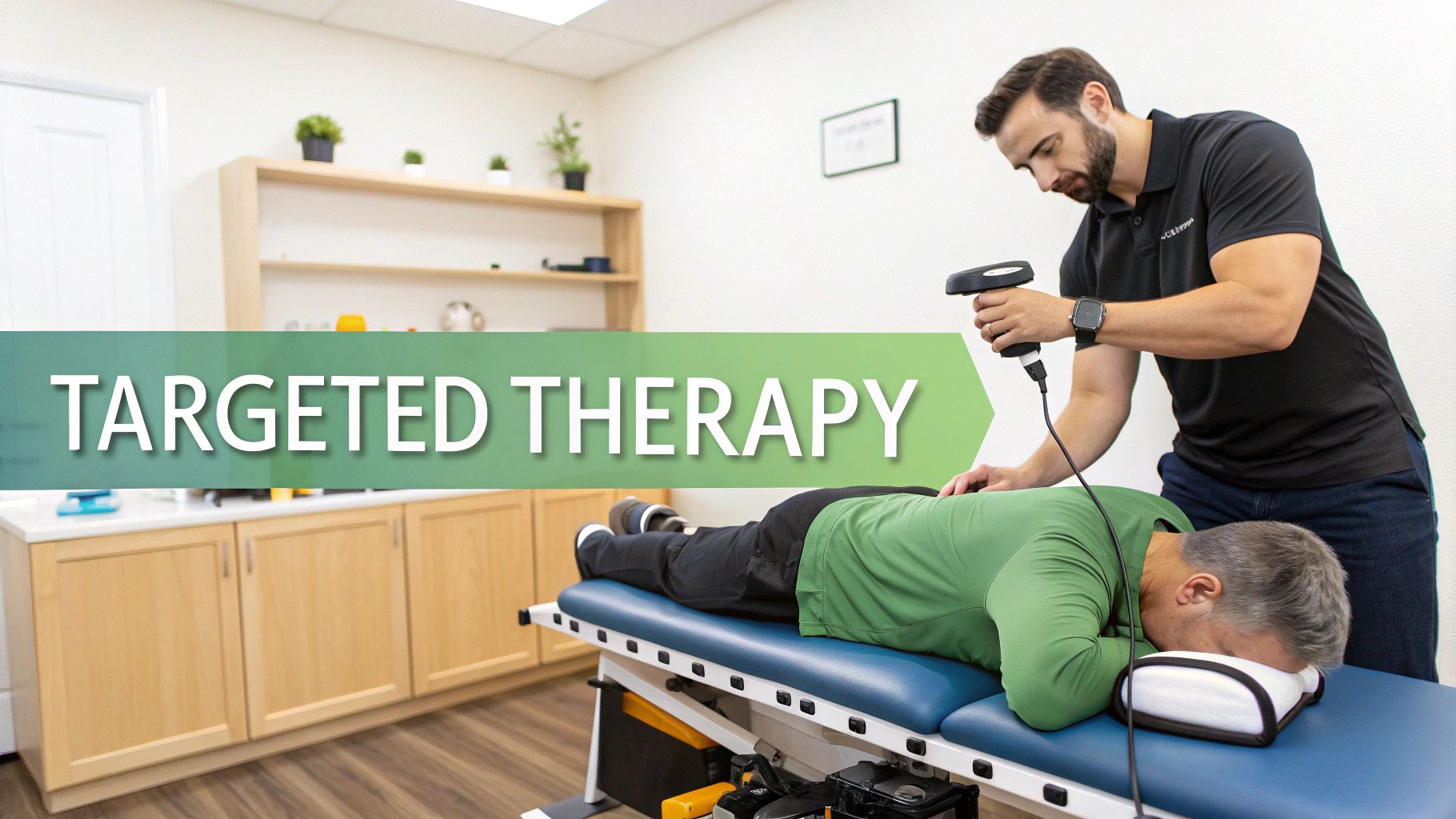
To better illustrate how these technologies work together, here’s a look at some of the most effective therapies we use in our clinic.
| Therapy | Mechanism of Action | Primary Benefit for Spinal Stenosis |
|---|---|---|
| Spinal Decompression | Uses a computer-controlled table to apply a gentle, axial stretching force, creating negative pressure within the intervertebral discs. | Creates a vacuum effect that can help retract bulging discs off of nerve roots and pulls nutrient-rich fluids into the disc to promote healing. |
| PulStar System | Employs a handheld device with advanced sensors to analyze spinal joint mobility and deliver precise, low-force impulses to restricted areas. | Provides a highly targeted and comfortable adjustment without twisting or "cracking," restoring motion to stiff joints that contribute to canal narrowing. |
| Class IV Laser Therapy | Delivers specific wavelengths of light energy deep into damaged tissues, stimulating cellular mitochondria to produce more energy (ATP). | Reduces inflammation and pain at the cellular level by accelerating tissue repair and improving circulation around the compressed nerves. |
These therapies represent a significant leap forward, allowing us to build a more comprehensive and personalized treatment plan for stenosis patients. Let's dig a bit deeper into each one.
One of the most effective tools in our arsenal for spinal stenosis is non-surgical spinal decompression. This therapy uses a sophisticated, computer-guided table to apply a very specific and gentle stretching force to your spine. The whole point is to create negative pressure inside the discs.
What does that mean? Imagine a subtle vacuum effect. This negative pressure can help:
This process can literally increase the space within the narrowed spinal canal, all without a single incision. To see this technology in action, you can learn more about how a modern spinal decompression chair operates.
By gently pulling the vertebrae apart, spinal decompression creates more room for the nerves. This can significantly reduce the pain, numbness, and tingling associated with stenosis, particularly symptoms that travel down the legs.
Let's be honest—the idea of manual "popping" or "cracking" makes some people nervous. The PulStar system is a fantastic alternative, offering a precise, computer-guided adjustment that gets the job done without any of the forceful twisting or thrusting.
Think of it as an intelligent adjustment tool. It sends a series of soft impulses into the spinal joints and then uses sensitive sensors to read how the spine responds. The computer instantly identifies which areas are stiff or stuck and then delivers a set of precise, low-force taps to restore movement right where it’s needed.
This approach ensures the adjustment is specific, controlled, and comfortable. It’s a perfect fit for sensitive conditions like spinal stenosis, where you want to be as exact as possible.
Inflammation is the real villain when it comes to the pain of spinal stenosis. Compressed nerves get angry and inflamed, firing off a constant stream of pain signals. Class IV laser therapy is a non-invasive treatment that uses focused light energy to tackle this inflammation right at the source—the cell itself.
This isn’t a burning laser; it uses specific wavelengths of light that penetrate deep into your tissues. This light energy gets absorbed by the mitochondria (the tiny "power plants" in your cells), which sets off a powerful healing cascade:
By directly addressing the underlying inflammation, Class IV laser therapy can dramatically cut down on pain and improve your ability to move. When used together, these advanced tools give us a powerful, multi-pronged strategy for managing your spinal stenosis.
Walking into a chiropractor's office for a condition like spinal stenosis can feel a little intimidating. I get it. But knowing what the road ahead looks like can make all the difference. Think of it less as a series of appointments and more as a collaborative game plan—one we build together to get you not just out of pain, but back to living your life.
Everything starts with a detailed consultation and a very thorough exam. This isn't just a quick "where does it hurt?" conversation. We'll dive deep into your health history, the specifics of your symptoms, and how this is affecting your day-to-day life. I’ll perform a full physical and neurological evaluation to get a crystal-clear picture of your starting point and, most importantly, to rule out any red flags that might mean you need a different kind of medical care. This initial step is non-negotiable; it ensures we create a plan that is both safe and tailored specifically to you.

Once we have that complete picture, your care will typically follow a three-phase structure. This isn't a rigid formula, but a proven framework that allows us to tackle your most urgent needs first, then build a foundation for long-term health.
1. The Intensive Phase (Putting Out the Fire)
Our first job is simple: get you feeling better, fast. During this phase, you’ll likely come in more frequently. We’ll focus on therapies like spinal decompression and Class IV laser to calm down the inflammation, take the pressure off those pinched nerves, and break the pain cycle. This is all about providing immediate relief so we can move on to the real work of correcting the underlying problem.
2. The Corrective Phase (Rebuilding the Foundation)
Once the acute pain is under control, our focus shifts. Now, we start addressing the mechanical issues that caused the problem in the first place. Visits might become less frequent as we work to restore proper movement in your spine, improve your posture, and strengthen the core muscles that act as your body’s natural back brace. This is where we make the structural changes that lead to lasting results.
3. The Wellness Phase (Protecting Your Investment)
After all that hard work, we want to make sure you stay feeling good. Think of this phase like a regular tune-up for your car or a cleaning for your teeth—it’s proactive maintenance for your spine. These periodic check-ups help us catch minor issues before they become major flare-ups, empowering you to manage a chronic condition like spinal stenosis for years to come.
Your treatment plan is never set in stone. It’s a living document that we’ll constantly adjust based on your progress and feedback. Success for us isn't just a lower number on a pain scale; it's seeing you walk farther, stand longer, and get back to the things you truly love doing.
Chiropractic care isn’t something that’s done to you; it’s a partnership. Your active participation is what turns good results into great ones. Your plan will always include things you can do outside of the office to speed up your recovery.
You will be an active partner through:
This combination of in-office care and your at-home diligence creates a powerful synergy that really accelerates healing. The research backs this up, too. One pragmatic trial showed that spinal manipulation was just as effective as physical therapy, with more frequent visits leading to bigger drops in both pain and disability. You can learn more about these clinical findings yourself. By working together and setting clear goals, we can achieve meaningful, lasting relief from spinal stenosis.
While chiropractic care can be a game-changer for many people dealing with spinal stenosis, it's not a silver bullet. A truly patient-focused chiropractor knows that the most important part of our job is understanding not just who we can help, but also who we can't. Our first commitment is always to your well-being, and that means being upfront about the limits of conservative care and knowing when to get you to another specialist, fast.
For most folks with mild to moderate stenosis, our goal is to improve function—to dial down the pain and get you back to living your life. This is where chiropractic truly shines. However, there are a handful of symptoms that are immediate "red flags," signaling a problem that needs to be checked out in a hospital setting right away.
These are the symptoms you never, ever wait on. If you experience any of the following, please seek immediate medical attention:
These symptoms suggest severe nerve compression that could cause permanent damage if not addressed quickly, often with emergency surgery. Any good chiropractic exam will screen for these red flags before a single adjustment is ever performed.
So, what happens if you've given conservative care a fair shot and you're still not getting the relief you need? If your symptoms are getting worse or your quality of life is still suffering, it might be time to see what other options are on the table. A surgical consultation is the logical next step.
For instance, if you can't make it through the grocery store without crippling leg pain, or you can't stand long enough to make dinner, it’s absolutely reasonable to explore surgical solutions. The goal of stenosis surgery is to mechanically create more room for the nerves, which might involve removing a piece of the vertebra (laminectomy) or shaving down bone spurs. We often see patients who are trying to avoid surgery for bone spurs, and you can learn more about the conservative treatment for bone spurs in the spine here.
A good chiropractor never works in a silo. We see ourselves as part of your total healthcare team. We'll gladly work with your family doctor, a neurologist, or an orthopedic surgeon to make sure you're getting the right care from the right provider.
Many patients also find that integrating other therapies can be a huge help. Looking into different types of massage therapy can offer complementary relief alongside your main treatment plan. At the end of the day, the best decisions come from understanding all the paths available to you.
Knowing that a chiropractor might be able to help with your spinal stenosis is one thing; taking the next step is what really matters. By now, you've seen how modern chiropractic care offers a solid, non-surgical path to managing the condition by focusing on improving function, calming inflammation, and bringing back mobility. The goal isn't just to mask the pain, but to get at the root of the mechanical problems so you can get back to living your life.
The most important thing to remember is that you don't have to just accept chronic pain. Left on its own, spinal stenosis often doesn't get better. One study that followed untreated patients for four years found that 70% saw no change in their symptoms.
But when you look at what’s possible with the right care, the picture is completely different. Chiropractic case studies have shown incredible results—one patient went from a severe 7.4/10 pain level down to zero, and was still pain-free nine years later. Another person reported an 80% improvement after only five months. You can discover more about these patient outcomes yourself and see what a proactive approach can achieve.
Finding the right partner for your health journey starts with asking the right questions. Not all chiropractic offices are equipped to handle complex conditions like stenosis, so it's crucial to find a provider with the right skills and technology. Think of your first consultation as an interview—you're there to see if they are the right fit for you.
Here are a few essential questions to bring with you:
Your first visit should feel like a real conversation, not a sales pitch. It’s your chance to make sure their approach and expertise line up with what you need to get better.
Deciding to see a chiropractor is a big move toward a more active, pain-free future. It’s about more than quieting symptoms; it’s about restoring your ability to do the things you love, whether that's walking in the park or getting on the floor to play with your grandkids.
By seeking out a personalized, whole-body approach, you can take back control from your condition. The next step is to schedule a consultation and find out if this kind of life-changing care is right for you.
Getting a spinal stenosis diagnosis can feel overwhelming, and it’s natural to have a lot of questions. If you're wondering whether chiropractic care is a safe and effective option, you've come to the right place. Here are some of the most common concerns we hear from patients just like you.
This is probably the most important question on your mind, and it's one we take very seriously. The short answer is no, not when the treatment is delivered by a chiropractor who is experienced in managing stenosis.
Our process always starts with a comprehensive exam. We need to know exactly what’s happening in your spine to determine the severity and rule out any red flags. We use gentle, precise techniques and completely avoid any aggressive twisting or forceful thrusts in the affected areas. For more sensitive cases, we often lean on non-manipulative therapies like spinal decompression or laser therapy to ensure we're helping, not hurting.
The first rule is always "do no harm." Modern chiropractic care for stenosis isn't about "cracking" anything back into place; it's about gently and precisely reducing pressure on the nerves.
Every patient’s journey is unique, but most people start to feel some initial pain relief within the first 2-3 weeks of starting care. Think of it as putting out the immediate fire.
More significant, lasting improvements—like being able to walk further without that burning leg pain or standing long enough to cook a meal—typically build over the next one to three months. Your personal timeline really depends on a few key things:
We’ll always give you a realistic outlook and set clear expectations right from the start.
Absolutely not. In fact, most people describe the feeling as a gentle, relieving stretch. It’s often quite relaxing.
As you lie on the specialized table, a computer system applies a very light, controlled pulling force. You'll feel a subtle lengthening in your spine. The goal is to carefully create a negative pressure inside your discs to draw in nutrients and give your pinched nerves more room. Many of our patients genuinely look forward to it.
Our main goal is to get you back in control of your life and give you the tools to manage your condition on your own. Treating a chronic issue like spinal stenosis usually happens in phases.
First, there’s an intensive "corrective" phase where we focus on getting your symptoms under control and improving your spinal function. Once we’ve achieved that, many patients choose to transition to a "maintenance" plan. This is a lot like a regular dental cleaning—you come in for periodic check-ups to keep your spine healthy, catch minor issues before they become major flare-ups, and protect all the hard-won progress you’ve made.
At Bonesetters Critical Chiropractic, we focus on evidence-based, non-surgical solutions for complex conditions like spinal stenosis. If you're ready to see if there's a better way to manage your pain and get back to living your life, we're here to help. Schedule your consultation today at https://bonesetters.org.