
The immediate aftermath of an accident is chaotic. Whether it involves a car crash, a slip and fall, or a workplace mishap, the physical and emotional impact hits hard and fast. In those first few moments, adrenaline floods the system, often masking pain and creating a false sense of security. This biological survival mechanism can lead to confusion about what steps to take next, causing many to delay necessary medical attention because they "feel fine" right after the incident.
While emergency rooms are excellent for treating broken bones and life-threatening conditions, they often overlook soft tissue injuries common in accidents. General practitioners may prescribe painkillers, but they rarely address the underlying structural damage caused by forceful impacts. Specialized care is essential because accident-related trauma frequently involves complex whiplash and muscle tears that require targeted therapy to heal correctly. Without this specific focus, minor aches can turn into chronic, lifelong issues.
This guide serves as a comprehensive resource for anyone searching for an "accident chiropractor near me." It covers the critical window for treatment, the importance of documenting injuries for insurance purposes, and the path to a full, safe recovery.
The human body is designed to survive trauma, and part of that survival mechanism involves the "fight or flight" response. Immediately following a collision or fall, the body releases a massive surge of endorphins and adrenaline. These chemicals act as natural painkillers, temporarily suppressing pain signals to the brain.
It is incredibly common for symptoms to remain dormant until the initial shock wears off. Issues like severe headaches, neck stiffness, dizziness, and numbness often appear 48 to 72 hours after the accident. Waiting for these symptoms to become unbearable before seeking help can complicate the recovery process.
Seeking immediate care is not just a medical necessity; it is often a legal and financial one as well. Many states have Personal Injury Protection (PIP) laws that impose strict deadlines on seeking treatment. For example, some regulations require accident victims to see a medical professional within 14 days of the incident to qualify for insurance coverage.
Accident Chiropractic Care
Whiplash is one of the most common injuries associated with car accidents, occurring when the head is suddenly jerked back and forth. This rapid motion strains the muscles and ligaments of the neck beyond their normal range of motion, causing micro-tears in the tissue. Contrary to popular belief, this injury does not require high speeds; collisions occurring at speeds as low as 5 to 10 mph can generate enough force to cause significant soft tissue damage and long-term spinal misalignment.
While the neck often takes the brunt of the impact, the force of an accident travels throughout the entire body. Shoulder impingement from seatbelts, lower back sprains from the torque of the crash, and even mild traumatic brain injuries (concussions) are frequently sustained. Wrists and knees can also suffer impact injuries that may not be immediately obvious.
Emergency rooms are designed to triage life-and-death situations. Their diagnostic protocols, primarily standard X-rays, focus on identifying fractures, dislocations, and internal bleeding. However, X-rays do not show soft tissue damage like torn ligaments, herniated discs, or muscle strains. A patient can leave the ER with a "clean bill of health" because they have no broken bones, yet still suffer from severe soft tissue trauma that requires the attention of a specialist trained to identify and treat these invisible injuries.
Not all chiropractors are equipped to handle the complexities of accident cases. Patients should specifically look for a provider who advertises experience with auto accidents and personal injury claims. These practitioners understand the specific medical documentation required by lawyers and insurance companies.
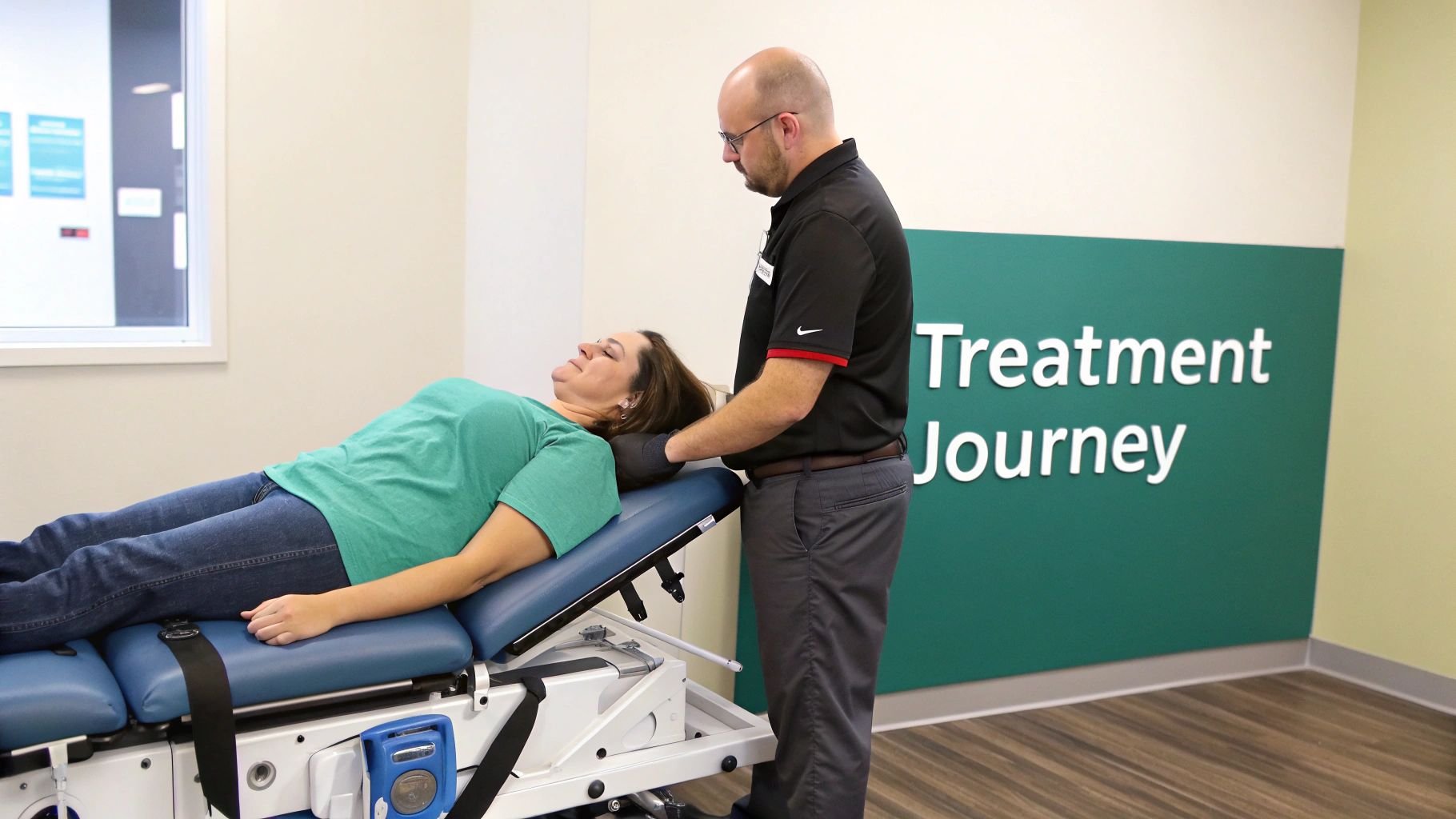
Effective recovery from acute trauma requires more than just manual adjustments. The best clinics utilize advanced technology designed to speed up soft tissue repair and reduce inflammation. Treatments such as cold laser therapy, spinal decompression, and electric stimulation are specifically effective for acute injuries.
A high-quality accident chiropractor rarely works in isolation. The most effective providers have an established network of referral partners, including orthopedists, neurologists, and advanced imaging facilities for MRIs. This interdisciplinary approach ensures that if an injury requires medical intervention beyond chiropractic care—such as injections or surgical consultation—the patient can be referred seamlessly to a trusted specialist within the network.
One of the most powerful tools for a personal injury claim is a daily pain journal. Patients are encouraged to keep a written record noting the location, intensity, and type of pain experienced each day. It is equally important to document how these injuries affect daily activities, such as an inability to sleep, difficulty driving, or trouble lifting groceries.
Following the prescribed treatment plan is vital for both physical recovery and the legal strength of a case. Missing appointments or showing up inconsistently can be interpreted by insurance adjusters as a sign that the injury is not serious. To ensure the claim remains valid and medical bills are covered, patients must prioritize their scheduled visits and follow the chiropractor's recommendations closely throughout the entire recovery process.
Insurance companies often look for reasons to devalue or deny claims, and a "gap in care" is a primary target. Stopping treatment prematurely because the pain has subsided, or having long periods between visits, creates a gap that adjusters can use to argue that any lasting pain is unrelated to the accident.
Standard chiropractic exams differ significantly from trauma-based assessments. The Bonesetters Critical Care approach involves using advanced diagnostics to evaluate the full extent of trauma to the spine and nervous system. This goes beyond checking for simple misalignments; it involves analyzing how the impact forces have altered the structural integrity of the body.
Patients fresh from an accident are often in too much pain for traditional, high-force manual manipulation. A critical care approach emphasizes the use of low-force, instrument-assisted adjustments. These techniques allow for the correction of spinal misalignments without the twisting or popping associated with standard chiropractic care.
The ultimate mission of specialized accident care is not just to treat the immediate symptoms of whiplash but to correct the underlying structural shifts caused by the impact. By addressing the root cause of the trauma, this approach aims to restore the body to its pre-accident state or better.
During the initial consultation, the doctor will conduct a specific interview focused on the details of the crash. Questions will cover the patient's position in the car, whether they were wearing a seatbelt, if the airbags deployed, and the direction of the impact. Understanding the physics of the crash and the forces the body absorbed helps the chiropractor pinpoint exactly where injuries likely occurred, even before the physical exam begins.
A comprehensive exam includes specific neurological and orthopedic tests designed to assess the damage. The doctor will check for nerve damage by testing reflexes and sensation, assess range of motion restrictions in the neck and back, and evaluate ligament stability.
In accident cases, guessing is not an option. High-quality digital X-rays are non-negotiable to rule out hairline fractures and visualize the spacing between vertebrae. If the X-rays or physical exam suggest more severe damage, such as disc herniations or spinal cord compression, the chiropractor will provide a referral for an MRI.

Accident Chiropractic Treatment
The immediate goal following an accident is simply to manage the crisis. Phase 1 focuses entirely on reducing pain and inflammation through gentle movement and passive modalities. During this stage, aggressive adjustments are avoided in favor of therapies that calm the nervous system and encourage fluid drainage from swollen tissues.
Once the acute pain and inflammation have subsided, treatment shifts toward restoring function. Phase 2 involves specific adjustments and therapies designed to bring normal range of motion back to the joints. This phase is critical for preventing the formation of restrictive scar tissue in the muscles and ligaments, which can lead to permanent stiffness if left untreated.
The final stage of care ensures the recovery lasts. Phase 3 introduces rehabilitative exercises focused on strengthening the muscles surrounding the neck and back. By stabilizing the spine and improving posture, the patient becomes more resilient against future injuries. This phase bridges the gap between simply being "pain-free" and being functionally corrected and strong.
Many accident victims worry about the upfront cost of care, but specialized chiropractors often work with attorneys under a Letter of Protection (LOP). This legal document allows the patient to receive necessary medical treatment immediately without paying out of pocket. Instead, the medical bills are paid later from the eventual injury settlement.
Navigating insurance coverage can be confusing, particularly distinguishing between Medical Payments (MedPay) coverage and standard health insurance. MedPay is an optional add-on to auto insurance policies that pays for medical expenses regardless of who was at fault. It is usually the primary payer in accident cases, meaning it pays out before health insurance kicks in.
Effective communication between the medical provider and legal representation is essential. Patients should choose a chiropractor who understands the importance of keeping the attorney informed. Accurate medical records that clearly reflect the severity of the case, the treatment plan, and the patient's progress are the foundation of a successful personal injury claim.
Recovering from an accident begins with acknowledging the urgency of the situation. From the moment of impact, the clock is ticking on both medical recovery and insurance eligibility. Seeking specialized soft tissue treatment immediately, rather than waiting for symptoms to worsen, is the most effective way to prevent chronic pain. Consistent documentation and adherence to a treatment plan further ensure that the patient's health and legal rights are protected.
While the trauma of an accident can be overwhelming, the human body is incredibly resilient. With the right expert care, a return to health is not just a possibility—it is an expectation. Patients do not have to accept pain as a new normal. By partnering with a knowledgeable provider who understands the intricacies of accident recovery, it is possible to heal fully and move forward with life.
Don't risk your long-term health or your legal rights by waiting. If you have been in a collision or suffered an injury, searching for an "accident chiropractor near me" is the first step toward getting your life back. Schedule a comprehensive evaluation with a specialized accident chiropractor today to start the road to recovery.
Bonesetters: Critical Care Chiropractic Clinic
https://maps.app.goo.gl/ekdeZy1WhR7UTJNPA
15510 Olive Blvd, Chesterfield, MO 63017
(636) 735-3599
https://bonesetters.org/