

The term spinal subluxation can be a real source of confusion because it means two completely different things depending on who you talk to. In the world of chiropractic, a vertebral subluxation describes a subtle misalignment believed to interfere with nerve function and your body's overall wellness. In a medical doctor's office, however, it refers to a partial dislocation of a joint—something you can clearly see on an X-ray.
Getting this distinction right is the key to understanding the different paths to spinal health.
When a healthcare professional mentions "spinal subluxation," they're operating from one of two very different philosophical camps. This isn't just wordplay; it reflects a fundamental disagreement about the spine's role in your health. To really grasp what's going on, we have to look at it from both the chiropractic and the medical points of view.
For a chiropractor, a subluxation is a functional problem. We're not usually talking about a dramatic dislocation that would show up on a routine X-ray. Instead, we're focused on a more subtle, complex issue known as the Vertebral Subluxation Complex (VSC).
Here’s a helpful way to think about it: Imagine your nervous system is the electrical grid for your entire body. Your brain is the power station, and your nerves are the wires sending critical signals to every single muscle, organ, and cell. The spinal column is the main protective conduit for all those crucial wires.
In the chiropractic model, a vertebral subluxation is like a dimmer switch being turned down on one of those circuits. A vertebra loses its proper motion or position, which can irritate or put stress on the nerves around it. It doesn't cause a "blackout" like a completely severed nerve, but it can disrupt or distort the messages traveling along that path. The end result is that your body might not be functioning at 100%.
The VSC isn't just about a bone being out of place. It's a collection of issues that includes:
This functional viewpoint is why a chiropractor can identify a subluxation that an orthopedist might not—we're simply looking for different things.
Conventional medicine sees subluxation in much more black-and-white, structural terms. From an orthopedic standpoint, a subluxation is a partial or incomplete dislocation of a joint. It's a significant event where the bones of a joint are no longer properly aligned, but they haven't come completely apart.
This kind of subluxation is almost always caused by some sort of trauma—a bad fall, a sports injury, or a car accident. You can usually see it plain as day on an X-ray or MRI. The medical focus is squarely on the joint's structural instability and the immediate damage.
A medical subluxation is a measurable, often painful, structural displacement that requires intervention to prevent further joint damage. In contrast, a chiropractic subluxation is a functional issue identified through motion palpation and neurological tests, focusing on restoring nervous system integrity.
To make this crystal clear, let's break down the core differences in a simple table.
The table below offers a side-by-side comparison to help you understand the two distinct ways this term is used.
| Aspect | Chiropractic View (Vertebral Subluxation Complex) | Medical View (Orthopedic Subluxation) |
|---|---|---|
| Primary Focus | Function. Loss of motion, nerve interference, and overall health impact. | Structure. A partial dislocation of the joint. |
| How It's Identified | Physical exam, motion palpation, neurological tests, postural analysis. | Diagnostic imaging like X-rays, CT scans, or MRIs. |
| What Causes It | Physical, chemical, or emotional stress (e.g., poor posture, toxins, emotional strain). | Acute trauma, such as a fall, car accident, or sports injury. |
| What It Looks Like | Often invisible on standard imaging. It's a dynamic, functional issue. | Visibly out of place on an X-ray or other imaging. |
| Goal of Treatment | Restore proper motion and alignment to improve nervous system function and overall health. | Realign the joint (reduction) and stabilize it to prevent further damage. |
As you can see, both perspectives are valid within their respective frameworks, but they are describing fundamentally different conditions.
This conceptual diagram provides a great visual summary of the two viewpoints.
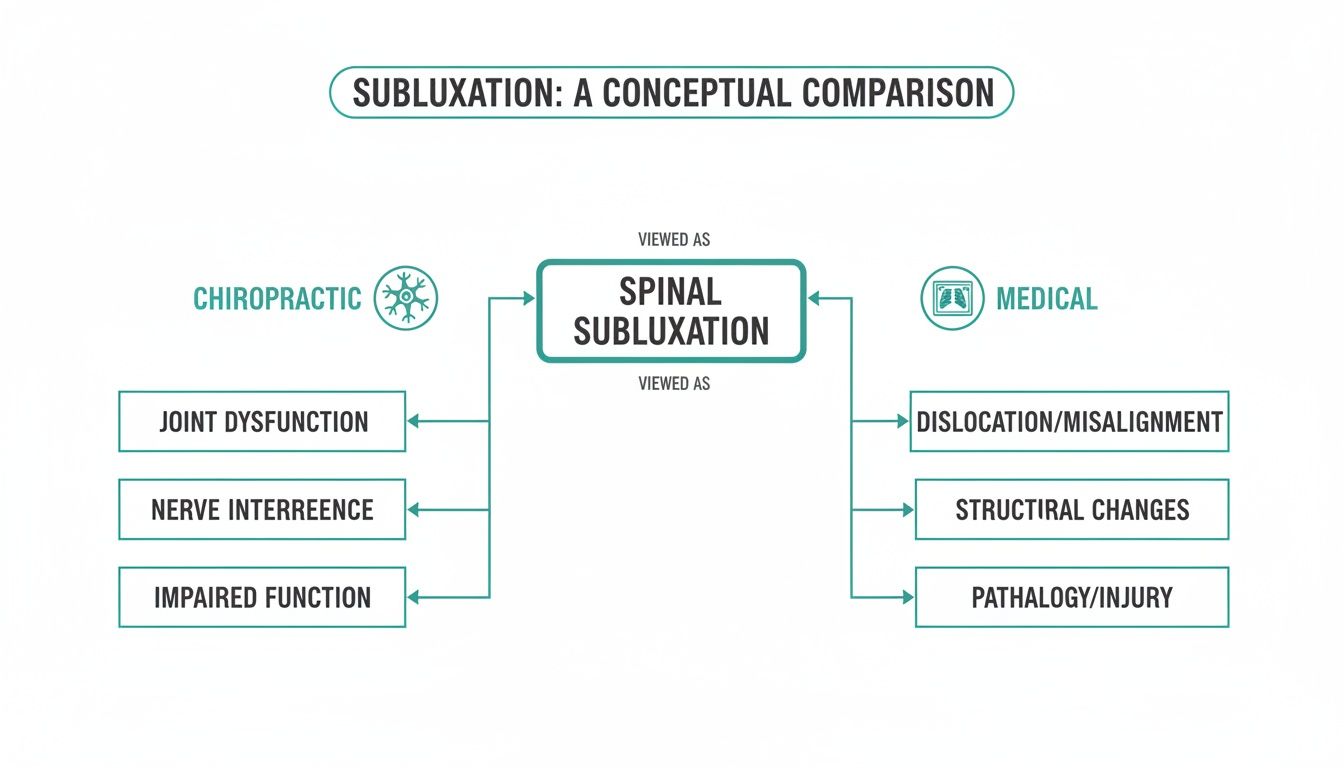
The image drives home the key point: the chiropractic model is concerned with nerve function and its effect on your body's wellness, while the medical model zeroes in on visible joint pathology and structural damage. Understanding this core difference is the first, most important step in having productive conversations about your spinal health and deciding on the best care for you.

Most people think of a spinal subluxation as a rare thing, maybe the result of a big accident or a serious fall. The truth is, these functional misalignments are incredibly common. They often creep in quietly, building up from the everyday stresses we all face.
Think of it like the foundation of a house. You might not notice small shifts at first, but over time they can lead to bigger problems like sticky doors or cracks in the walls. In the same way, seemingly minor vertebral subluxations can develop from our daily habits and slowly begin to affect how our entire body works.
Our modern lives practically create a perfect storm for spinal stress. We spend hours hunched over keyboards, crane our necks to stare at our phones, and slump in our cars and on our couches. These aren't major traumas, of course, but they are micro-traumas—small, repeated stresses that add up day after day.
Eventually, this constant strain can cause vertebrae to lose their proper alignment and range of motion. This, in turn, can interfere with the very nerves the spine is meant to protect. Changing our perspective on what is spinal subluxation—from a rare injury to a common result of modern life—is key to understanding why spinal health is so important.
A major 2022 study really brought this home. Researchers looked at 1,851 patient records from chiropractic clinics in four states and found that a staggering 78.55% of them showed signs of vertebral subluxation. This suggests that a huge number of adults could be walking around with spinal issues they don't even know about, making a strong case for proactive screening to catch problems before they worsen. You can dive into the full research on these subluxation findings and their public health implications.
While a subluxation can happen to anyone, some lifestyles and activities definitely raise the risk. Knowing what these are helps shift the mindset from seeing a chiropractor only for emergencies to treating it as routine maintenance, just like getting your teeth cleaned.
Common risk factors include:
Just as a dentist checks for cavities before they become painful root canals, a chiropractor can identify and correct vertebral subluxations before they lead to chronic pain, nerve interference, or reduced mobility. This preventative approach is the cornerstone of long-term wellness.
The sheer number of people dealing with subluxations sends a clear message: your spine needs regular care. It’s not just about chasing pain after it shows up; it’s about proactively maintaining the master system that keeps your entire body running.
So, how can you tell if you have a spinal subluxation? It's a great question, and the answer isn't always as simple as pointing to a sore spot on your back. The signs can be surprisingly subtle and varied, and that's because they're all tied to nerve interference.
Think of your body's symptoms as the "check engine" light in your car. That little light doesn't tell you exactly what's wrong, but it's a clear signal that something under the hood needs a professional look. The symptoms of a subluxation are your body's version of that light—a warning that its internal communication network, your nervous system, is hitting some static.
These warning signs often go far beyond just localized pain, branching out into issues you might never think to connect back to your spine.
These are the most direct and easily recognizable clues of a potential spinal issue. You'll typically feel them right at or near the site of the misalignment, where the joint and surrounding muscles are taking the brunt of the impact.
When a vertebra gets "stuck" and loses its proper motion, the body’s natural defense is to tighten the nearby muscles to try and protect the area. Unfortunately, this can kick off a frustrating cycle of stiffness, pain, and more stiffness.
Common localized signs include:
This is where things get a bit more complex. Your spine is the protective armor for your nervous system. Even a minor misalignment can start to irritate or compress the delicate nerves that exit the spinal column. That nerve pressure can then send confusing, distorted, or painful signals to totally different parts of your body, far from the actual problem.
Picture a garden hose with a small kink in it. Water can still get through, but the flow is weak and inconsistent. A subluxation does something very similar to your nerve signals.
Neurological symptoms are the body’s clearest cry for help. They tell us that the vital communication highway between your brain and body is compromised. To get lasting relief, you have to address the root cause in the spine.
These nerve-related signs often show up as:
This is perhaps the most overlooked category of all—systemic problems that seem to have absolutely nothing to do with your back. But remember, your nervous system regulates every single function in your body, from your heartbeat and digestion to your immune response. When nerve signals are distorted, the organs on the receiving end can't function at 100%.
Over time, this can contribute to a whole host of health challenges that traditional medicine might struggle to find a cause for.
Think about these potential indicators:
Recognizing these diverse warning signs is the first crucial step toward understanding what is spinal subluxation and finding the right care to get you back on track.

To really get a handle on spinal subluxations, you first have to understand where they come from. These misalignments rarely just pop up out of the blue. More often, they're the result of all the different stresses our bodies soak up day in and day out.
Your spine is an incredibly resilient structure, but it’s not invincible. Think of it like a finely tuned guitar string; it can handle a lot of tension, but constant strain and sudden shocks will eventually knock it out of tune.
In the world of chiropractic, we often trace subluxations back to three core sources, what we call the "Three T's": Traumas, Toxins, and Thoughts. This simple framework helps us connect the dots between physical injuries, chemical exposures, and even emotional stress to the functional imbalances that mess with your nervous system. When you look at it this way, you start to see how modern life can stack the deck against a healthy spine.
The most straightforward cause of a spinal subluxation is physical trauma. This is the stuff you’d expect: car accidents, a bad fall, or a hard hit during a weekend sports game. These major events can slam the spine with sudden, overwhelming force, knocking vertebrae out of place. The effect is usually immediate and needs attention right away to get things back in line.
But what trips most people up are the micro-traumas—the small, repetitive stresses that quietly pull the spine out of alignment over weeks, months, or even years.
Sometimes, the root cause is even more subtle. A chronic biomechanical issue, like a slight leg length discrepancy that you might not even know you have, can be the underlying culprit behind persistent spinal misalignment.
Never underestimate the mind-body connection. When you're dealing with chronic emotional stress—whether from work, money, or relationships—your body gets stuck in "fight or flight" mode. This floods your system with stress hormones like cortisol and makes your muscles clamp down, especially in your neck, shoulders, and back.
Over time, this constant muscular tension acts like a set of tight wires pulling on your vertebrae. The spine can be gradually pulled out of alignment, not by a sudden impact, but by the relentless strain of your body’s stress response.
This is exactly why a stressful week at work so often leads to a flare-up of back pain or a tension headache. That emotional weight literally becomes a physical burden, directly contributing to vertebral subluxations.
The final piece of the puzzle, toxins, refers to all the chemical stressors that create a hostile environment inside your body. When your system is inflamed, it affects everything—including the health of your joints, muscles, and ligaments. This makes them far more vulnerable to injury and misalignment.
Chemical stressors can come from anywhere:
All this inflammation can cause swelling and irritation around the spinal joints, making everything feel stiff and sore. At the end of the day, what you put into your body can either fortify your spine or create the perfect internal storm for subluxations to form. Answering the question what is spinal subluxation means looking at the whole picture.
Once we’ve pinpointed a spinal subluxation, the next step is building a smart, effective plan to correct it. A lot of people hear "chiropractor" and immediately picture forceful twisting and popping, but modern care has evolved far beyond that. Today's best non-surgical solutions are technology-driven, gentle, and designed around your specific spinal mechanics—no cracking required.
Our goal is to get your spine moving correctly again, take the pressure off your nerves, and kickstart your body’s own healing abilities. This isn't just about a single adjustment. It's a comprehensive strategy that looks at the spine, the muscles supporting it, and any underlying inflammation. By layering different evidence-based therapies, we can put together a plan that delivers real, lasting results.
Leading the charge in modern chiropractic is computer-guided technology like the PulStar system. This FDA-cleared device completely removes the guesswork from analyzing and correcting the spine. Instead of relying only on what I can feel with my hands, the PulStar uses a handheld instrument that sends tiny, gentle impulses into each spinal joint.
You can think of it as a highly sophisticated sonar system for your back. The tool measures the resistance from each joint, creating a digital map of any areas that are stiff, stuck, or just not moving the way they should. This data pops up on a computer screen in real-time, so we can both see exactly where the problem is.
The PulStar doesn't just find the problem—it helps fix it. The very same instrument delivers a series of precise, gentle taps to the stuck joint, carefully coaxing it back into motion. There is absolutely no twisting, cracking, or popping involved.
This approach gives us a few huge advantages:
Sometimes a subluxation goes hand-in-hand with a disc problem, like a bulge or herniation. When that's the case, non-surgical spinal decompression is an incredibly powerful tool. This therapy works by gently stretching the spine, which creates a negative pressure—almost like a vacuum—inside the damaged disc.
This vacuum effect helps pull the bulging disc material back where it belongs and, just as importantly, draws in a fresh supply of oxygen and nutrients to fuel the healing process.
Imagine a dry, compressed sponge being placed in water and allowed to expand. Decompression does something very similar for your spinal discs, giving them the space and resources they desperately need to repair. For anyone battling sciatica or that radiating pain down the leg, understanding how a spinal decompression chair provides such focused relief is a great next step. It’s a targeted solution for one of the most debilitating complications of spinal misalignment.
Fixing the alignment is just one piece of the puzzle. To get you feeling better for good, we also have to tackle the inflammation and tissue damage that a subluxation often leaves in its wake. That's where Class IV cold laser therapy comes into play.
This non-invasive therapy uses specific wavelengths of light that penetrate deep into your muscles and ligaments. Your damaged cells absorb this light energy, which triggers a healing process called photobiomodulation. It's like giving your cells a massive energy boost so they can repair themselves much faster. Since chronic inflammation is often tied to spinal issues, learning how to reduce inflammation in the body is a key part of any long-term recovery strategy.
The main benefits you'll see from cold laser therapy are:
By combining these advanced, non-surgical tools, we move way beyond just chasing symptoms. We can correct the root cause of the spinal subluxation, knock out pain and inflammation, and truly restore your body's ability to function at its best.

Knowing when to switch from self-care to professional help is key to managing your spinal health. We all get aches and pains now and then, but some signals from your body suggest a deeper issue, like a spinal subluxation, that needs an expert eye.
If you’re dealing with discomfort that just won’t go away, it’s probably time to get it checked out. Ignoring these persistent warnings can allow a small problem to snowball into a chronic one, potentially leading to increased nerve interference and long-term joint damage. A chiropractor can give you a thorough assessment to pinpoint the root cause of your symptoms.
Some symptoms are more than just minor annoyances; they're clear signs that your body needs more than rest. These indicators often point to an underlying spinal issue, like a vertebral subluxation, that might be disrupting your nervous system. You don't have to wait until the pain is unbearable.
Consider scheduling an evaluation if any of these sound familiar:
While most symptoms mean you should book an appointment, a few are considered “red flags.” These demand immediate medical attention to rule out a more serious condition. They could be a sign of severe nerve compression or another urgent issue that a chiropractor is trained to spot and refer out.
Crucial Takeaway: Never ignore sudden and severe neurological changes. These symptoms go beyond a typical spinal subluxation and require an immediate medical workup.
Seek emergency care if you experience:
Understanding these differences helps you make smart decisions about your health, empowering you to know when to see a chiropractor and when to head straight to the emergency room.
It's natural to have questions when you're navigating the complexities of spinal health. To give you some clarity, we've answered a few of the most common queries we hear about spinal subluxations and what they mean for your daily life.
While a little stiffness might ease up after a good stretch, a true vertebral subluxation almost never resolves on its own. The combination of stuck joints, tense muscles, and nerve irritation is a stubborn pattern that usually needs a targeted intervention—like a chiropractic adjustment—to break the cycle.
Leaving it alone often just gives the problem time to settle in and become chronic. Over time, your body might even form scar tissue around the joint to stabilize it, making it that much harder to correct down the road. This is a perfect example of why being proactive with your spinal health is so important.
That’s a great question, and the answer is no, but they are definitely related. A classic "pinched nerve," medically known as radiculopathy, is a serious issue where a nerve is being physically compressed, usually by something like a herniated disc. This typically causes sharp, shooting pain.
A subluxation creates a more subtle problem: nerve interference. Think of it less like a cut phone line and more like static or a bad connection. The signals are still getting through, but they’re distorted, which can lead to a whole host of issues, from dull aches to tingling or muscle weakness.
Think of it this way: A pinched nerve is a total roadblock on the neural highway. A subluxation is more like a constant, frustrating traffic jam—information gets through, but it's delayed and jumbled, affecting how everything functions.
Chiropractors don't just guess. Pinpointing the exact location of a subluxation is a detailed diagnostic process that pulls together several different clues to get the full story.
This thorough evaluation ensures that any treatment is aimed squarely at the specific vertebrae that need it most.
At Bonesetters Critical Chiropractic, we use advanced, evidence-based diagnostics to find the true source of your discomfort. If you're dealing with symptoms that sound like a spinal subluxation, you can schedule your comprehensive evaluation with us today.