

Living with chronic back pain can feel like an endless fight, chipping away at your quality of life. A spinal decompression chair offers a powerful, non-surgical path forward, designed to gently relieve the crushing pressure that’s built up on your spinal discs. It creates an environment where your body can finally begin to heal itself.
To really get how a spinal decompression chair works, let's use an analogy. Think of your spinal discs as tiny, water-filled sponges tucked between each vertebra. They're your spine's natural shock absorbers, letting you bend, twist, and move without pain.
But over the years, things like poor posture, an old injury, or just the natural aging process start to compress those little sponges. That constant pressure squeezes out the water and vital nutrients, leaving the discs thin, dry, and brittle. Once that happens, they can’t cushion your spine anymore, which is what leads to that nagging, chronic pain. Sometimes, the disc even bulges or herniates, pressing on sensitive nerves and triggering debilitating symptoms.
Spinal decompression therapy gets right to the heart of this problem. Using precise, computer-guided force, the chair gently stretches the spine. This creates a state of negative pressure inside that squeezed, damaged disc.
You can think of it as a subtle vacuum effect. This negative pressure carefully pulls the spine apart, creating space that helps draw bulging or herniated disc material back into place. Even better, this process ushers in a healing flood of oxygen, water, and nutrients that the disc has been starved of.
This isn’t about a quick fix. It’s about rehydrating those "sponges," allowing them to plump back up and do their job as cushions again. This targeted approach is a game-changer for several common conditions behind severe back and leg pain.
Because a spinal decompression chair is so specific, it's a fantastic solution for certain spinal issues. It works by directly taking the mechanical stress off the area causing your symptoms. Some of the key conditions it helps are:
The growing trust in non-surgical solutions is clear when you look at the numbers. The global market for spinal decompression devices, like the advanced systems we use here at Bonesetters Critical Chiropractic, was valued at USD 1.5 billion in 2023 and is expected to climb to USD 2.6 billion by 2032. This shows just how much people are seeking out effective, non-invasive treatments.
You can dive deeper into this trend by exploring the market research on spinal decompression devices. And if you’re looking for things you can do right now, our guide on how to relieve chronic back pain offers some great starting points.
To really get why a spinal decompression chair works so well, we need to look at the science behind that gentle, controlled stretch it provides. The therapy zeroes in on the real culprit behind most disc pain: crushing pressure. This isn't just about pulling things apart; it's a very specific biomechanical process designed to give your spine a complete reset.
The whole concept revolves around something called axial traction. In simple terms, this means applying a force along the length of your spine to create space. But here's the clever part: your body has a built-in defense system called muscle guarding. If you just pull, your back muscles instinctively tense up and fight against it. A modern spinal decompression chair is smart enough to work around this reflex.
Using sophisticated computer controls, the chair applies and releases tension in a precise, rhythmic cycle. This pattern is key—it prevents your muscles from tensing up, allowing the vertebrae to gently and smoothly separate. And that separation is where the healing begins.
When the vertebrae are gently coaxed apart, something incredible happens inside the disc: a state of negative intradiscal pressure is created. The best way to think about it is like a gentle vacuum effect. This subtle but powerful force does two critical things for a damaged disc.
First, it helps pull back any bulging or herniated disc material that’s pressing on a nerve root. Picture a jelly donut that’s been squeezed so hard the filling is bulging out. The negative pressure helps draw that jelly back toward the center, taking the heat off the nerves that cause sciatica and that sharp, localized back pain.
Second, that same vacuum effect actively draws a rush of vital fluids and nutrients into the disc. A healthy disc is mostly water, but constant compression starves it. This process floods the disc with:
This process creates the perfect internal environment for your discs to heal themselves, naturally.
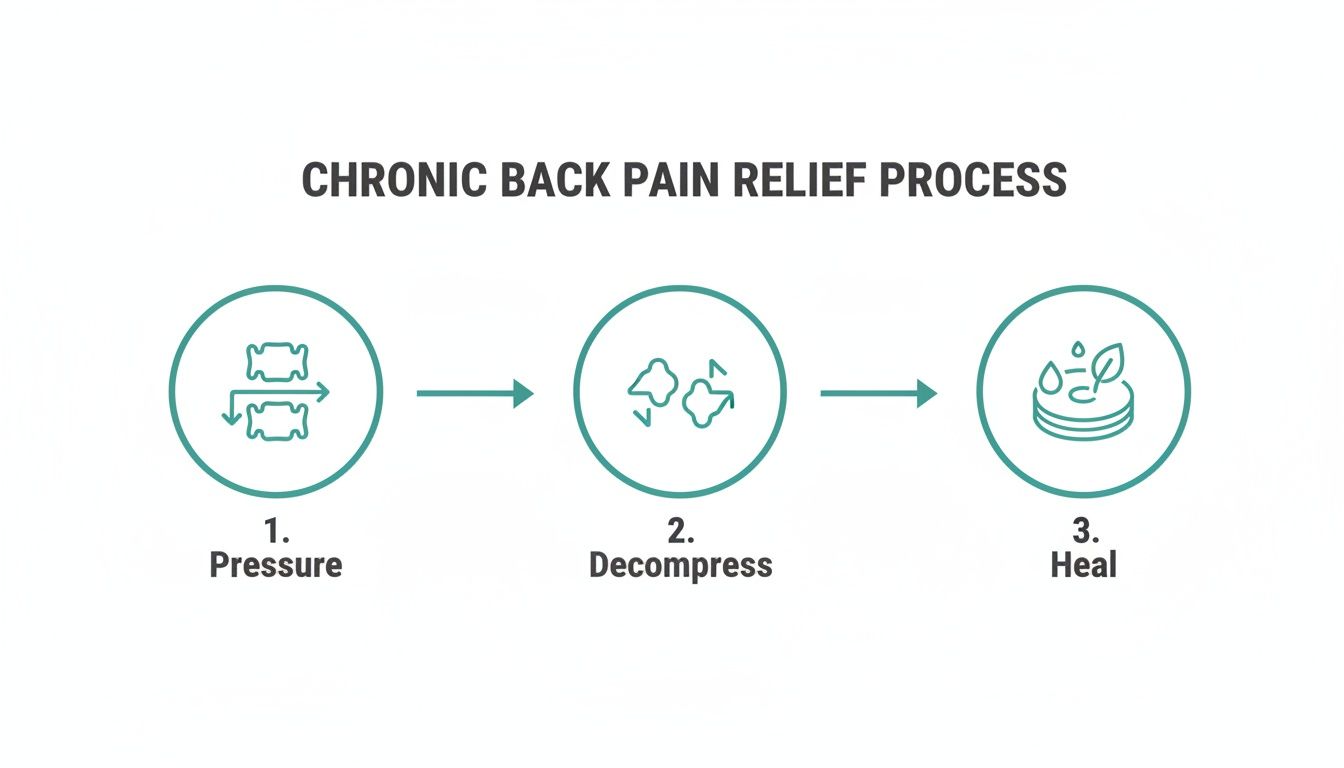
The diagram above boils it down to three fundamental steps—relieving pressure, decompressing the disc, and letting the natural healing process take over. It’s this combination that truly restores function to your spine.
This isn't just theory; it’s a well-established method for getting lasting results without resorting to surgery. A spinal decompression chair isn’t about a temporary patch. The real goal is to create the ideal conditions inside your body so it can finally fix itself.
By fostering an environment rich in oxygen and nutrients, the therapy encourages the regeneration of disc tissue over time. This leads to reduced inflammation, improved mobility, and a significant decrease in pain.
The results speak for themselves. Clinics consistently report 70-90% success rates in improving symptoms from herniated discs. Ever since the FDA cleared these computer-guided systems back in the 2000s, the technology has become a trusted pillar of non-surgical spine care.
Here at Bonesetters, we take this proven foundation and enhance it with a whole-body approach. We integrate therapies like horizontal stimulation and cold laser to accelerate the healing process, a protocol backed by extensive clinical research. You can even see the growing impact of this technology by looking into the spinal decompression device market.
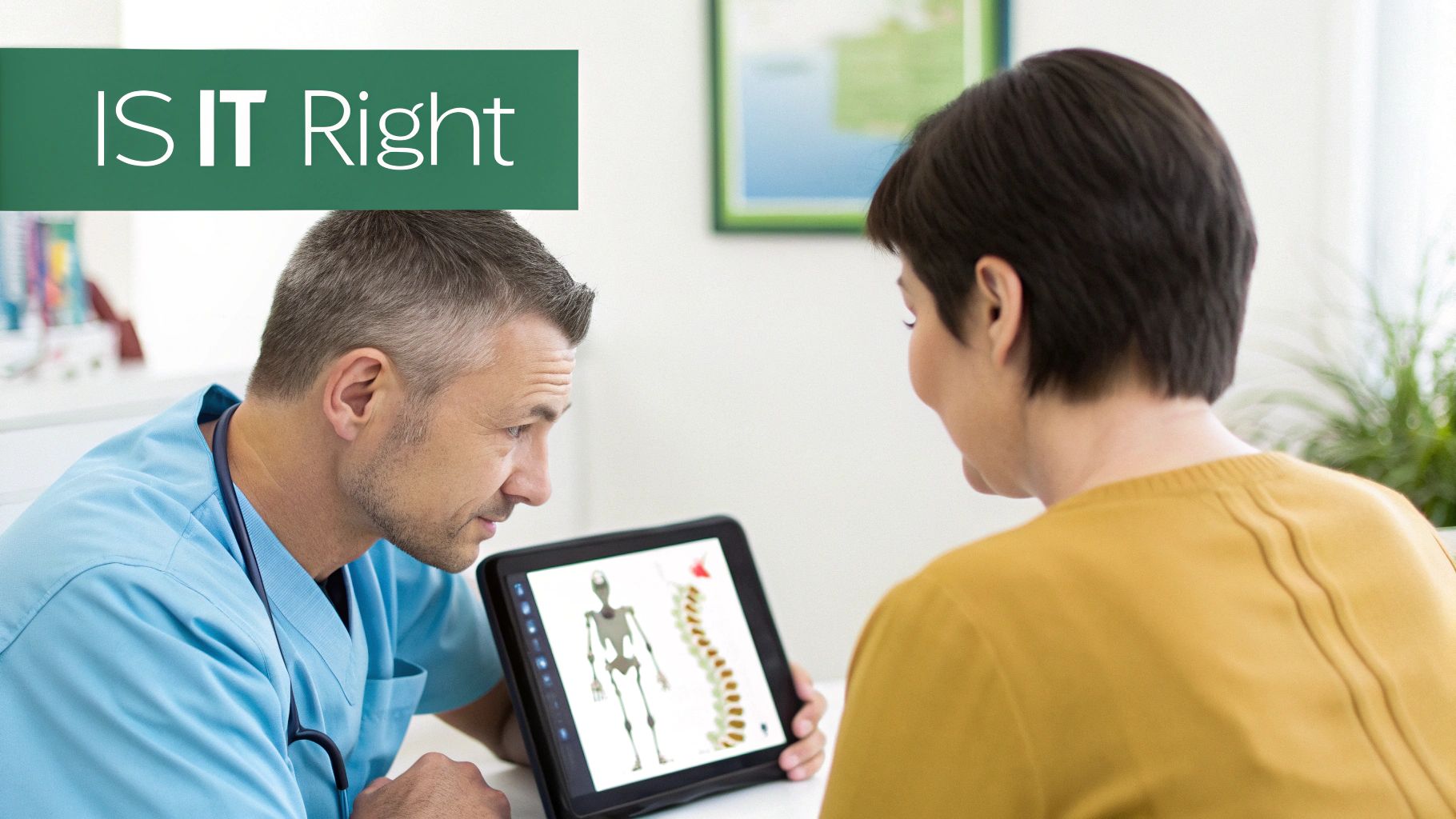
Figuring out if a spinal decompression chair is the right tool for your specific pain is always the first, most important step. This therapy isn't a cure-all; its real power is in its precision. It's specifically designed to address the mechanical root causes of pain—the kind that starts in your spinal discs and nerves.
By creating a gentle negative pressure within the spine, the treatment gets right to the heart of what's causing your symptoms. Let's dig into the conditions that respond best to this focused, non-surgical approach.
Think of your spinal discs as little jelly-filled donuts that cushion your vertebrae. When a disc herniates or bulges, that inner "jelly" gets squeezed out, often pressing directly on a super-sensitive spinal nerve. This is one of the most common culprits behind sharp, debilitating back pain.
A spinal decompression chair works to gently coax that material back into place. The controlled pulling action creates a subtle vacuum effect that helps retract the bulging disc material. As it moves back toward the center of the disc, it takes the pressure right off that irritated nerve, clearing the way for real relief. You can learn more about this in our guide to the non-surgical treatment for a herniated disc.
Sciatica isn't a diagnosis in itself, but rather a symptom of another problem—usually, a pinched sciatic nerve in the lower back. If you've ever felt that sharp, shooting pain that travels from your lower back, through your glute, and down your leg, you know exactly what sciatica feels like.
Decompression therapy works by creating more space between the vertebrae in your lower back, right where the sciatic nerve root exits. This relieves the direct compression on the nerve, which in turn quiets down those painful signals traveling down your leg. Clinical studies show significant results, with some reporting up to an 80% improvement in pain scores for sciatica patients after a course of treatment.
Over the years, our spinal discs naturally lose water content, causing them to become thinner and less effective at absorbing shock. This is degenerative disc disease, and it often leads to chronic pain, stiffness, and inflammation as the bones of the spine settle closer together.
The therapy helps counteract this by drawing vital fluids and nutrients back into the dehydrated discs. This rehydration process can help restore some of the disc's original height and cushioning ability, which slows the degenerative cycle and improves how your spine functions day-to-day.
The facet joints are small, stabilizing joints on the back of your spine that guide movement. When discs start to thin from degeneration, these joints can take on extra stress, becoming arthritic and inflamed. This is posterior facet syndrome, and it typically causes localized pain that gets worse when you bend backward or twist.
A spinal decompression chair helps by gently separating the vertebrae, which takes the pressure off these overworked facet joints. This gives the inflamed joint tissues a chance to calm down and heal, leading to less pain and smoother, more comfortable movement. It’s another example of how this therapy targets a specific mechanical problem to deliver lasting results.
Walking into a clinic for a new type of therapy can feel a bit intimidating. Let's walk through what actually happens during spinal decompression therapy, from your first visit to completing your full treatment plan. The whole process is designed to be comfortable and straightforward.
Your first appointment is really a discovery session. We'll sit down, discuss your health history, and run through a thorough examination to make sure this therapy is the right fit for you. Once we’ve confirmed you're a good candidate, we’ll get you settled onto the decompression chair.
Getting you positioned correctly is simple and only takes a few moments. We’ll calibrate the machine to your specific needs, targeting the exact spinal segment causing your pain. You'll be secured with soft, comfortable harnesses, which help ensure the gentle pulling force is directed precisely where it needs to go.
So, what does it feel like? As the session starts, you’ll notice a slow, gentle stretching in your back. The computer-controlled system applies a very specific pull-and-release cycle, which is key to its success. This rhythm is so smooth that it prevents your back muscles from instinctively tightening up or guarding, allowing the spine to decompress effectively.
The entire process is completely painless. Honestly, many of our patients find the sessions so relaxing they doze off for a bit.
A typical session lasts about 20 to 30 minutes. While you rest, the chair is doing all the work—creating that crucial negative pressure to help retract bulging disc material and pull in nutrient-rich fluids to promote healing.
Once the session is over, we'll have you get up slowly. Most people describe the immediate sensation as a feeling of lightness or relief in the treated area.
Following each treatment, it's really important to drink plenty of water. Staying hydrated helps the discs absorb those healing fluids and nutrients, which is a big part of how this therapy works. You might feel some mild soreness, much like you would after a new workout, but this is a positive sign that your body is responding and it typically subsides quickly.
It's also crucial to remember that spinal decompression isn't a one-and-done fix; its effects are cumulative. While some people feel a difference after just a few visits, the real, lasting results come from completing the full treatment plan we map out for you. Each session builds on the progress of the last one.
A standard course of care usually involves a series of sessions over several weeks. This consistency gives your spinal discs the time they need to truly heal, rehydrate, and regain stability. Our goal isn't just to patch up your symptoms—it's to restore long-term function and help you build a more resilient spine. Think of it as a steady, progressive journey away from chronic pain and back toward a life of comfort and mobility.
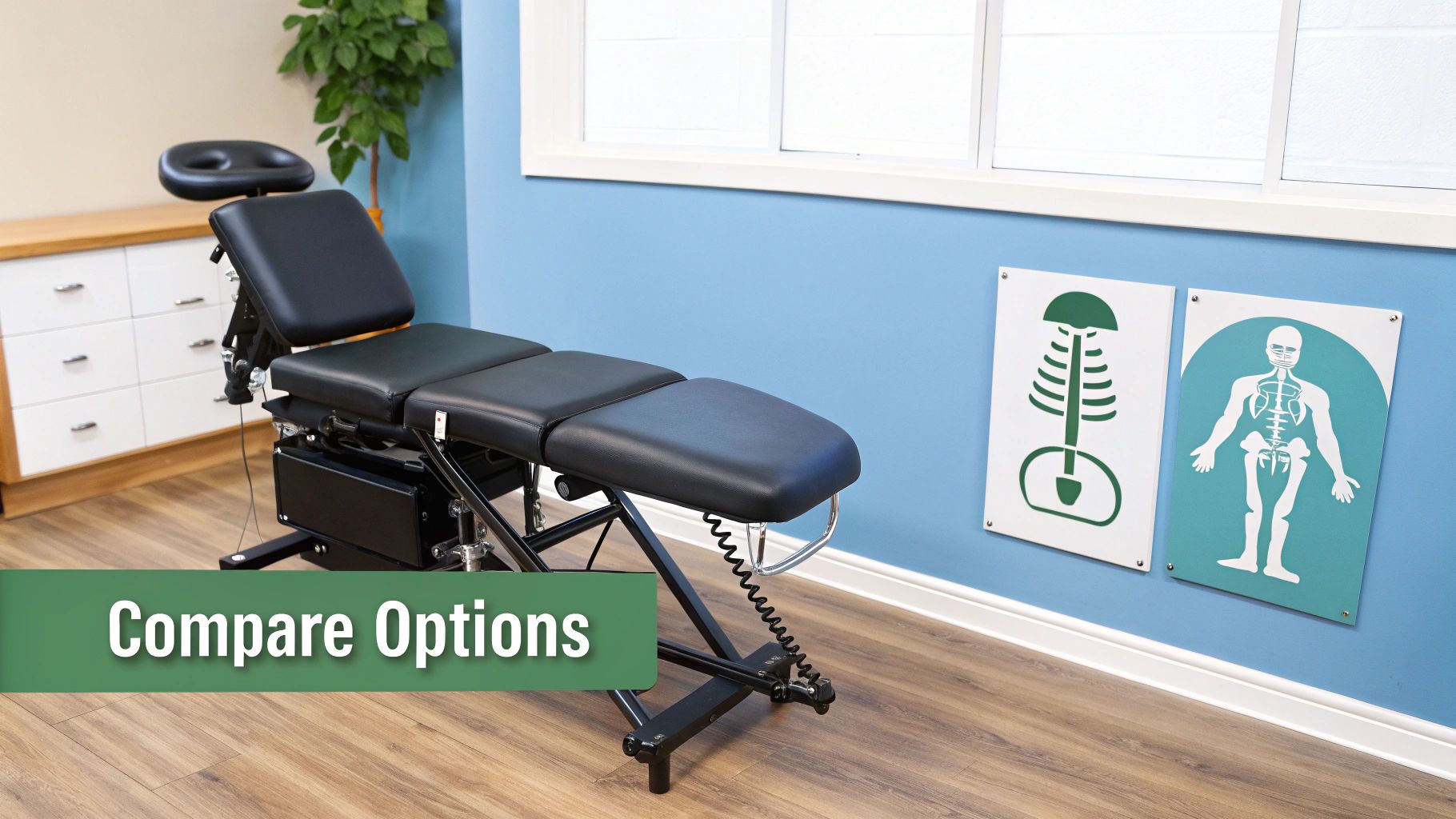
When you're dealing with chronic back pain, it’s easy to feel lost in a sea of treatment options. To figure out what's right for you, it helps to see where a spinal decompression chair fits into the picture. Think of it as a powerful middle-ground therapy—far more sophisticated than simple home remedies but without the serious risks and long recovery that come with surgery.
Let's look at how it measures up to other common approaches, focusing on what really counts: how well it works, how safe it is, and what the healing process looks like.
Many people turn to at-home inversion tables as a first line of defense. The concept is straightforward: you hang upside down and let gravity gently stretch your spine. While this can provide some temporary relief, it’s a bit like using a sledgehammer when you need a scalpel.
An inversion table applies one uniform, uncontrolled pull across your entire spine. A clinical spinal decompression chair, on the other hand, is a different beast entirely. It uses a sophisticated, computer-guided system to isolate and apply a very specific, calculated force to the exact spinal segment that needs help. That precision is what creates the negative pressure inside the disc—the key to retracting herniated material and jump-starting the healing process. An inversion table simply can't match that level of targeted therapy.
Physical therapy (PT) is, and always will be, a vital part of managing back pain. The goal of PT is to build a strong foundation by strengthening your core and back muscles, improving your flexibility, and teaching you how to move without causing further strain. It's fantastic for building long-term stability and preventing future flare-ups.
But here’s the thing: if the root of your pain is an actively compressed nerve from a bulging or herniated disc, all the exercises in the world might not be enough to fix the underlying mechanical issue. A spinal decompression chair directly tackles that problem by gently creating space and taking the pressure off the disc itself. In fact, the two therapies work beautifully together. Decompression creates the ideal environment for healing, and physical therapy builds the strength to protect that progress for the long haul.
When other treatments haven't worked, surgery like a discectomy or spinal fusion often enters the conversation. While sometimes unavoidable, these are major, invasive procedures with significant risks and months of recovery. Surgery permanently changes the anatomy of your spine, and there's no going back.
A spinal decompression chair offers a non-invasive path to potentially avoiding surgery altogether. By getting to the heart of the problem—the pressure inside the disc—it can often resolve the very issues that would otherwise lead a surgeon to pick up a scalpel.
Choosing the right path means weighing all these factors. When you lay it all out, the differences become much clearer.
This table helps put the key aspects of different back pain treatments side-by-side, giving you a better understanding of your choices.
| Treatment Option | Invasiveness | Recovery Time | Primary Goal |
|---|---|---|---|
| Spinal Decompression | Non-Invasive | None | Heals the disc by relieving pressure |
| Inversion Table | Non-Invasive | Minimal | Provides a general, temporary stretch |
| Physical Therapy | Non-Invasive | Gradual | Strengthens supporting muscles |
| Spinal Surgery | Highly Invasive | Months | Alters spinal structure to remove pressure |
As you can see, this comparison makes it clear why so many people find lasting relief with targeted decompression therapy. It offers a direct, powerful solution without the drawbacks of more extreme or less focused options.
To hear from people who have experienced this firsthand, you can explore our collection of spinal decompression therapy reviews from our actual patients.
It's completely normal to have a few questions before diving into any new treatment. Getting a feel for the practical side of things can help you feel confident and ready. Let's tackle some of the most common things people ask about the spinal decompression chair.
Not in the slightest. People often hear "stretching the spine" and imagine something uncomfortable, but the reality is just the opposite. The entire process is designed to be gentle, controlled, and surprisingly relaxing.
You’ll feel a subtle, rhythmic pulling sensation in your back, but it’s never painful. The chair's computer-guided system is so precise that it applies force gradually, bypassing your body’s natural tendency to tense up. There are no sudden movements or discomfort. In fact, it’s not uncommon for patients to drift off to sleep during their sessions.
That's a great question, and the honest answer is: it depends. The right number of sessions is different for everyone. We have to consider how severe your condition is, how long you've been dealing with the pain, and what the specific diagnosis is.
Some people feel a significant sense of relief after just a handful of visits, but lasting change doesn't happen overnight. A complete treatment plan usually involves a series of appointments spread over several weeks.
Think of it this way: the effects of the spinal decompression chair are cumulative. Each session builds on the last, giving your spinal discs the time and space they need to rehydrate, pull back into place, and heal for the long haul.
While the therapy is incredibly safe for most people, it isn't a universal solution. There are a few specific situations, which we call contraindications, where this treatment isn't the right choice.
We generally don't recommend it for individuals with:
This is exactly why we always start with a thorough medical evaluation. That first assessment is crucial for making sure you're a good candidate and allows us to build a plan that is both safe and effective for you. Your well-being is always our first priority.
This is a fantastic question because it gets right to the heart of what makes this therapy so effective. An inversion table simply uses gravity and your own body weight to create a general, uncontrolled stretch along your entire spine. It might provide some temporary relief, but it’s a blunt instrument.
A clinical spinal decompression chair, on the other hand, is a sophisticated medical device. It uses a computer-guided system to apply a very specific, targeted, and measurable force to individual segments of your spine. It's this precision that actually creates the negative pressure inside the disc needed to draw in bulging material and kickstart the healing process. An inversion table just can't match that level of targeted control.
At Bonesetters Critical Chiropractic, our evidence-based protocols are designed to give you the most effective, non-surgical care available. If you're tired of living with chronic pain and ready for a real solution, schedule a consultation with our team today.