

If you're grappling with the daily pain and frustrating limitations of spinal stenosis, you're probably asking yourself one big question: Is it really possible to get relief without going under the knife?
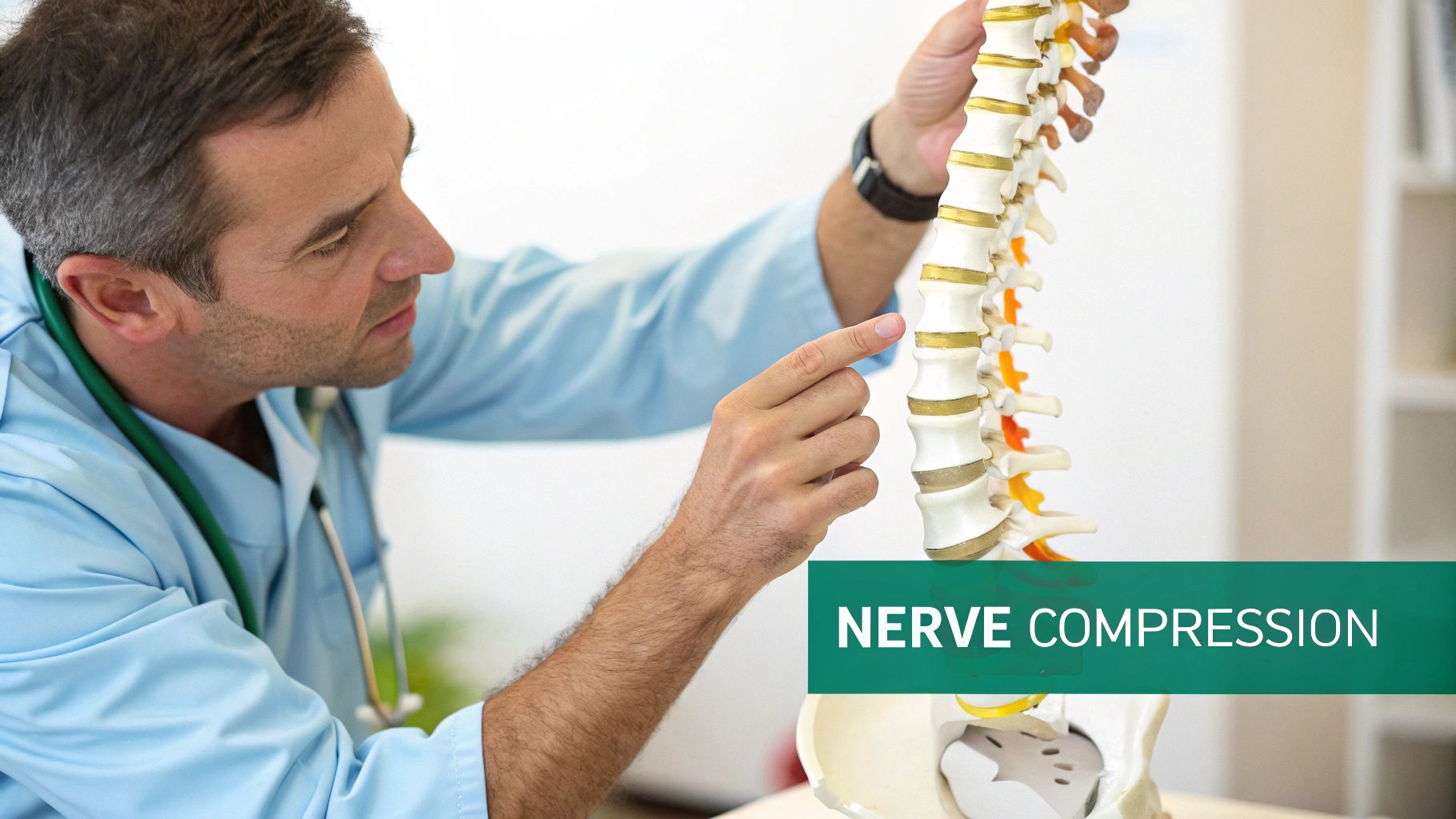
Before we can talk about effective spinal stenosis treatment without surgery, we need a clear picture of what’s gone wrong. Think of your spinal canal as the main protective tunnel for your body's most important electrical wiring—the spinal cord and its branching nerves.
Spinal stenosis simply means that this tunnel has started to narrow. It’s like a four-lane highway gradually getting squeezed down to two lanes. This bottleneck creates a "traffic jam," putting pressure on the delicate nerves passing through.
That constant pinching is the real culprit. It disrupts the signals traveling along those nerves, triggering the pain, numbness, tingling, or weakness you're feeling. These symptoms are your body's alarm bells, telling you that a critical pathway is being compressed. This is why any worthwhile non-surgical treatment has one primary goal: create more space.
While stenosis can happen anywhere along your spine, we almost always see it in two main areas. The location of the narrowing determines which nerves get pinched and, consequently, where you feel your symptoms.
The goal of non-surgical spinal stenosis treatment is incredibly straightforward: take the pressure off the nerves. By carefully and gently creating more room in the spinal canal, we can relieve the compression that’s causing the pain and allow those nerves to function properly again.
The narrowing of the spinal canal is usually a slow burn, the result of years of wear and tear. It’s rarely caused by a single issue; instead, it’s often a combination of factors that collectively shrink the available space for your nerves.
Think of it less like a sudden rockslide and more like sediment slowly building up in a pipe over many years.
Here are the most common contributors to this "traffic jam" in your spine:
Once you understand these mechanical root causes, it becomes obvious why the best conservative treatments don't just numb the pain. They focus on fixing the physical problem—the compression happening deep inside your spine.
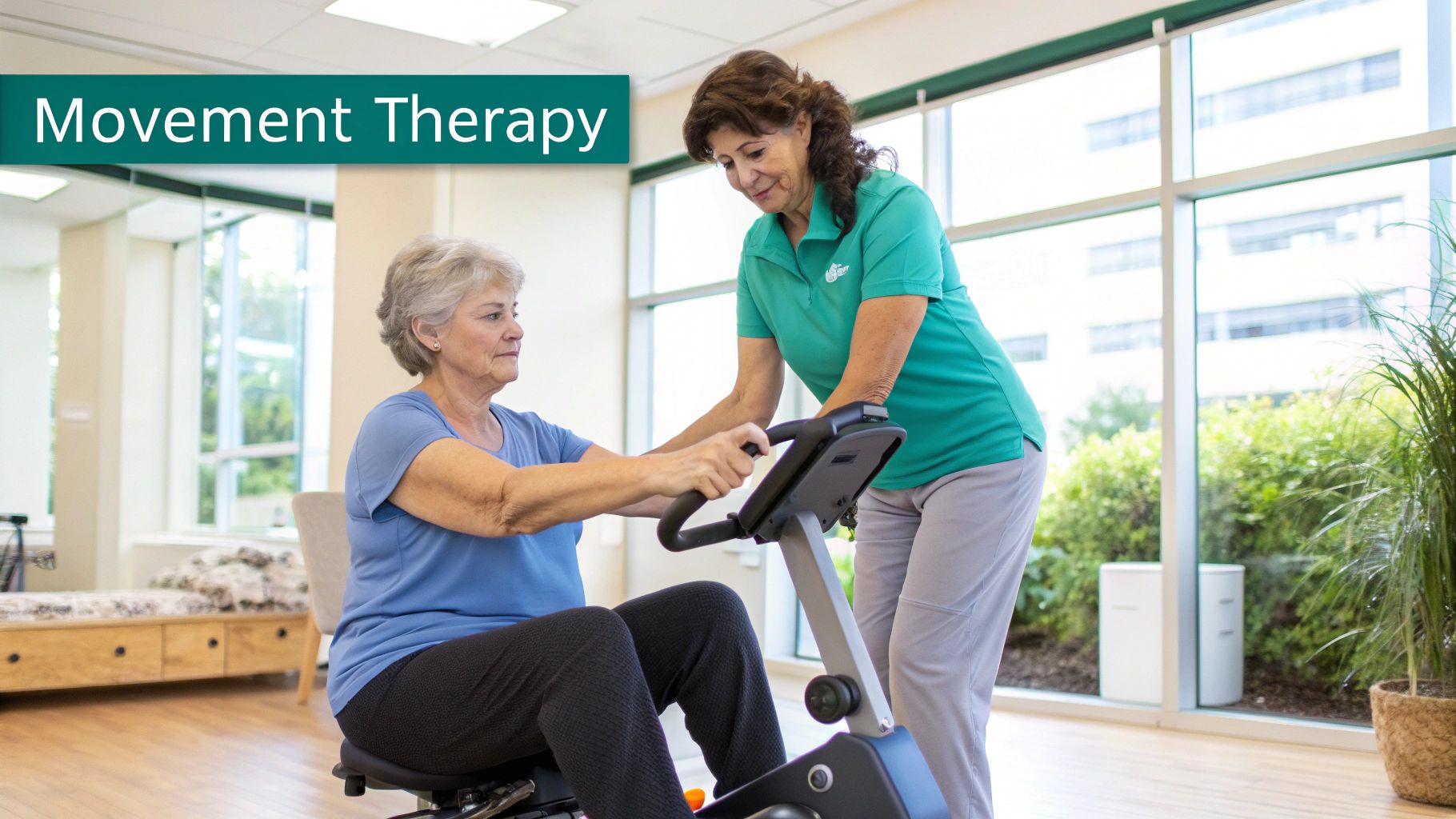
When your back is screaming in pain, the last thing on your mind is probably exercise. But for spinal stenosis, the right kind of movement is one of the most powerful tools in your non-surgical toolbox. It’s time to stop thinking of exercise as just "getting stronger" and start seeing it for what it really is: a precise way to create space and stability right where you need it most.
The entire strategy comes down to one core principle: relieving pressure. A professionally guided physical therapy program helps you build a natural "corset" of muscle around your spine. When your core and back muscles are strong, they act like a supportive brace, taking a significant load off your compressed vertebrae and discs. This added stability can dramatically reduce the mechanical stress that’s been aggravating your nerves.
Even more importantly, specific movements can physically open up the narrowed spaces in your spine, often providing almost immediate relief.
Have you ever noticed that leaning forward on a shopping cart makes your back feel better? That’s not a coincidence. This position, known as flexion, gently stretches the ligaments along the back of your spine and can temporarily increase the diameter of your spinal canal.
A good physical therapist knows how to leverage this exact principle. They design exercises that encourage controlled, gentle spinal flexion—movements designed to decompress the nerves without causing strain or instability.
The goal isn't to force your spine into uncomfortable positions. Instead, it’s about using gentle, targeted movements to guide your vertebrae into a state where your nerves have more room to breathe, effectively turning motion into medicine.
This isn’t just theory; it’s a highly effective approach. Physical therapy is a cornerstone of spinal stenosis treatment without surgery, and study after study shows that structured programs deliver real results. For example, a trial with 68 patients found that a six-week regimen of activities like cycling or treadmill walking led to major pain reduction and improved function.
High-impact activities are the enemy of a stenotic spine. The jarring forces from running or jumping can compress your vertebrae and ignite a painful flare-up. Instead, the focus has to be on exercises that build strength and endurance without all that spinal stress.
Here are some of the most beneficial low-impact activities:
Knowing what not to do is just as important as knowing what to do. Certain movements can actively make stenosis symptoms worse by extending the back, which further narrows the spinal canal.
Be mindful of these activities, which often need to be avoided or modified:
A skilled physical therapist can be your guide here, providing smart modifications for the activities you love so you can stay active safely. Their expertise is crucial for creating a program that heals rather than harms, making movement a central pillar of your recovery.
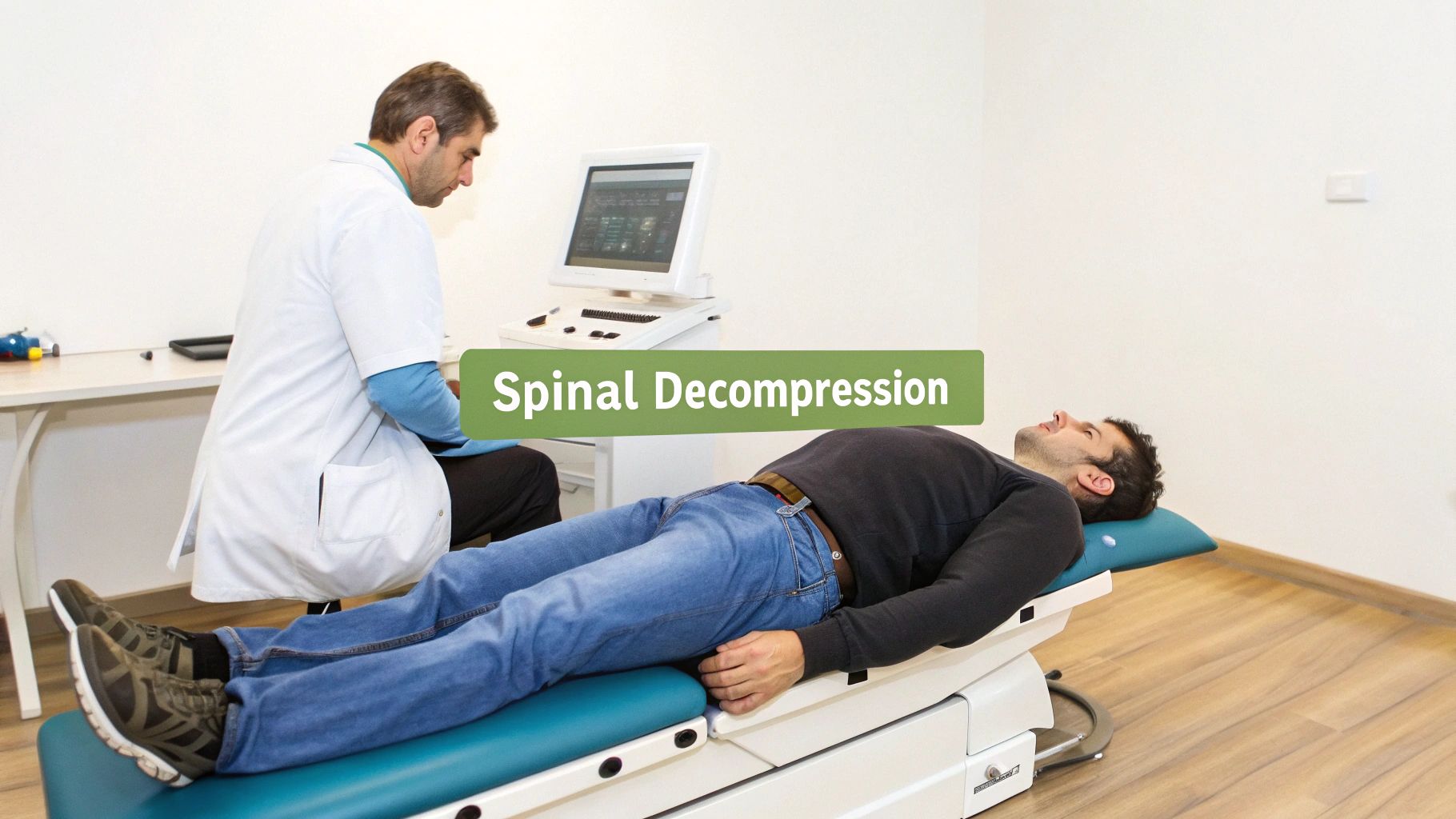
When people think of chiropractic care, they usually picture manual adjustments. But for a complex condition like spinal stenosis, today’s advanced clinics have moved well beyond that. While getting your joints moving properly is still a piece of the puzzle, the real focus is on using targeted technology to address the root of the problem: nerve compression.
These modern therapies are gentle, precise, and designed to physically create more room inside the spine. Instead of just managing the pain, the goal is to change the environment causing the pain, offering a powerful spinal stenosis treatment without surgery.
Think of your spinal discs as little jelly-filled shock absorbers. With stenosis, they can get squashed and bulge out, much like a car tire that’s low on air. This is what ends up pinching your nerves. Non-surgical spinal decompression is designed to gently reverse that pressure.
You lie on a computer-controlled table that very slowly and carefully stretches your spine. This action creates a subtle vacuum effect inside the discs. This does two amazing things: it helps suck the bulging material back toward the center of the disc and away from your nerves, and it pulls in a fresh supply of oxygen and nutrients to help the disc rehydrate and heal.
It's a surprisingly comfortable process. Many patients find the gentle, rhythmic stretching motion incredibly soothing as they feel the pressure finally easing off those compressed nerves.
Let’s be honest—the "cracking" or "popping" sound of a traditional adjustment can be intimidating, especially when you're already in pain from spinal stenosis. This is where computer-assisted adjusting systems, like the FDA-cleared PulStar, have completely changed the game.
This technology allows us to analyze and treat your spine with incredible accuracy, all without any twisting. A small, handheld instrument sends tiny impulses down your spine, measuring how each joint responds. This gives us a precise map of what’s stuck and what isn’t. The instrument then delivers targeted, gentle taps at the exact right frequency and force needed to get the stiff joints moving again.
The real beauty of this tool is that it gives us objective data. We're not guessing. The system shows us exactly where the problem is and then delivers a measured correction, ensuring the treatment is perfectly calibrated to what your body needs.
So, we've created space with decompression and restored motion with adjustments. The final step is to help the damaged tissues actually heal. Chronic nerve compression causes a ton of inflammation and cellular stress. To address this, we turn to therapies like Class IV cold laser.
This isn't a laser that cuts or burns; it uses specific wavelengths of light that safely penetrate deep into your body to reach the inflamed nerves and sore muscles. This light energy essentially "supercharges" the mitochondria, which are the little power factories inside your cells.
This process kicks off a powerful healing response:
The result is pain relief that comes from true tissue healing, not just masking symptoms. You can learn more about the science in our detailed guide on cold laser therapy for back pain.
While no treatment is a magic bullet, this combined, non-surgical approach gets real results. A retrospective study found that patients saw a 42.2% meaningful improvement in their disability levels after just one year—a significant outcome achieved without the risks of an operation.
Your recovery doesn't just happen inside the clinic. It happens in the small choices you make every single day. The way you sit, sleep, and eat can either help your spine heal or work against the progress you're making. The goal is to create an environment for your body that reduces stress on your back and calms inflammation, putting you in the driver's seat of your own spinal stenosis treatment without surgery.
This isn’t about a massive, overnight life change. Think of it as a series of small, smart upgrades to your routine. These little adjustments add up, building a strong foundation for a healthier, more resilient spine over the long haul.
One of the most powerful things you can do to ease spinal compression is to manage your weight. Picture carrying a heavy backpack 24/7. That’s exactly what excess weight does to the joints and discs in your spine—it constantly squeezes those spaces that are already too narrow.
You might be surprised how much of a difference even a small amount of weight loss can make. For every single pound you lose, you take about four pounds of pressure off your spine. This means losing just 10 pounds can relieve your back of 40 pounds of mechanical force. That kind of relief can be a complete game-changer, making every other treatment you're undergoing far more effective.
Poor posture is a huge trigger for spinal stenosis pain. It often contorts your spine into positions that pinch nerves and make everything feel worse. By making a few simple tweaks to your workspace and home, you can avoid these painful postures and encourage a healthier, more neutral alignment.
Here are a few simple but incredibly effective changes to consider:
Think of good posture not as a stiff, forced position, but as the path of least resistance for your body. Ergonomics is just the art of setting up your world so that path is the easiest one to follow.
While therapies like decompression and laser treatment address the mechanical problem of stenosis, your diet can tackle the chemical problem: inflammation. A diet heavy in sugar, processed foods, and unhealthy fats fuels a state of chronic, low-grade inflammation that can make your nerve pain feel significantly worse.
On the flip side, an anti-inflammatory diet can be one of your best allies, acting like a natural, internal pain reliever. The idea is to fill your plate with whole foods that actively cool inflammation at a cellular level.
Your Anti-Inflammatory Food Checklist:
These lifestyle strategies are not just afterthoughts; they are essential pieces of the puzzle. When you combine weight management, smart ergonomics, and an anti-inflammatory diet with your clinical treatments, you create a powerful, holistic plan that tackles your spinal stenosis from every angle.
Let's be direct: an honest approach to spinal stenosis means acknowledging that conservative care, while incredibly effective for most people, isn't the final answer for everyone. The ultimate goal is your long-term well-being. Sometimes, getting there means recognizing when the conversation needs to shift toward surgery.
This doesn't mean non-surgical options failed. Think of it as a complete pathway of care. For a small group of patients, surgery is simply the appropriate and necessary next step. Knowing the signs that point toward a surgical consult is crucial—it puts you in the driver's seat of your own healthcare.
Most stenosis symptoms are about managing pain and improving function. But a few "red flag" symptoms are different. They signal that the nerve compression might be severe enough to cause permanent damage. These aren't signs you can afford to wait on; they demand immediate medical evaluation.
The most critical of these is a rare but serious condition called cauda equina syndrome. This happens when the bundle of nerve roots at the very base of your spine gets severely squeezed.
Symptoms that demand urgent, emergency-level attention include:
If you experience any of these, treat it as a medical emergency. Don't wait.
Beyond emergencies, other signs can tell you it's time to talk about surgery. The main one is when you've given a comprehensive non-surgical plan a real shot—like the therapies we’ve covered—and your quality of life is still just not where it needs to be.
For instance, you might have tried spinal decompression therapy and other treatments, but the progressive, debilitating weakness in your legs just keeps getting worse. That’s a clear signal that the nerve compression isn't letting up.
The decision to consider surgery often boils down to one thing: function. When pain and weakness stop you from doing basic daily activities—walking, standing, dressing, or just taking care of yourself—surgery becomes a very logical tool to get that fundamental quality of life back.
It's interesting, though, what long-term studies show. One extensive eight-year study found that while surgery gave patients more significant relief right out of the gate, many non-surgical patients eventually caught up. Over the long haul, both groups achieved similar improvements in pain and disability. If you're curious, you can read the full research on long-term outcomes.
At the end of the day, a spinal stenosis treatment without surgery is the best place to start for the overwhelming majority of people. But knowing when to escalate that care is just as important. It ensures you always have a clear plan for regaining your mobility and comfort, no matter what that plan involves. We can always offer more specific insights based on spinal decompression therapy reviews and a deep dive into your individual case.
It’s completely normal to have questions when you’re thinking about a non-surgical approach to spinal stenosis. Wondering about timelines, what treatment feels like, and what the future holds is a huge part of feeling confident in your plan. Let's tackle some of the most common things patients ask.
Everyone's journey is a bit different, simply because every spine is unique and every person heals at their own pace. That said, we do see some common patterns.
With treatments like non-surgical spinal decompression that directly relieve nerve pressure, many people start to feel a noticeable difference within the first few weeks. It’s often a subtle shift at first, but it’s a sign that the pressure is coming off.
For improvements that rely on building strength and stability through physical therapy, you're looking at a more gradual process. It typically takes about 6 to 8 weeks of consistent work to feel significant gains in strength and see a real drop in your daily pain levels. A good, comprehensive plan combines these approaches for steady improvement over a few months, focusing on real, lasting change, not just a temporary patch.
This is a big one, and the answer is refreshingly simple: no, they shouldn't be. Comfort is a top priority. These therapies are designed to be gentle and precise, which is exactly what you need when you're already in pain.
Take spinal decompression, for example. You’ll feel a slow, methodical stretching in your back, a sensation most patients describe as a welcome relief. It’s like a long, deep sigh for your spine. Similarly, Class IV laser therapy is completely painless—the most you might feel is a gentle, soothing warmth over the area being treated.
The whole idea behind these modern therapies is to work with your body’s natural healing processes, not force them. We want to provide powerful results without adding any more stress or discomfort to your system.
Spinal stenosis is a degenerative condition, which means it’s caused by the wear and tear of life. So, our goal with non-surgical care isn't a one-and-done "cure" but rather effective, long-term management that gets you back to living your life. We can dramatically reduce or even eliminate your symptoms, and the results can last for years.
The key to keeping those results is what you do after your main course of treatment is finished. By committing to a simple maintenance routine—like targeted exercises, making smart lifestyle choices, and coming in for periodic "tune-up" visits—most patients keep their condition under control. This proactive mindset is what prevents a serious flare-up and keeps you enjoying the activities you love.
Ready to explore a personalized, non-surgical path to relief from spinal stenosis? The team at Bonesetters Critical Chiropractic is here to provide the expert guidance and advanced care you need. Visit us online to learn more and schedule your consultation at https://bonesetters.org.