Here's the rewritten section, designed to sound like an experienced human expert explaining the concept naturally.
Cold laser therapy is a fascinating, science-backed approach that uses specific wavelengths of light to kickstart your body's own healing processes, all without drugs or surgery. I often tell my patients to think of it like a battery charger for their injured cells—it delivers a targeted boost of energy right where it's needed most, helping those cells get back to the business of repairing themselves.
If you're stuck in a cycle of chronic pain from something like sciatica, a nagging disc injury, or peripheral neuropathy, you've probably felt like you've tried everything. Most treatments just put a temporary band-aid on the symptoms, but they don't fix the underlying problem. Cold laser therapy, which scientists call photobiomodulation, offers a completely different strategy by going straight to the source of the pain.
And don't let the name fool you. The term "cold" simply means the laser doesn't produce any heat. You won't feel any burning, cutting, or even a cold sensation during treatment—just a gentle, healing light that works deep within your tissues to stimulate natural repair.
To give you a clearer picture, here's a quick rundown of what cold laser therapy is all about.
| Key Aspect | Patient-Friendly Explanation |
|---|---|
| What It Is | A non-invasive therapy that uses specific, low-level light waves to stimulate healing in damaged cells. |
| How It Feels | Completely painless. You won't feel heat, cold, or any discomfort—just the gentle application of the laser device. |
| The Goal | To reduce pain and inflammation by giving your cells the energy they need to repair tissue, not just to mask symptoms. |
| Safety | It is an FDA-cleared treatment with a long track record of safety and effectiveness for a wide range of conditions. |
Ultimately, this advanced technology is a way to work with your body, encouraging its own powerful ability to heal and restore function.
The whole field of cold laser therapy actually started by accident. Back in 1967, a Hungarian professor named Endre Mester was trying to see if ruby lasers could shrink tumors in mice. His experiment didn't work out as planned, but he stumbled upon something remarkable.
He noticed that the mice treated with a low-powered laser had their shaved hair grow back 75% faster than the untreated mice. Not only that, but their skin wounds healed much more quickly and with significantly less inflammation. That "aha!" moment was the birth of photobiomodulation, showing for the first time how non-thermal light could literally energize cells and accelerate the repair process. If you're interested, you can explore the fascinating history of this treatment to see how far the science has come.
Cold laser therapy isn’t about masking pain; it’s about providing your cells with the specific light energy needed to repair tissue, reduce inflammation, and calm irritated nerves. It addresses the biological root of the problem.
The science behind it is elegant. When we apply this concentrated light energy deep into your damaged tissues, it sets off a cascade of beneficial effects that are crucial for recovery.
Here’s what’s happening on a biological level:
At Bonesetters Critical Chiropractic, we use this powerful tool not just for temporary fixes, but to help you find genuine, lasting relief.
Think of your body's cells like tiny, rechargeable batteries. When you're dealing with an injury or chronic inflammation from something like sciatica or a disc problem, those cellular batteries get drained. This energy shortage is a huge roadblock—it slows down healing, ramps up inflammation, and keeps you stuck in a painful cycle.
Cold laser therapy is like a specialized charging station for these exhausted cells. It sends concentrated light energy, made up of particles called photons, right into the damaged tissues. This process, known scientifically as photobiomodulation, is what unlocks your body's own powerful healing mechanisms. It’s not magic; it's just a highly targeted biological boost.
The light penetrates deep into your tissues, targeting a specific part of your cells: the mitochondria.
You might remember from high school biology that mitochondria are the "powerhouses" of the cell. They're responsible for creating the vast majority of your body's energy by converting nutrients into a molecule called adenosine triphosphate (ATP). ATP is the universal fuel that powers almost everything you do, from flexing a muscle to, most importantly, repairing damaged tissue.
When tissue gets damaged, the mitochondria in those cells become sluggish, and ATP production plummets. Without enough fuel, the cells just can't keep up with their repair jobs. Inflammation sticks around, and healing grinds to a halt. This is precisely where the targeted light from a cold laser steps in.
The specific wavelengths of light in cold laser therapy are absorbed by an enzyme in the mitochondria called cytochrome c oxidase. This interaction essentially supercharges the mitochondria, pushing them to produce ATP at a much faster rate—sometimes increasing output by as much as 150%.
It’s a bit like how plants use sunlight for photosynthesis to create energy. In a similar way, your cells use the specific light from the laser to generate more of their own energy, which then kicks off a whole cascade of positive healing effects.
This chart breaks down how that process works, from the initial application of light to the ultimate result of pain relief.
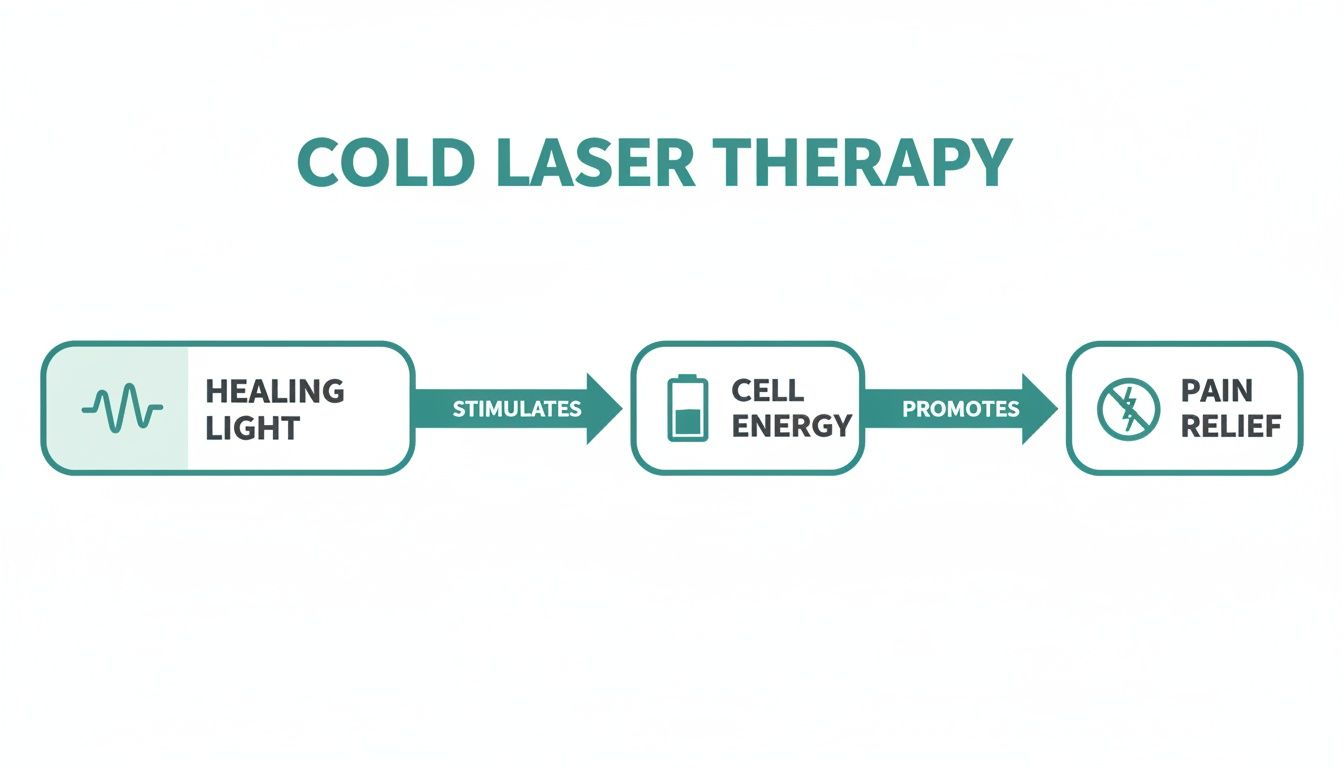
As you can see, it's a direct line from light energy to cellular fuel, which translates into a real, physical reduction in pain.
This sudden surge in cellular energy doesn't just stay put. It sets off three fundamental biological responses that work together to bring down pain and encourage lasting recovery, targeting the actual source of your discomfort.
Reduced Inflammation and Swelling
With more ATP, cells can function normally again, which means they stop producing as many inflammatory chemicals. The therapy also enhances lymphatic drainage, helping your body clear out excess fluid and waste from the injured area. This is a game-changer for conditions involving nerve compression, like herniated discs or sciatica.
Improved Blood Circulation
The light energy encourages the formation of new capillaries in damaged areas. Better circulation is critical because it means more oxygen and nutrients can get to the injury site, and waste products are carried away more efficiently. Whether it's a muscle, ligament, or nerve, good blood flow is the foundation of healing.
Direct Pain Relief
Cold laser therapy also tackles pain in two ways. First, by reducing inflammation, it physically takes pressure off sensitive nerves. Second, the light directly influences nerve cells, making them less efficient at sending pain signals to the brain. It can also trigger the release of endorphins, your body's own natural painkillers, providing more immediate relief while the deeper healing gets underway.
So, we've covered the science of how cold laser therapy gives your cells an energy boost. Now, let's talk about what that actually means for you and the pain you're living with. This isn't just about what happens in a petri dish; it's about getting real-world results for some of the most frustrating and persistent pain conditions out there.
The real beauty of this therapy is how versatile it is. We can use it to soothe a nerve that's screaming in pain, dial down deep-seated inflammation in a joint, or kickstart circulation in tissues that have been starved for too long. Below, we’ll walk through the specific conditions we see the most success with, and I’ll explain exactly why this focused light energy works so well for each one.

If you’re dealing with chronic back pain from a bulging or herniated disc, you know it’s a vicious cycle. The injured disc presses on a spinal nerve, triggering a massive inflammatory response and swelling. That swelling then creates even more pressure on the nerve, and the pain just keeps radiating, disrupting everything you do.
Class IV laser therapy gives us a way to step in and break that cycle. The light energy is able to penetrate deep into the spinal tissues to get right to the source of the problem: the inflamed nerve root.
This does two critical things at once:
By tackling the inflammation head-on, the laser creates the perfect environment for the disc and surrounding tissues to finally start healing the way they're supposed to.
Sciatica is the classic example of nerve pain. The long sciatic nerve gets compressed or irritated, and suddenly you've got that trademark shooting pain down your leg. The root of the issue is an angry, inflamed nerve that refuses to settle down. While pain meds can muffle the signal for a bit, they do nothing to fix the underlying inflammation.
This is where cold laser therapy really shines. We trace the path of the sciatic nerve with the laser, delivering light energy that has a powerful calming effect. The therapy helps shut down the production of inflammatory chemicals aggravating the nerve while also boosting blood flow to bring in more oxygen and nutrients for repair.
For someone with sciatica, this means the constant burning, tingling, or shooting pain finally starts to fade. The goal is simple: quiet the nerve so you can sit, stand, and sleep without that relentless pain.
Peripheral neuropathy is a different beast altogether. The problem here is often damage to the tiny blood vessels that feed the nerves in your hands and feet. When that blood supply is choked off, the nerve cells starve and begin to misfire, causing that awful burning, tingling, and numbness.
Class IV cold laser therapy helps by stimulating a process called angiogenesis—the creation of new, tiny blood vessels. This is a game-changer because it works to restore that critical microcirculation to the damaged nerves.
As blood flow improves, those starving nerve cells finally get the oxygen and nutrients they need to start repairing themselves. Over a series of treatments, patients often tell us they feel a major reduction in the burning sensations and a gradual, welcome return of normal feeling in their feet or hands.
With knee osteoarthritis, you're fighting a battle against cartilage breakdown and chronic joint inflammation. That inflammation doesn't just cause pain and stiffness; it creates a toxic environment in the joint that actively accelerates the damage to your remaining cartilage. Class IV cold laser therapy offers a powerful, non-surgical way to intervene.
The laser’s energy can reach deep into the knee joint to reduce the inflammatory proteins that are driving the arthritic process. This calms the joint down, which means less pain and a better range of motion for you.
On top of that, by boosting the cellular energy (ATP) in the surrounding tissues, it fosters a healthier joint environment that can help slow down further cartilage degradation. It’s an excellent way to manage knee pain and preserve your joint function for the long haul. You can learn more in our detailed guide on laser therapy for knee pain.
To help you see how these applications differ, here's a quick comparison of how laser therapy works for each of these distinct conditions.
| Condition | Primary Mechanism of Action | Expected Patient Outcome |
|---|---|---|
| Back Pain/Disc Injury | Reduces deep inflammation and swelling around the nerve root, calming nerve irritation. | Reduced radiating pain, improved mobility, and a better environment for disc healing. |
| Sciatica | Calms the inflamed sciatic nerve and improves blood flow along the nerve pathway. | Significant decrease in shooting pain, burning, and tingling down the leg. |
| Peripheral Neuropathy | Stimulates angiogenesis (new blood vessel growth) to restore circulation to damaged nerves. | Reduction in numbness and burning; gradual return of normal sensation in hands/feet. |
| Knee Osteoarthritis | Decreases inflammatory proteins within the joint and boosts cellular energy for tissue health. | Less daily pain and stiffness, improved range of motion, and slowed cartilage degradation. |
As you can see, while the technology is the same, the biological goal and the patient's results are very specific to the condition being treated. It's all about applying the therapy with a precise understanding of the underlying problem.
It’s completely normal to have questions when you’re considering a new kind of treatment. What does it actually feel like? How long does a session take? Knowing what the process looks like from start to finish can make all the difference, helping you feel relaxed and confident from the moment you walk in.
Let's walk through exactly what happens, so you can see just how straightforward and comfortable a cold laser therapy session is.
Your first visit always starts with a simple conversation. We’ll sit down in a calm, professional setting to talk about your specific condition, your pain points, and what you’re hoping to achieve. This is a crucial step; it’s where we get to know you and your body, allowing us to build a treatment plan that’s truly personalized.
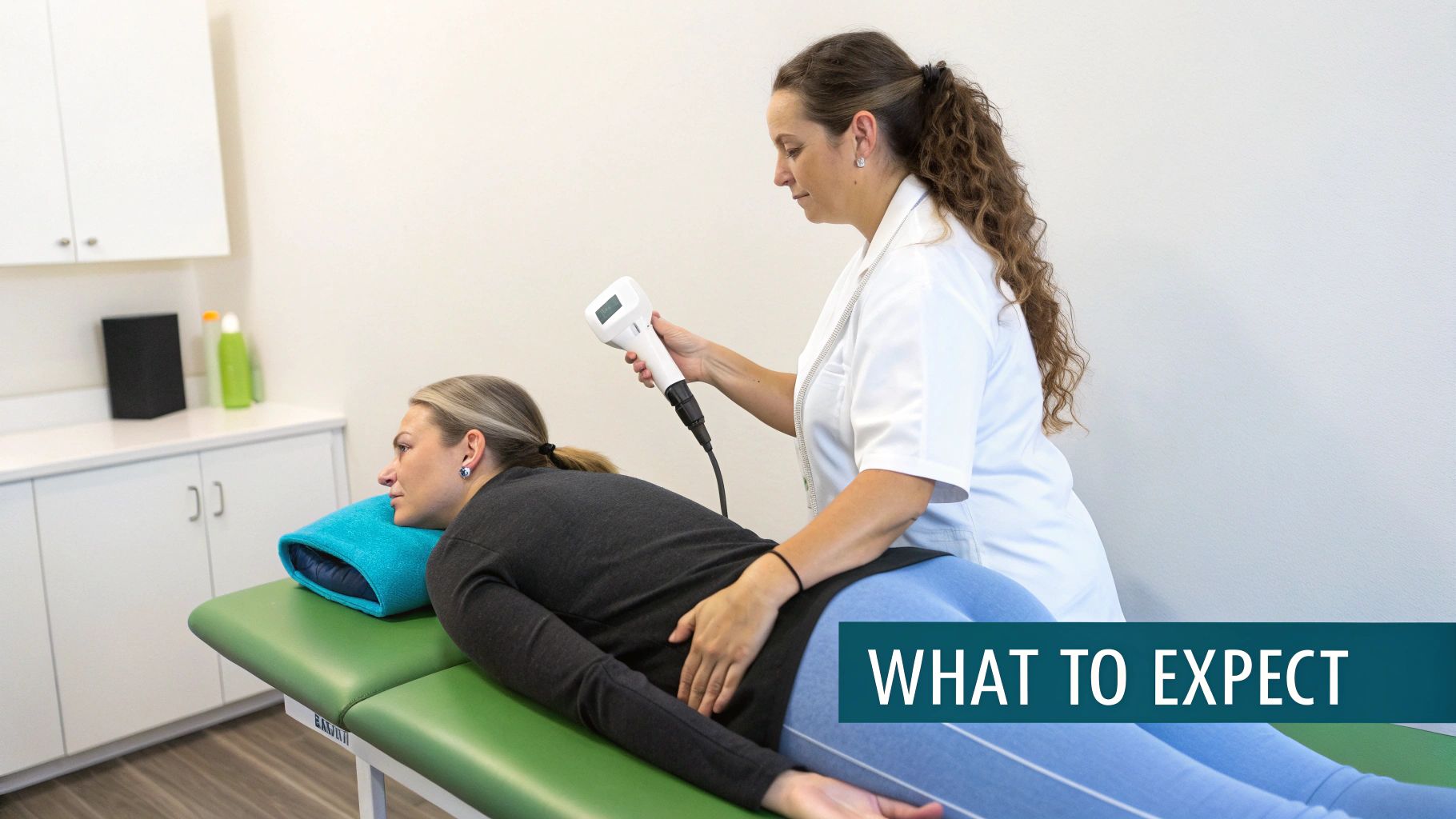
Once we have a plan, you’ll get settled in a comfortable position that gives us easy access to the area we need to treat. We use a sophisticated Class IV laser device that has a handheld wand, and both you and the practitioner will put on protective eyewear for safety.
The practitioner will then place the wand directly against your skin over the source of the pain or injury. When the laser is activated, it sends focused light energy deep into your body’s tissues. The wand is moved slowly and deliberately across the entire treatment zone to ensure the whole area benefits.
A question we get all the time is, "Will it hurt?" For nearly everyone, the answer is no. You feel practically nothing. Because it’s a “cold” laser, there’s no heat, no vibration, and no pain. At most, some people mention a very slight, comforting warmth, but that's it.
One of the best parts about cold laser therapy is how quick and efficient it is. It’s a treatment that can easily fit into a busy day.
Session Duration: A typical session is surprisingly short, usually lasting between 5 and 15 minutes. The exact time depends on the size of the area and the condition. For instance, a smaller joint might only take five minutes, while treating a larger region like the lower back might take closer to fifteen.
Total Number of Sessions: While it's common to feel some improvement after just a session or two, the real, lasting change comes from the cumulative effect of multiple treatments. Think of it like watering a plant—one watering helps, but consistent watering is what makes it thrive.
A full treatment plan often includes 6 to 12 sessions, typically scheduled two or three times a week. Of course, this is just a general framework. We’ll create a personalized schedule based on how your body responds, fine-tuning it to make sure you get the best possible results.
While cold laser therapy is a fantastic tool on its own, we’ve found its true potential is unlocked when it’s part of a bigger, more strategic game plan.
Think of it like a world-class orchestra. The laser is a brilliant soloist, but the music it creates becomes so much richer and more powerful when other instruments join in, all playing in harmony. Here at Bonesetters, we don’t just chase symptoms; we get to the root of your pain by tackling it from several angles at once.
Our philosophy is pretty straightforward: first, create the best possible environment for your body to heal, and then deliver the targeted energy it needs to repair itself. This synergy means each therapy makes the next one more effective, leading to faster, more complete, and longer-lasting relief. It’s simply a smarter way to heal.
We always start by addressing the mechanical stress that’s usually driving the pain and inflammation in the first place.
Before we use the laser to give your cells a super-charge of healing energy, we first need to take the pressure off. Imagine trying to fix a pinched wire while it’s still being squeezed by a heavy weight—it’s much easier if you move the weight first, right? That’s exactly what spinal or knee decompression therapy does for your body.
For anyone dealing with disc injuries, sciatica, or stubborn back pain, non-surgical spinal decompression gently stretches the spine. This creates a small vacuum-like effect inside the disc, which can help pull bulging or herniated material back into place while drawing in a fresh supply of oxygen and nutrients. This single step can immediately relieve pressure on pinched nerves, setting the stage for real healing to begin.
By creating physical space and relieving mechanical stress first, decompression therapy sets the stage for the cold laser. With the pressure gone, the laser's light energy can penetrate the tissues more effectively to reduce inflammation and accelerate cellular repair without fighting against constant irritation.
This strategic one-two punch is a game-changer for getting to the bottom of nerve and joint pain.
Once we’ve taken the pressure off and calmed the inflammation, the final piece of the puzzle is to restore clear communication between your brain and your body. This is where the PulStar system, our advanced tool for computer-guided adjustments, shines. It lets us find and correct dysfunctional joints with incredible precision.
Unlike a traditional manual adjustment, the PulStar uses gentle impulses to get your joints moving correctly again, which also helps reset the nervous system. Restoring proper joint mechanics is key to preventing that old mechanical stress from coming right back. When your nervous system is working without interference, your body’s natural ability to heal itself gets a major boost. If you're curious, you can learn more about how a chiropractic adjustment works and why this connection is so important.
Bringing these three powerful therapies together creates a complete healing cycle:
This integrated approach ensures we’re not just chasing pain but are systematically fixing the underlying issues that caused it, giving you the best possible shot at getting back to your life for good.
It's completely normal to have questions when you're looking into a new kind of treatment. In fact, it's a good thing. Understanding how a therapy works and what to expect is the first step toward feeling confident in your care. My goal here is to give you clear, straightforward answers to the questions I hear most often from patients about cold laser therapy.
Let's cut through the noise and get right to what you need to know, from safety and timelines to what the treatment actually feels like.
This is usually the first thing people ask, and I'm happy to report that the answer is a firm "yes." Cold laser therapy has a fantastic safety record, built over decades of clinical use and research all around the world. It’s non-invasive, drug-free, and has virtually no side effects for most people.
The word "laser" can sound a little intense, but we're not talking about a surgical or cutting laser here. The light is "non-thermal," which is a technical way of saying it doesn't create heat. It won’t burn or harm your skin or the tissues underneath.
A huge vote of confidence in its safety comes from the FDA. Cold laser therapy devices are FDA-cleared for a whole host of pain conditions, from muscle issues to nerve pain. This means they’ve passed strict standards for both safety and effectiveness.
The only precaution we take is a simple one: you and the practitioner will wear protective eyewear during the session. This just ensures the focused light beam doesn't accidentally shine into anyone's eyes.
Another big concern, especially when you're already in pain, is whether the treatment itself will be uncomfortable. I can tell you that for pretty much everyone, cold laser therapy is completely painless.
You won't feel any zapping, vibration, or cutting. The laser device just rests gently on your skin over the area we're treating. Most people honestly don't feel anything at all. A few might notice a very subtle, soothing warmth, but it’s never painful. It’s a very gentle process focused entirely on healing.
This pain-free approach makes it a great option for people who are sensitive to hands-on therapies or for treating areas that are just too sore to touch.
This is the million-dollar question, and the honest answer is: it depends. The timeline for feeling better varies from person to person based on a few key factors.
While some people do feel a drop in their pain level after the very first session, the real, lasting benefits are cumulative. The laser is kickstarting a biological process, and just like building strength in the gym, it takes consistency over time to create significant, durable change. A typical plan involves a series of sessions, and we'll track your progress every step of the way to make sure you're getting the best possible results.
You might hear about different "classes" of lasers, and it's an important distinction. The class simply refers to the laser's power output, which dictates how deeply it can send healing light energy into your body. While lower-class lasers (like Class IIIb) are fine for skin-deep issues, they just don't have the horsepower to reach problems located deep inside.
At our clinic, we use a Class IV laser, the most powerful type available for therapy. We chose this very deliberately for two main reasons.
Using a Class IV laser simply means we can treat more conditions, more effectively, and ensure you get the most out of every single visit. When it comes to nerve problems, that deep penetration is a game-changer. To learn more about how we tackle nerve-related pain, take a look at our guide on the best treatment for nerve pain.
I hope these answers have given you some of the clarity you were looking for as you consider this powerful healing technology.
At Bonesetters Critical Chiropractic, we are committed to providing you with the most effective, evidence-based care available. If you're ready to explore how our integrated approach can help you find lasting relief, we invite you to schedule a consultation. https://bonesetters.org