Let's peel back the curtain on how cold laser therapy actually works. The magic is in a process called photobiomodulation, and it's simpler than it sounds. At its core, the therapy uses specific wavelengths of light to give your cells a powerful energy boost, helping them heal and repair themselves.
Think of it this way: your cells are like tiny factories. When you're injured or dealing with chronic pain, those factories slow down, run out of energy, and can't keep up with repairs.
The laser sends focused light energy deep into your tissues, right where the problem is. This light is absorbed by a specific part of your cells called the mitochondria—the "powerhouse" responsible for generating energy.
When the mitochondria absorb this light, they kick into high gear and start producing more adenosine triphosphate (ATP). ATP is the fundamental fuel for virtually every process in your body. It's the cellular equivalent of high-octane gasoline.
This surge in cellular energy sets off a cascade of beneficial effects:
By essentially recharging your cells, cold laser therapy gives your body the power it needs to get ahead of the pain cycle and fix the underlying damage. It’s not a band-aid; it’s a way to supercharge your natural healing process.
So, in the end, it’s not about some external force fixing you. It’s about providing your body with the tools it needs to heal itself, just more efficiently. This is why it can bring lasting relief for tough conditions like disc injuries, arthritis, and neuropathy.
To wrap your head around the core ideas, here’s a quick summary.
| Concept | Brief Explanation |
|---|---|
| What It Is | A non-invasive therapy that uses specific wavelengths of light to stimulate healing at a cellular level. |
| Primary Mechanism | Photobiomodulation: Light energy is absorbed by mitochondria, boosting cellular energy (ATP) production. |
| Key Benefits | Reduced inflammation, accelerated tissue repair, improved circulation, and significant pain relief. |
| Common Conditions | Chronic back/neck pain, knee arthritis, neuropathy, sciatica, disc injuries, and soft tissue damage. |
This table captures the essence of how a simple beam of light can make such a profound difference in healing and pain management.
To get a handle on how a simple beam of light can soothe a stubborn, aching back or help a damaged knee feel whole again, we need to zoom in—way in. We're talking about the cellular level. Every single tissue, nerve, and muscle in your body is made up of trillions of cells. When they get injured or inflamed, they just can't do their job. This is where the science of cold laser therapy, a process called photobiomodulation, really comes into play.
Think of your cells as tiny, rechargeable batteries. When an injury or a chronic condition strikes, it’s like it drains those batteries, leaving them with practically no energy to run their built-in repair programs. Cold laser therapy acts like a sophisticated charging station, delivering targeted wavelengths of light energy right to those tired, depleted cells.
Tucked inside every one of your cells are microscopic engines called mitochondria. Their main job is to produce a molecule called adenosine triphosphate, or ATP, which is the high-octane fuel that powers literally every process in your body—from a muscle contracting to new tissue being built. When you're injured and in pain, ATP production grinds to a near halt, and the healing process stalls right along with it.
This is where the laser's photons make their grand entrance. These particles of light penetrate deep into your tissue and get absorbed by a very specific enzyme inside the mitochondria known as cytochrome C oxidase. This interaction acts like a key in an ignition, kicking the mitochondria into a higher gear and dramatically ramping up ATP production.
By supercharging ATP levels, we’re essentially giving damaged cells the fuel they need to rebuild tissue, calm inflammation, and restore normal function. This isn't just masking pain; it's providing the fundamental energy required for true healing.
This surge in cellular energy kicks off a whole cascade of positive effects in the body. It’s like tipping over the first domino in a long line, with each one contributing to your recovery.
This infographic breaks down the process into a simple, three-step visual.
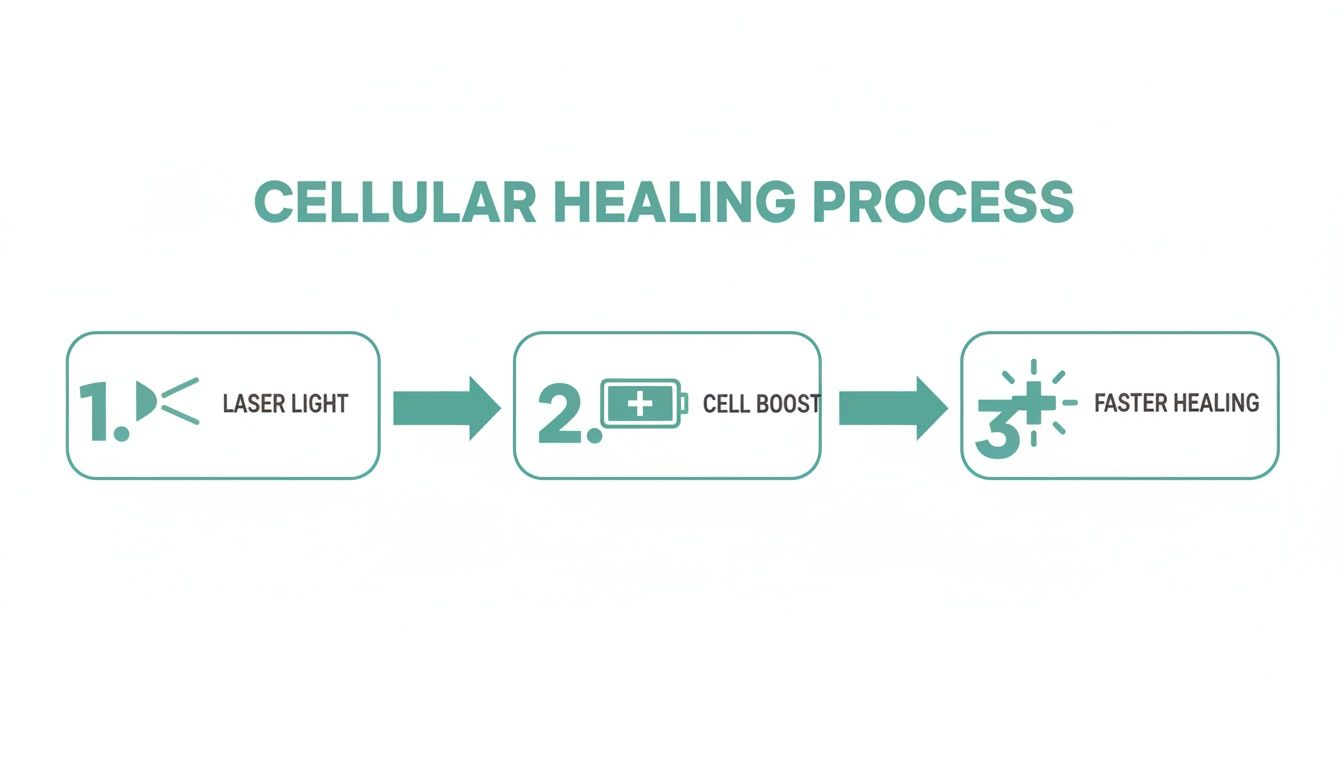
As you can see, it all starts with light energy, which triggers a boost in cellular activity and, ultimately, gets you on the road to faster healing and lasting pain relief.
The science gets even more interesting when you look closer. When the laser's photons are absorbed by cytochrome C oxidase (CCO) in the mitochondria, it actually displaces something called nitric oxide, which was blocking the enzyme from working at full capacity. Once the nitric oxide is out of the way, the cell's respiration rate ramps up, boosting ATP production by several times its previous rate. This is absolutely critical for healing tissues involved in stubborn conditions like chronic back pain or disc injuries. You can find a full breakdown of these cellular mechanisms and discover more insights about the process.
By targeting the root of the problem—a lack of cellular energy—cold laser therapy simply helps the body fire up its own natural healing systems. This is why the results tend to stick around; the therapy helps fix the underlying issue instead of just putting a band-aid on the symptoms. That gentle warmth you might feel during a session? That's just a byproduct of this powerful metabolic activity happening deep inside your tissues.
Knowing the science behind photobiomodulation is great, but seeing how that science translates into real-world relief is what truly matters. This is where the focused light energy of Class IV cold laser therapy moves from a cellular concept to a life-changing solution for specific, stubborn conditions. The therapy isn’t a shotgun approach; it’s a targeted tool that gets right to the underlying causes of your pain.
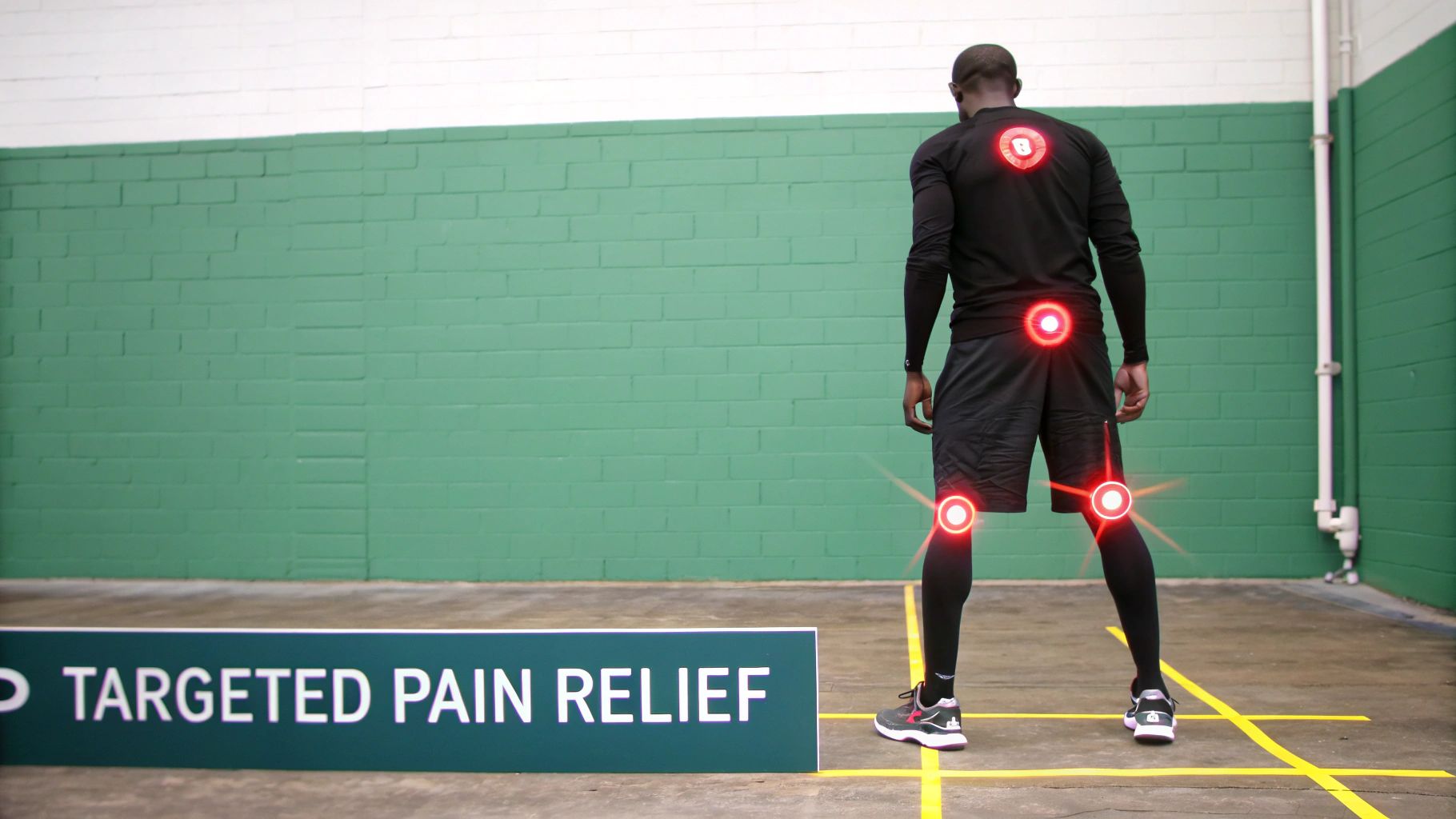
Whether you're struggling with a disc injury that just won't heal or neuropathy that disrupts your daily life, the mechanism is the same: sparking the body's own healing processes at the source. Let's break down exactly how this works for some of the most common and difficult-to-treat conditions we see in the clinic.
Chronic back pain, especially from disc injuries like herniations or bulges, is almost always driven by deep, persistent inflammation. This inflammation doesn't just cause pain; it also chokes off blood flow, effectively starving the damaged disc of the oxygen and nutrients it desperately needs to repair itself.
Cold laser therapy is designed to penetrate deep into the spinal tissues to tackle this core problem. The light energy helps calm the inflammatory storm around the nerve roots and within the disc itself. At the same time, it energizes the very cells responsible for rebuilding the disc's tough outer wall, kick-starting the natural healing process for a path to lasting relief.
Knee osteoarthritis is a slow, grinding process. Cartilage breaks down, leading to bone-on-bone friction, inflammation, and chronic pain. The biggest challenge here is that cartilage has a terrible blood supply, making self-repair incredibly slow and often impossible on its own.
This is where photobiomodulation really shines. The laser's photons are absorbed by the chondrocytes—the body's cartilage-producing cells—giving them an energy boost to improve their function.
For knee osteoarthritis, the goal is twofold: first, reduce the persistent joint inflammation causing daily pain and stiffness. Second, support the health of the remaining cartilage to slow down the progression of the condition. This is how we help people restore mobility and get back to living.
By enhancing circulation and reducing swelling inside the joint, patients often feel a noticeable drop in pain and an increase in their range of motion. It can be the difference that allows them to return to activities they thought were gone for good.
If you've ever dealt with peripheral neuropathy, you know how frustrating the tingling, numbness, and burning can be. These symptoms stem from damaged or dysfunctional nerve cells that simply don't have the energy to transmit signals correctly.
Cold laser therapy offers a unique way to address this by targeting nerve cell health directly. The light energy gets absorbed by the mitochondria (the "powerhouses") within the nerve cells, which helps in a few key ways:
By addressing the root metabolic issues behind neuropathy, patients can experience a significant reduction in their most debilitating symptoms.
Across all of these conditions, the fundamental principle is the same: accelerating tissue repair. The therapy stimulates a cascade of cellular events, leading to enhanced cell proliferation. In fact, research shows this can lead to up to a 20-30% increase in the activity of fibroblasts, the cells that build connective tissue like ligaments and tendons.
When the mitochondria absorb the photons, they ramp up ATP production and trigger transcription factors that promote blood vessel growth and dial down inflammation. If you want to dive deeper, you can explore the full scientific review of these mechanisms.
This is how cold laser therapy works—it doesn't just mask symptoms. It actively helps the body rebuild and recover from the inside out, providing a foundation for long-term health and function.
Knowing the science is great, but what does a cold laser therapy session actually feel like? It’s a common question, and I find that understanding the process helps put a lot of minds at ease. The good news is that the entire experience is simple, straightforward, and surprisingly comfortable. There are no needles or medications, and you can get right back to your day afterward.
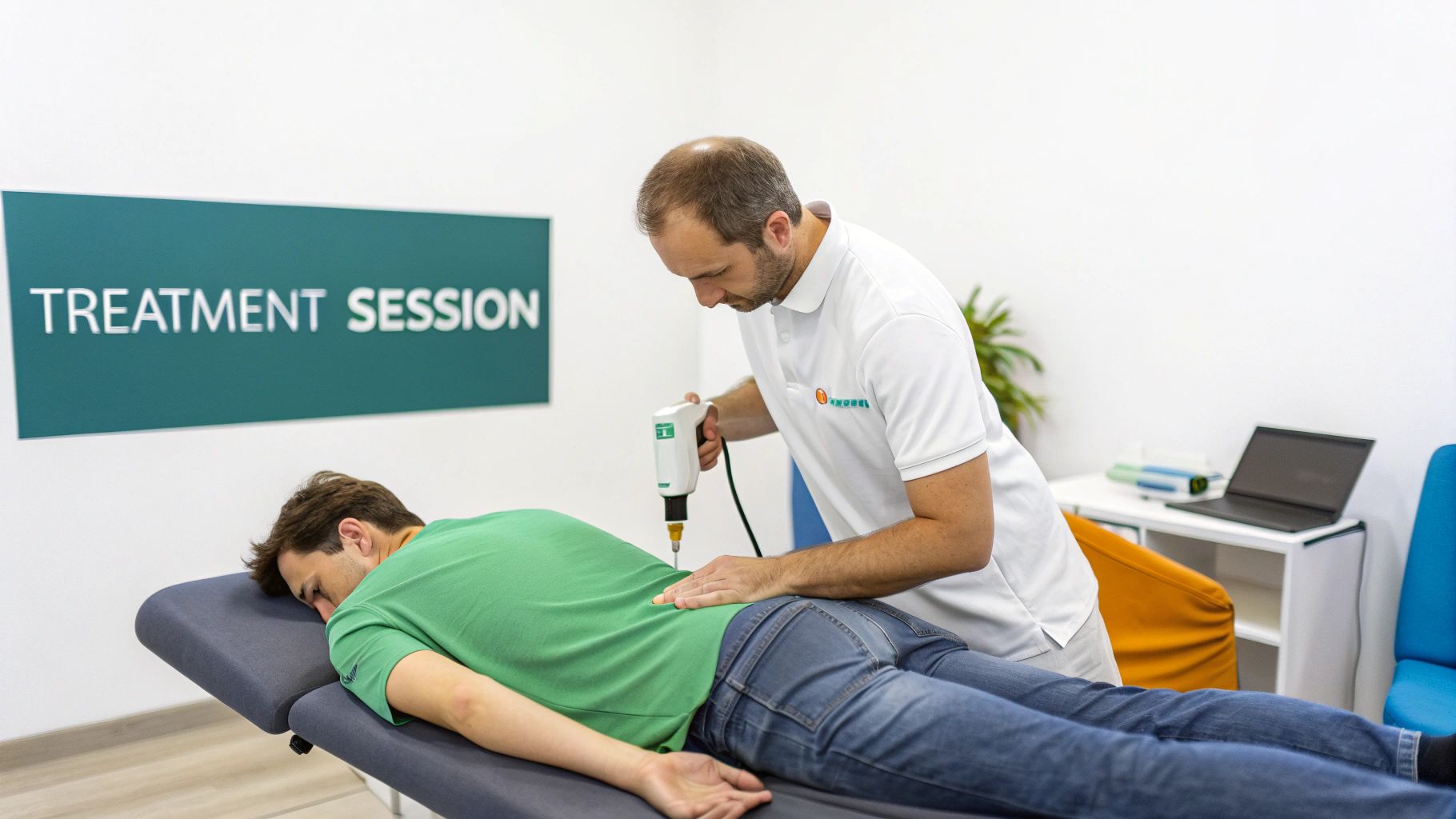
We design the whole process to be relaxing. You’ll get settled in a comfortable position, usually sitting or lying down, so we can easily reach the area that needs attention. Then, your therapist will take a handheld device and place it directly on the skin over the source of your pain.
Once we start, the therapist will slowly and steadily move the laser applicator over the target area. The device sends specific wavelengths of light deep into your tissues to wake up your cells and kickstart the repair process. You shouldn't feel any pain at all.
In fact, the most common thing people tell me they feel is a gentle, soothing warmth. It’s a bit confusing since it’s called "cold" laser, right? That warmth isn't from heat; it's a sign of increased circulation and metabolic activity in your tissues. It’s your body responding to the light energy and getting down to business.
A typical session is also refreshingly quick, usually lasting just 5 to 15 minutes. The exact time depends on a few things:
During the session itself, most patients find it incredibly calm and relaxing. It's a quiet moment in their day where their only job is to lie back and let the light energy do its thing.
Afterward, experiences can differ. Some people feel a noticeable drop in their pain level right away, sometimes after the very first treatment. For others, the relief is more gradual, building up with each session.
It's important to remember that cold laser therapy is working to heal the underlying tissue, not just mask the symptoms. The benefits you feel are the result of your body's enhanced natural repair mechanisms getting to work.
Occasionally, you might feel a slight, temporary soreness in the treated area a few hours later. I always tell my patients this is a good sign! It means we’ve triggered a significant healing response at the cellular level. This feeling usually fades within a day.
Cold laser therapy isn't a one-and-done fix, especially for long-standing problems. The real magic is in the cumulative effect—each session builds on the last. Think of it like charging a battery. Every treatment adds more energy to your cells, giving them the power to repair more tissue and reduce more inflammation over time.
Your personalized treatment plan will map out how often you should come in to get lasting results. Sticking to the schedule is the key to helping your body get ahead of the pain cycle and make real, long-term repairs. For stubborn issues like joint pain, this steady approach can make all the difference. You can learn more about how laser therapy is applied specifically for knee pain in our detailed guide.
By knowing what to expect, you can walk into your first session with confidence, knowing that each quiet, comfortable treatment is a powerful step toward getting your body back on track and living a life with less pain.
Effective cold laser therapy isn't a "one-size-fits-all" kind of deal. It's a precise science. To really get how this works in a real-world clinic, you have to look at the personalized protocols we develop to make sure the right amount of light energy gets to the exact right spot. Your treatment plan is built from the ground up, based on your specific condition, your body, and what you want to achieve.
Think of it like a skilled photographer adjusting the focus, aperture, and shutter speed to get the perfect shot. We do the same with light, fine-tuning every single parameter to get the biggest healing impact possible.
The "dose" in cold laser therapy is all about the total amount of energy we deliver to your tissue, which we measure in Joules. Getting this number right is everything. Too little energy, and you won't spark that cellular healing process. Too much, and it can actually be less effective.
We carefully calibrate several factors to hit that sweet spot for your condition:
By tweaking these variables, we can make sure the light energy hits those damaged cells with enough intensity to ramp up ATP production and kickstart your recovery.
Think of it this way: treating a superficial muscle strain is like watering a small potted plant—it doesn't need much water (energy). But healing a deep-seated disc injury is like trying to water the roots of a huge tree. It requires a lot more water, delivered for a longer time, just to get past the surface and reach the real target.
We often get asked how we determine the right settings for each person. It comes down to a careful calculation based on the condition being treated, tissue depth, and even factors like skin tone. This is where clinical experience really matters.
To give you a clearer picture, here are the key parameters we adjust for every patient.
This table breaks down the key settings we adjust to create a cold laser therapy protocol that is both effective and completely safe for your specific needs.
| Parameter | Why It Matters | Example Application |
|---|---|---|
| Wavelength (nm) | Determines how deep the light can penetrate into the body's tissues. | A 980 nm wavelength is often used for deep joint issues like knee osteoarthritis, while an 810 nm wavelength is great for more superficial nerves or muscles. |
| Power (Watts) | This is the rate at which energy is delivered. Higher power allows for deeper penetration and shorter treatment times. | For a deep lumbar disc, we might use 10-15 Watts to deliver a therapeutic dose quickly. A smaller area like the wrist might only need 4-6 Watts. |
| Dose (Joules/cm²) | The total energy delivered per unit area. This is the ultimate goal of the calculation and is critical for triggering a biological response. | A chronic condition like neuropathy might require a higher cumulative dose over several sessions, whereas an acute ankle sprain needs a specific dose to reduce initial inflammation. |
| Mode (Pulsed vs. Continuous) | The laser can be delivered in a continuous wave or in pulses. Pulsing can help manage heat and may have unique biological effects. | We often use a continuous wave for deep heating and pain relief, but a pulsed mode might be chosen for sensitive areas or to target inflammation. |
As you can see, it's a dynamic process. We're not just pointing a laser and hoping for the best; we're using physics and biology to create a truly customized therapeutic plan.
One of the best things about this therapy is its outstanding safety profile. As an FDA-cleared treatment, cold laser therapy has minimal to no side effects. We call it "cold" because the laser doesn't produce the kind of heat that can damage tissue, which is why most people only feel a gentle, soothing warmth during a session.
While it's incredibly safe for most people, there are a few important situations where we won't use it. We always screen for these to ensure your well-being:
This transparent, safety-first approach means you can feel completely confident in your care plan. When you're exploring different non-invasive treatments, understanding the safety guardrails is crucial. For instance, you can learn more about another common modality in our guide on what is E-stim therapy and see how it compares.
Ultimately, your personalized treatment plan is a blend of clinical precision and a deep commitment to your safety, creating a powerful and reliable path toward healing.
While our Class IV cold laser is a fantastic treatment on its own, we've found that it often delivers the best results when it's part of a comprehensive, whole-body healing plan. Think of it like a star player on a championship team. That player is incredibly talented, but their real magic happens when they work in sync with their teammates to win the game.
That’s exactly how we approach complex conditions. By combining cold laser with other advanced therapies, we can attack pain and dysfunction from multiple angles. This strategy isn't about chasing symptoms; it's about targeting the root mechanical and cellular problems to achieve real, lasting relief.
A perfect example of this is how we pair cold laser therapy with spinal decompression. First, we use decompression to gently create space between the vertebrae, taking pressure off a pinched nerve or a bulging disc. That's the mechanical fix.
Then, we immediately follow up with the cold laser. The laser floods the targeted disc and surrounding tissues with light energy, which calms inflammation and kicks the cellular repair process into high gear. Decompression creates the space for healing to begin, and the laser provides the biological energy to make it happen.
By combining these therapies, we create a powerful one-two punch against chronic back and neck pain. Decompression creates the opportunity for healing, and cold laser therapy provides the energy to make that healing happen faster and more effectively.
This same principle applies to our other modalities. When we use cold laser alongside precise, computer-guided chiropractic adjustments, it helps relax the muscle spasms and inflammation that often fight against proper joint alignment. The adjustment restores the structural integrity, and the laser helps the surrounding soft tissues calm down and adapt, allowing the adjustment to hold better and longer.
This layered approach is central to understanding how cold laser therapy works as part of a complete treatment plan. It also complements other energy-based treatments like therapeutic ultrasound, which uses sound waves to create deep heat and increase blood flow. You can learn more about how these different technologies compare in our guide on what is therapeutic ultrasound.
Ultimately, a combined treatment strategy allows us to address every facet of your condition—the structural, the cellular, and the functional. This leads to a more thorough and durable recovery, so you can get back to living your life with comfort and confidence.
It's completely normal to have a few questions before diving into a new treatment, even after you understand the science behind it. We want you to feel confident and informed every step of the way. So, let's walk through some of the most common things patients ask us about cold laser therapy.
Not in the slightest. The name can be a bit misleading—the term "cold" just means the laser doesn't generate heat that can cut or burn tissue like a surgical laser.
With the Class IV laser we use, what you'll actually feel is a gentle, soothing warmth over the treatment area. Many patients tell us it's incredibly relaxing. The entire process is non-invasive and completely pain-free.
That's a great question, and the honest answer is: it depends. The right number of sessions really hinges on your specific situation—what the condition is, how long you've had it, and how severe it is.
For example, a recent, acute injury might see significant improvement in just a handful of visits. On the other hand, a more stubborn, chronic issue like peripheral neuropathy might need a course of 10 to 15 sessions to create deep, lasting change. We’ll map out a personalized plan for you so you know exactly what to expect. Most people, however, start to notice a real difference within the first few treatments.
Insurance coverage for cold laser therapy can be a bit of a mixed bag. Although it's an FDA-cleared and well-researched therapy, some insurance carriers still classify it as investigational.
Our team is here to help you navigate this. We can verify your benefits and will lay out all the payment options for you before we begin, so there are absolutely no surprises.
Your peace of mind is our priority. We believe in being completely transparent about costs and will work with you to find a solution that makes sense for your budget.
One of the best things about cold laser therapy is its outstanding safety profile. There are virtually no side effects. It’s a non-toxic, non-invasive treatment that simply helps your body do what it does best—heal itself.
In very rare cases, some people might feel a temporary, mild soreness in the area as the healing and inflammatory processes get a kickstart. This is actually a good sign that things are changing, and it usually subsides quickly. The only standard safety measure is wearing protective eyewear during your session to shield your eyes from the powerful light, ensuring everything is safe and effective.
At Bonesetters Critical Chiropractic, our focus is on finding and fixing the root cause of your pain with safe, personalized care. If you're curious about how Class IV cold laser therapy can accelerate your healing, visit us at https://bonesetters.org to schedule a consultation.