

When you’re trying to find the best treatment for neuropathy in feet, it's easy to get lost in all the options. But the most important thing to know is that there's no single "best" choice for everyone. The most effective path forward is almost always a personalized plan that gets to the root cause of the nerve damage, rather than just masking the symptoms with medication.
For millions, living with peripheral neuropathy means a constant battle with tingling, burning, sharp pains, or a frustrating numbness that turns a simple walk into a challenge. The standard medical approach often starts and ends with a prescription pad, offering drugs meant to silence those noisy, overactive nerve signals.
While these medications can sometimes offer a temporary break from the pain, they almost never fix the actual problem.
Think of it like the check engine light in your car. You could put a piece of black tape over the light to stop it from bothering you, but that doesn't do anything to fix the engine. Neuropathy medications are a lot like that piece of tape—they cover up the warning sign (the pain) without repairing the damaged "wiring" underneath. This is why so many people feel stuck in a cycle of needing higher doses for less relief, all while the nerve damage quietly gets worse.
A truly effective treatment for foot neuropathy shifts the focus from just quieting the symptoms to creating an environment where the nerves can actually start to heal. Lasting relief isn't about finding a cleverer way to ignore the pain; it's about rebuilding nerve function from the inside out.
To do that, a modern approach brings together several powerful, evidence-based therapies designed to:
By targeting the core issues of poor circulation and inflammation, it becomes possible to move beyond temporary fixes. The goal is to rebuild nerve health from the ground up, leading to a significant and sustainable reduction in symptoms and an improved quality of life.
This guide will walk you through these advanced, non-surgical options. We’ll look at how therapies like Class IV Cold Laser Therapy and spinal decompression directly tackle nerve damage and compare them to more conventional methods. Understanding these differences is the first step toward making an informed choice and finding a real path back to comfort and mobility.
Before we can find the right solution for your foot pain, we have to get to the bottom of the problem. Picture the nerves in your feet as the intricate electrical wiring running through your home. When everything is working correctly, the signals flow seamlessly. You can feel the texture of the carpet under your feet, keep your balance without thinking, and move with confidence.
But what if that wiring gets damaged, frayed, or develops a short circuit? The signals go haywire. Instead of a clear message, your brain gets a blast of static—that's the tingling, burning, or pins-and-needles sensation. Or sometimes, the signal gets cut off completely, which you feel as numbness. This is precisely what peripheral neuropathy is: damaged nerves misfiring and sending chaotic messages that disrupt your life.
This nerve damage rarely happens on its own. It's almost always a red flag, a symptom of a bigger health problem that's been wearing down your nerves over time. While there are literally hundreds of potential causes, a handful of them account for the vast majority of cases we see.
The most frequent culprit, by far, is diabetes. Persistently high blood sugar is like poison to your nerves and the tiny blood vessels that feed them, especially in your feet. Year after year, this toxic environment slowly suffocates the nerves, depriving them of the oxygen and nutrients they need to survive. This is called diabetic neuropathy, and it’s incredibly common—up to 50% of people with diabetes will eventually develop it.
But it’s not just about diabetes. Several other issues can set the stage for nerve damage:
Pinpointing the source of your nerve damage is the single most important step toward lasting relief. Just taking medication to dull the tingling and burning is like putting a piece of tape over your car's check engine light—you're ignoring the real problem, which will only get worse.
By zeroing in on the root cause—whether that’s getting blood sugar under control, fixing a nutritional gap, or calming systemic inflammation—we can build a plan that does more than just manage symptoms. The real goal is to fix the underlying issue that's causing the damage in the first place, giving your nerves a fighting chance to heal and regenerate.
This is the only way to create a truly effective treatment plan. Instead of just turning down the volume on the static, we can start repairing the faulty wiring. That's the difference between temporarily feeling better and actually getting better.
When you first get a neuropathy diagnosis, the conversation almost always turns to prescription medications. Drugs like gabapentin, pregabalin, and nortriptyline—originally designed for depression or seizures—are usually the first line of defense. The goal is simple: relief. But it's crucial to understand what these drugs are actually doing.
Think of your damaged nerves as a faulty fire alarm that won’t stop shrieking, sending constant pain signals to your brain. Conventional medications don't fix the broken wiring. Instead, they just turn down the volume of the siren or, metaphorically, put earmuffs on your brain so the noise isn't so overwhelming. They are designed to mask or dampen pain signals, not to heal the nerves themselves.
While this can give some people a bit of a break, it's often a temporary fix for a chronic problem. This is exactly why so many people find themselves searching for the best treatment for neuropathy in feet that does more than just manage symptoms.
Trying to manage neuropathy with medication alone often feels like you're stuck in a frustrating cycle. Any initial relief can start to fade, which is a classic case of diminishing returns. This leaves you with a tough choice: do you increase the dosage and risk more side effects, or just accept a lower quality of life?
And those side effects aren't trivial. They can really get in the way of your day-to-day life. Common ones include:
This trade-off between partial relief and significant side effects is a big reason why many people get discouraged with conventional treatments. The root of the problem—the actual nerve damage—is never addressed. It’s left to potentially get worse over time, all while being hidden by the drugs.
This isn't just a collection of personal stories; major clinical studies back up the struggles patients face. The research shows a huge gap between the relief doctors hope for and what patients actually experience, which pushes many to look for alternatives that focus on healing.
A groundbreaking study in JAMA Neurology painted a very clear picture of these limitations. Researchers compared four common prescription drugs and found that they often weren't very effective, and side effects were a massive issue. For example, with pregabalin, a popular first-choice drug, only 15.1% of patients got meaningful pain relief, while an incredible 42.5% quit the trial because of the side effects. Another drug, mexiletine, had a dropout rate of 58.0%, which just goes to show how difficult these medications can be to tolerate.
These aren't just numbers; they tell a story about why relying only on medication is often an unsustainable strategy for long-term neuropathy relief. You can dig into the full results of the JAMA Neurology patient-assisted trial here.
This chart highlights some of the most common underlying issues that need to be addressed if you want to truly heal.
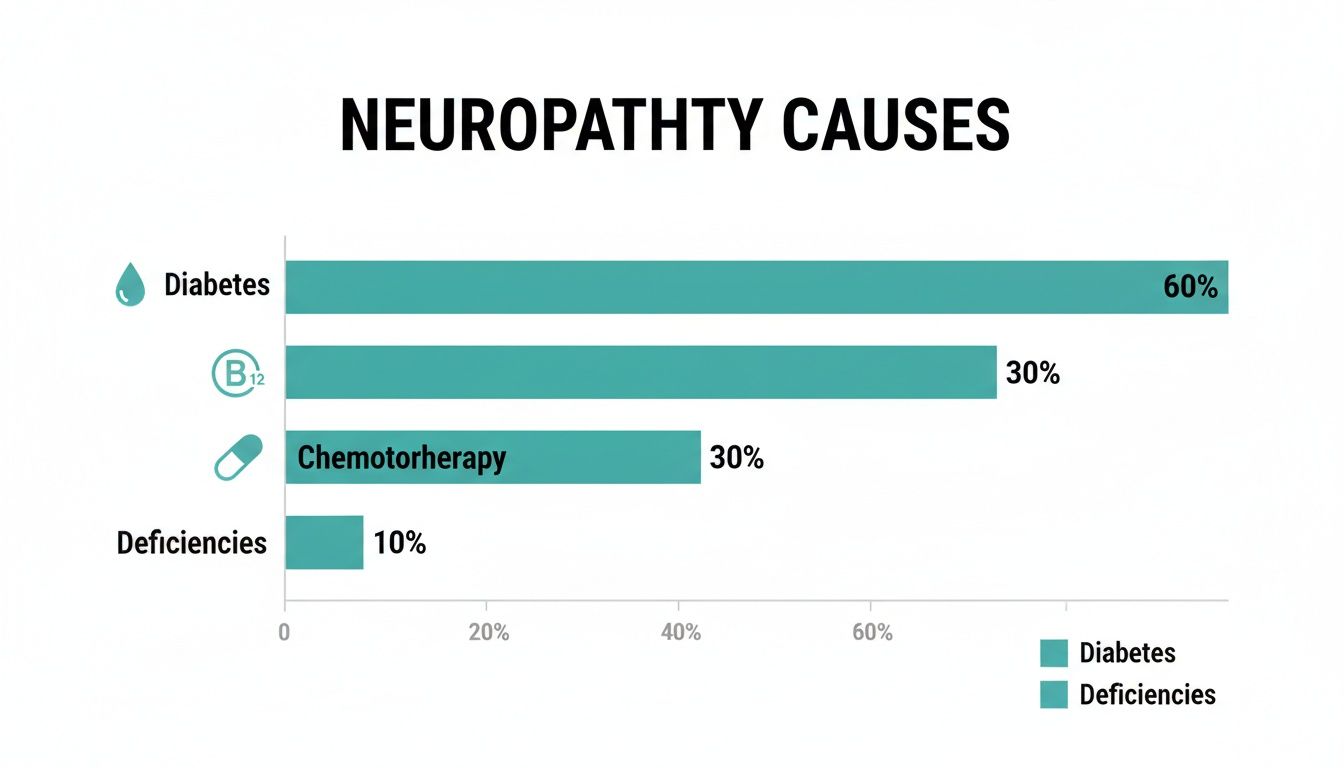
As you can see, things like diabetes and nutritional deficiencies are major drivers of nerve damage. No medication can reverse those on its own.
The evidence is clear: while medications may have a place in a broader treatment plan, they are fundamentally limited. They act as a temporary patch on a complex problem, which is why a root-cause approach that promotes actual nerve repair is so essential for achieving lasting results.
This reality check on conventional medications naturally leads to a search for more restorative options. The next section explores advanced, non-surgical therapies designed not just to silence the pain, but to actively heal damaged nerves and restore function from the ground up.
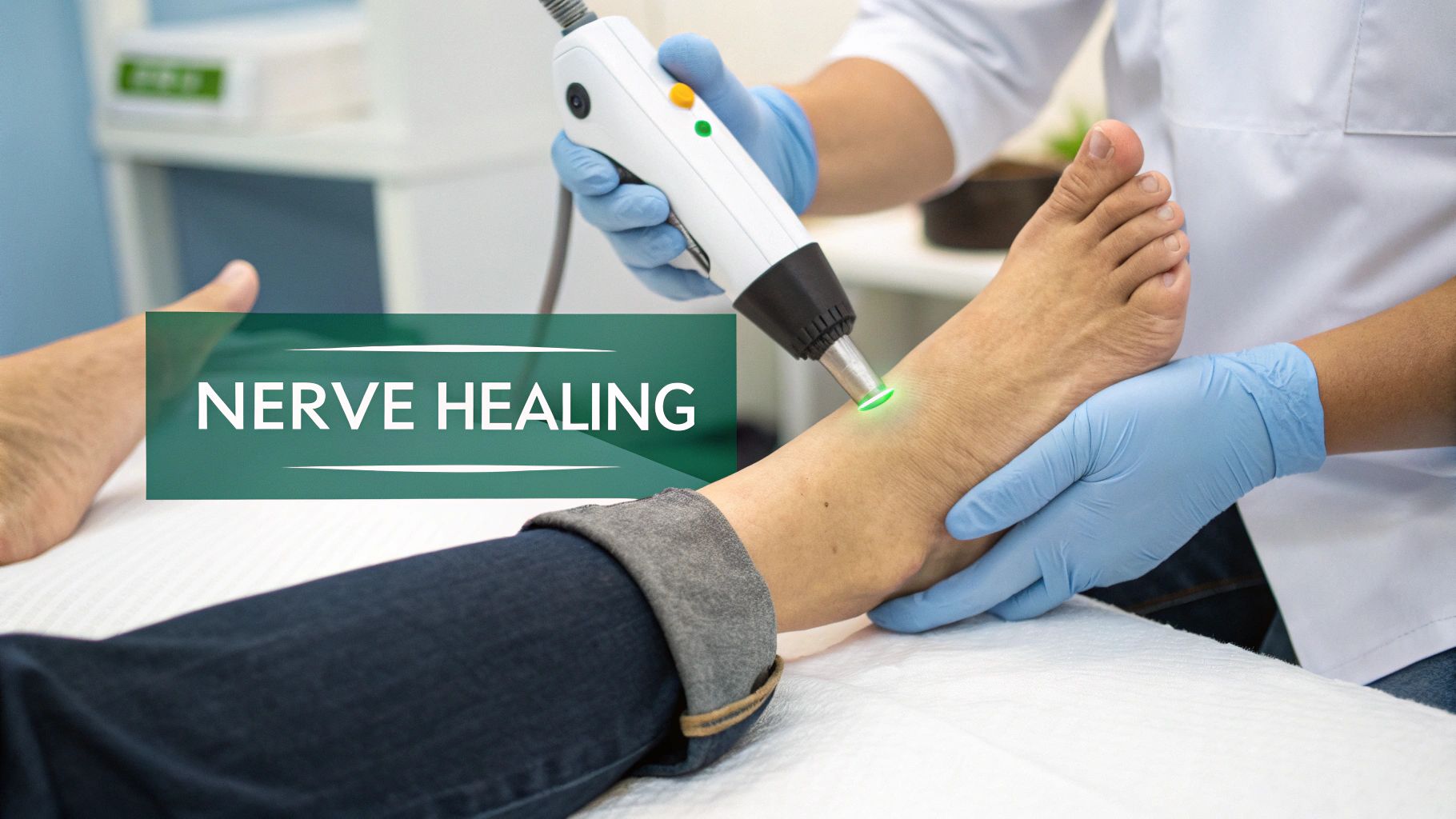
While most conventional treatments focus on masking pain signals, a more modern approach to finding the best treatment for neuropathy in feet is all about actively healing the damaged nerves. This is a huge shift in strategy—instead of just silencing a fire alarm, these therapies work to fix the faulty wiring that's causing the alarm in the first place.
The goal is to use targeted, non-surgical methods to create the perfect environment for nerve regeneration. By calming chronic inflammation, boosting circulation to starved nerve endings, and firing up the body's natural repair mechanisms, it's possible to find lasting relief without being tethered to a lifetime of medication.
Think of your damaged nerves as wilted plants struggling in dry, nutrient-poor soil. To recover, they need more than just a little water; they need sunlight and healthier soil to truly thrive. Class IV Cold Laser Therapy acts like a specialized grow light, delivering concentrated light energy deep into the tissues of your feet.
Don't let the word "laser" fool you; this isn't the kind used in surgery. It's a therapeutic process called photobiomodulation. Specific wavelengths of light penetrate your skin without any heat or pain, reaching the damaged nerve cells below. Once there, the light is absorbed by the mitochondria—the tiny powerhouses inside every cell.
This process essentially jump-starts cellular activity, leading to several key benefits:
This targeted approach helps rebuild nerve health from the inside out by addressing the damage directly at the source—a very different goal than simply blocking pain signals. You can learn more about how this technology tackles nerve-related issues in our guide on cold laser therapy for back pain.
Modern research is confirming that Class IV laser therapy is a significant step forward for treating foot neuropathy. It offers a clear path toward progressive nerve regeneration and immediate pain relief without drugs or downtime. Studies show that patients experience enhanced tissue repair with zero risk of medication interactions.
In fact, many report a 50-70% reduction in symptoms after completing a full treatment plan. That level of relief goes far beyond what’s typically seen with topical agents like capsaicin cream. For the 15-20% of US adults over 40 dealing with diabetic peripheral neuropathy, this therapy's ability to fight inflammation and promote healing makes it a cornerstone of effective care.
“By stimulating the body's own healing mechanisms at a cellular level, we can move beyond mere symptom management. The goal is to restore function and achieve genuine, long-term relief by repairing the nerve itself.”
Sometimes, the problem isn’t just in your feet; it actually starts much higher up. Picture a garden hose that’s been pinched right near the spigot. No matter how good the nozzle is, the water pressure at the other end will be weak and inconsistent. In the same way, if a nerve root in your lower back is compressed by a bulging or herniated disc, the signals traveling down to your feet get scrambled.
This compression can be the primary cause of your neuropathy symptoms, or at least a major contributing factor. You might feel the tingling, numbness, or weakness in your feet, but the real issue is hiding in your spine.
Spinal decompression therapy is a gentle, non-surgical treatment designed to relieve that pressure. You simply lie on a specialized table as it applies a precise, computer-controlled pulling force to the spine. This creates a negative pressure inside the discs, which does two crucial things:
By freeing up the nerve pathway at its source, spinal decompression allows signals to flow properly again, often leading to a dramatic reduction in foot neuropathy symptoms. When you combine it with therapies like cold laser that heal nerves at the local level, you get a powerful, multi-faceted solution for lasting relief.

While the advanced therapies we offer are incredibly powerful, finding the best treatment for neuropathy in your feet doesn't stop when you leave our clinic. Real, lasting relief is built on the daily choices you make to support your body's own healing processes.
What you put on your plate and how you move your body can either speed up nerve repair or actively work against it.
Think of it this way: your treatment plan is the skilled construction crew working to rebuild damaged nerves. Your diet and lifestyle are the raw materials and logistical support. Without the right building blocks and a clear path to the job site, even the best crew can't work efficiently. Let's look at some practical ways to give your body everything it needs to heal.
Chronic inflammation is like a low-grade fire smoldering around your delicate nerve endings. The right diet helps douse those flames, creating an environment where healing can finally begin. The goal isn't just to eat "healthy," but to strategically provide the specific nutrients that act as building blocks for nerve regeneration.
Here's what to focus on:
If your neuropathy is related to diabetes, managing your blood sugar isn't just a suggestion—it's non-negotiable. Persistently high blood glucose is a direct poison to your nerves and the tiny blood vessels that feed them. No therapy in the world can provide lasting help if the root cause of the damage isn't under control.
For anyone with diabetic neuropathy, strict glucose control is the foundation of treatment. Consistent monitoring and following your diabetes management plan are absolutely essential to protect your nerves from further harm and give them a chance to heal.
Getting blood flowing to your feet is crucial for delivering the oxygen and nutrients your damaged nerves are crying out for. You don't need to run a marathon; in fact, gentle, consistent movement can make a world of difference.
Low-impact activities like walking, swimming, or riding a stationary bike are fantastic options. Even simple balance exercises from Tai Chi or yoga can strengthen your core and improve the connection between your nerves and muscles. This not only keeps your nerves active but also dramatically reduces your risk of falls—a serious danger when your feet are numb.
Because neuropathy can rob you of the ability to feel pain, meticulous foot care becomes a critical daily habit. You have to be your own first line of defense against injuries and infections you might not even feel. Check your feet every single day for cuts, blisters, or sores. Always wear comfortable, well-fitting shoes with a wide toe box to prevent pressure points.
Finally, you need to actively avoid substances known to poison nerves. This means seriously limiting or, ideally, eliminating alcohol, as excessive consumption is a direct cause of neuropathy. Smoking is another major offender; it constricts blood vessels and starves your nerves of the oxygen they need to survive. Cutting out these toxins is one of the most powerful steps you can take. For more at-home tips, our guide on the correct use of gel ice packs can offer more insight into managing inflammation on your own.
When you're dealing with foot neuropathy, it's natural to have a lot of questions. It can feel overwhelming, but getting clear answers is the first step toward getting relief. We've put together some straightforward answers to the questions we hear most often from people just like you.
Think of this as your guide to understanding the practical side of treatment. Our goal is to clear up the confusion and help you feel confident as you explore solutions that actually work on the problem, not just the pain.
This is probably the most common question we get, and it's an important one. While everyone's body responds a bit differently, many of our patients start feeling a real difference—less burning, less tingling—within the first few weeks. That initial relief usually comes from calming down inflammation and boosting blood flow to the damaged nerves.
But for deep, lasting healing, it takes more time. Think in terms of several months, not days. Nerves heal slowly, and true regeneration is a gradual process. The key to getting those durable, long-term results is sticking with your treatment plan consistently.
Absolutely not. It's a common myth that for a treatment to be powerful, it has to hurt. In reality, it's just the opposite.
Our advanced therapies, like Class IV Cold Laser Therapy, are completely painless. In fact, most people say all they feel is a gentle, soothing warmth. There is zero downtime, so you can walk out of your session and get right back to your day.
The same goes for our other treatments. They're designed to be comfortable and relaxing. To see how these gentle but effective technologies work, check out our guide on what E-stim therapy is and how it helps restore nerve function.
The biggest difference comes down to the core philosophy. Conventional medical care is typically centered on symptom management. The goal is often to make the pain more tolerable, usually with prescription drugs that numb the pain signals but do nothing to fix the actual nerve damage.
Our approach is different because we focus on root-cause resolution. We’re not interested in just masking the problem. Instead, we use a strategic combination of therapies to accomplish three key biological goals:
Our objective isn't just to suppress symptoms—it's to achieve genuine healing and give you your life back.
Ready to stop chasing symptoms and start healing the real cause of your neuropathy? The expert team at Bonesetters Critical Chiropractic is here to build a personalized, non-surgical treatment plan that helps you reclaim your life from nerve pain. Schedule your consultation today by visiting us at https://bonesetters.org.