
If you're living with a knee that constantly aches, clicks, or just plain hurts, it's easy to think surgery is the only way out. But the truth is, for most people, there's a whole world of effective, evidence-based treatments that can bring lasting relief without ever going under the knife.
This guide is your roadmap to understanding those powerful alternatives. It’s about getting to the root of the problem and restoring function, not just masking the pain.

When chronic knee pain sets in, it changes everything. Simple things like taking the stairs, playing with your kids, or even just getting out of a chair can feel like a monumental task. It’s completely understandable why so many people start to believe a knee replacement is their only real path forward.
But that perspective often misses a key point. Your knee is an incredibly complex joint—a dynamic system of bones, cartilage, ligaments, and muscles all working together. More often than not, the pain you feel is a symptom of an imbalance or dysfunction in that system, not a sign that the whole joint is shot and needs to be replaced.
Pinpointing the source of the pain is the first—and most important—step. For the vast majority of people, knee discomfort comes from common conditions that respond incredibly well to conservative, non-surgical treatments.
The usual suspects include:
Each of these problems throws off the delicate mechanics of your knee, leading straight to inflammation, stiffness, and that all-too-familiar pain. The goal of non-surgical care is to fix those mechanical issues and give your body the support it needs to heal itself.
The need for effective, non-invasive solutions is more urgent than ever. Just look at the numbers for knee osteoarthritis (OA). In 2021, an estimated 374.7 million people worldwide were affected by it—a massive 234.5% jump since 1990.
Experts predict that by 2050, nearly 1 billion people could be living with knee OA. That staggering figure makes it clear just how vital it is to have accessible and sustainable ways to find relief. You can learn more about the global impact of knee OA00163-7/fulltext) and see why this is such a critical issue.
The core idea behind non-surgical care is simple: empower your body to heal. Instead of cutting out and replacing parts, these methods focus on calming inflammation, correcting biomechanics, and strengthening the very structures that support your knee.
This guide will walk you through the proven, evidence-based options available today. It’s time to shift from feeling trapped by a surgical ultimatum to feeling empowered by the range of choices you have for lasting knee pain relief.
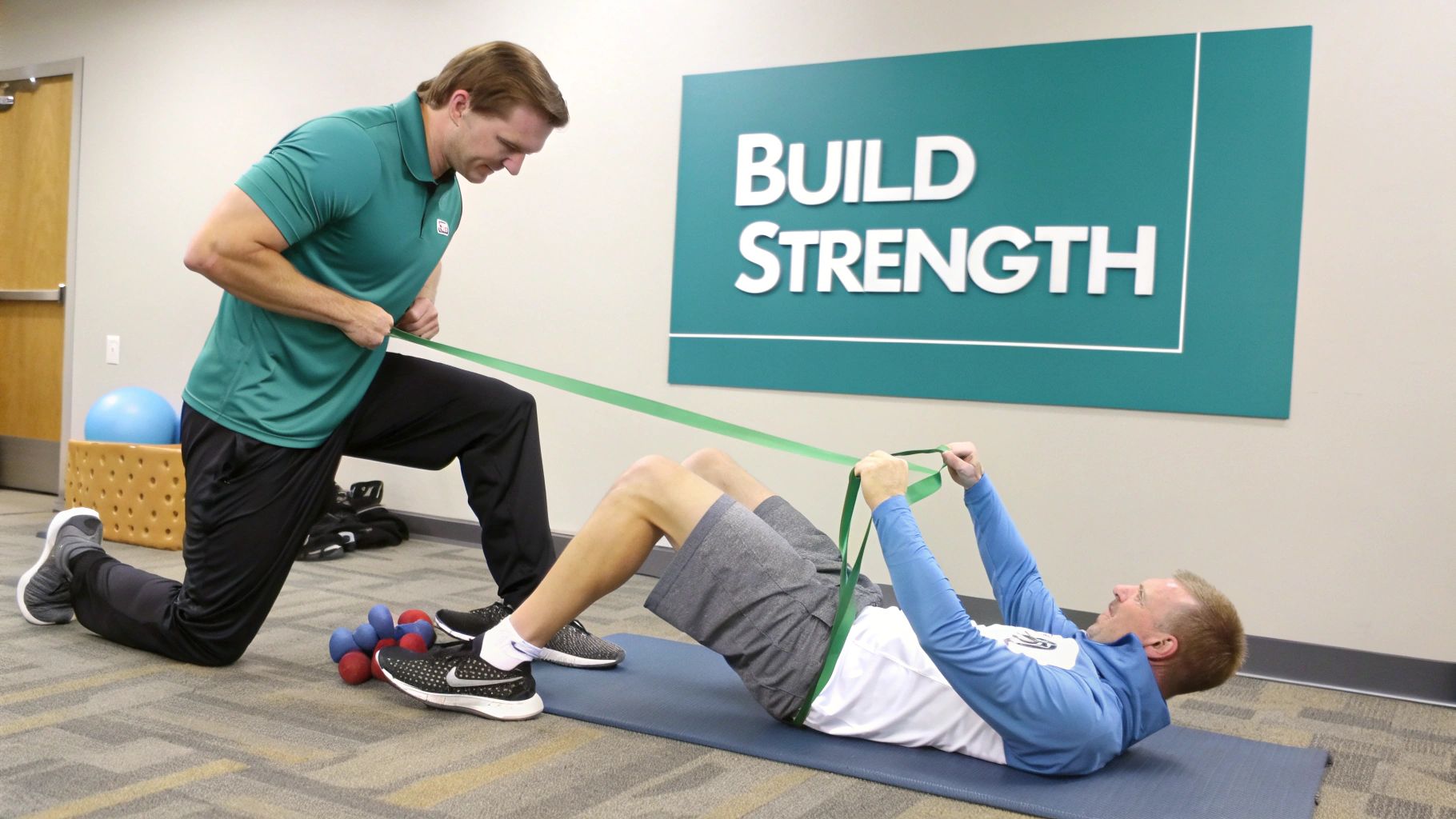
Before we even think about advanced clinical procedures, the best route to lasting knee pain relief starts with getting the basics right. These conservative, first-line treatments aren't just about masking the pain. They’re about fundamentally changing the environment around your knee to encourage healing and build stability for the long haul.
Think of it like building a house. You have to pour a solid foundation before you can put up the walls. These strategies are the essential pillars that support everything else, addressing the root mechanical problems that are causing your pain in the first place. When you strengthen the right muscles, correct your alignment, and reduce daily stress on the joint, you give your knee the best possible chance to recover.
When we talk about physical therapy (PT) for knee pain, we’re not talking about a generic handout of quad exercises. A good therapist is more like a biomechanical detective. They'll pinpoint the exact muscle weaknesses and imbalances—often in your hips and ankles—that are forcing your knee into a compromised, painful position.
The real goal here is to rebuild the natural "scaffolding" that’s supposed to protect your knee.
It’s about more than just the muscles you can see. A comprehensive PT program will zero in on:
When this support system is out of whack, the knee joint takes on a burden it was never meant to carry. PT systematically corrects these issues, effectively taking the load off the joint so it can heal. Many therapists also use hands-on manual techniques, and you can learn more about how myofascial release can help unlock tissue restrictions to improve circulation and reduce stiffness.
The proof is in the research. A massive 2025 meta-analysis in PLOS One looked at 139 different studies with over 10,000 patients. It confirmed that structured exercise and physical therapy are the gold-standard treatments for knee osteoarthritis, which affects over 528 million people worldwide. The data showed these methods can cut pain by 30-50% and improve function by 40%. You can read the full research about these powerful findings for yourself.
The link between your body weight and knee pain is incredibly direct. Your knees are your body's primary shock absorbers, and every single extra pound you carry multiplies the force they have to deal with every time you take a step.
Imagine carrying a heavy backpack all day, every day. That’s what excess weight feels like to your knees. For every one pound of body weight you lose, you relieve four pounds of pressure from your knees. Losing just 10 pounds feels like a 40-pound weight has been lifted off the joint.
Lightening that mechanical load is one of the most powerful things you can do for your knees. It directly slows down the wear and tear on your cartilage, which can halt the progression of arthritis and dramatically reduce inflammation and pain.
While you're working on building your body's internal support system through exercise, external devices can give you immediate relief and stability. These tools are fantastic for correcting biomechanical flaws and offloading the stressed parts of your knee, letting you stay active with less pain and more confidence.
To give you a clearer picture of how these foundational treatments stack up, here’s a quick comparison:
| Treatment | Primary Goal | Typical Time to See Results | Best For |
|---|---|---|---|
| Physical Therapy | Strengthen supporting muscles, improve biomechanics | 4-6 weeks | Muscle imbalances, post-injury recovery, and osteoarthritis management |
| Weight Loss | Reduce mechanical load and inflammation | 8-12 weeks (gradual) | Individuals who are overweight, especially those with arthritis |
| Bracing/Orthotics | Provide external stability, realign the joint | Immediate | Unilateral (one-sided) arthritis, ligament instability, and foot-related issues |
These conservative treatments—physical therapy, weight management, and supportive devices—work together beautifully. By committing to these strategies, you're not just chasing symptoms. You're rebuilding a stronger, more resilient foundation for your knees and setting yourself up for a more active, pain-free future.
When physical therapy, exercise, and weight loss aren't enough, it's easy to feel stuck. You might think your only remaining options are to either live with the pain or consider surgery. But that's not the case at all.
This is exactly where advanced clinical treatments come in, bridging the gap between those initial steps and the operating room. These therapies go beyond just managing symptoms; they work on a deeper level to target the biological sources of pain and inflammation right inside the joint. They are designed to change the knee's internal environment to promote healing and restore function from within.
For many people, the first step into more advanced care is a therapeutic injection. This isn't just about masking pain; it's a strategic move to calm down an angry, inflamed joint so you can get back to moving comfortably and making progress.
Two of the most common and effective injections work in very different ways:
Corticosteroid Injections: Think of these as a powerful, fast-acting fire extinguisher for a severe arthritis flare-up. They quickly knock down swelling and pain, creating a crucial window of relief. This often makes it possible to get back to your physical therapy exercises with much less discomfort.
Viscosupplementation: This is a fantastic option if your knee feels stiff, grindy, and poorly cushioned. A great analogy is giving a rusty door hinge a high-quality oil change. We inject hyaluronic acid—a gel-like substance that your body produces naturally—directly into the knee. This helps lubricate the joint, improve shock absorption, and allow the bones to glide smoothly again.
These injections can provide significant relief that lasts for months, keeping you active and engaged in your recovery. We sometimes even pair these treatments with other technologies, like therapeutic ultrasound, to help enhance the healing process. You can learn more about how therapeutic ultrasound works in our detailed guide.
Beyond managing inflammation and symptoms, a truly exciting field of medicine focuses on actual tissue repair. Known as regenerative medicine, this approach doesn't introduce external drugs but instead uses your body's own powerful healing components to fix the damage causing your knee pain.
This is really the future of non-surgical care. The goal is simple but profound: kickstart a natural healing response right inside the joint to rebuild cartilage and calm chronic inflammation for good.
Regenerative medicine isn't some far-off idea; it's a practical, effective solution that gives your body the tools it needs to heal itself. We concentrate your own healing factors and deliver them precisely to the damaged area, creating the ideal environment for real tissue repair to begin.
This approach is changing how we think about knee pain relief. Therapies like Platelet-Rich Plasma (PRP) tap into your body’s built-in repair system to mend damaged cartilage and reduce inflammation. In fact, many clinics find that PRP can reduce pain by 40-60% in just a few months, offering a real alternative to the nearly 1 million knee replacement surgeries performed in the U.S. each year. You can find more on these promising knee pain statistics if you're curious.
The process for PRP is surprisingly simple. We draw a small amount of your blood—just like a standard blood test—and place it in a centrifuge. This machine spins the blood at high speed to separate and concentrate the platelets, which are tiny cells packed with growth factors that act as the "general contractors" for your body's repair jobs. We then inject this platelet-rich plasma directly into your knee, initiating a powerful healing cascade that leads to lasting relief and better function.
When it comes to knee pain, there's rarely a single magic bullet. While one-off treatments like physical therapy or a corticosteroid injection can provide some relief, they often only target one piece of a much larger puzzle. The real secret to lasting, non-surgical relief is a smarter strategy—one that layers multiple, evidence-based treatments together to create a powerful, combined effect.
Think of it like trying to build a sturdy table. One leg won't cut it; the whole thing will just topple over. But when you add a second, third, and fourth leg, you create a solid, dependable structure. An integrated treatment plan works the exact same way. Each therapy supports the others, tackling the pain from different angles to build a more resilient and functional knee.
This approach lets us get right to the root causes of your specific pain—whether it's inflammation, excess pressure, poor circulation, or cellular damage—and address them all at once.
One of the biggest culprits behind chronic knee pain, especially with arthritis, is the loss of space inside the joint. As cartilage thins out, the bones inch closer and closer, leading to that awful grinding, friction, and constant inflammation. Knee Decompression therapy is designed to push back against this.
Using a gentle, computer-guided force, the therapy carefully separates the knee joint. It’s a bit like slowly pulling apart a compressed spring. This slow, steady action creates a subtle negative pressure inside the joint capsule, which does two critical things:
This mechanical relief is the first step. It creates a healthier environment inside the knee, setting the stage for deeper healing and making other therapies far more effective.
Once we’ve created a less compressed, healthier environment, the next move is to stimulate healing on a microscopic level. This is where a technology like Class IV Cold Laser Therapy really shines. Don't let the word "laser" fool you; unlike surgical lasers that cut, this therapeutic tool uses specific wavelengths of light that penetrate deep into your knee's muscles, ligaments, and cartilage.
The scientific term is photobiomodulation, but a better way to think of it is like giving a dead car battery a jump-start. The light energy gets absorbed by your cells' mitochondria—their tiny power plants—and supercharges their ability to produce ATP, which is the fuel for all cellular repair.
This surge in cellular energy triggers a whole cascade of positive effects. It dramatically dials down inflammation, boosts circulation to bring more oxygen to the area, and puts the body’s natural repair processes into a higher gear. By "recharging" your cells, we can help you recover much faster than your body could on its own.
The final piece of this integrated approach deals with the nerves and blood vessels. Chronic pain can actually rewire your nervous system, creating a feedback loop where your brain keeps getting pain signals even after the initial problem has improved. Specialized treatments like horizontal stimulation work to break that cycle.
By sending specific electrical frequencies through the tissue, we can help "retrain" those overactive nerves, calming them down and quieting the pain signals. At the same time, this improves local blood flow, which is essential for flushing out inflammatory waste products and delivering the nutrients needed for healing.
By weaving these therapies together, we create a truly comprehensive solution.
Together, they form a powerful protocol that doesn't just put a band-aid on your symptoms. It actively promotes a healthier, more functional knee—the cornerstone of modern, non-surgical knee care that can get you back to living with less pain.
When you decide to tackle knee pain without surgery, you're starting a journey, not just a single treatment. Knowing what's ahead—the different phases, the small wins along the way—is incredibly important for staying motivated. It helps you see real progress and understand how each step builds on the last.
Think of it as a roadmap to getting your life back. Here’s a look at how our integrated treatments like decompression, laser therapy, and nerve stimulation fit together over time to deliver results that last.
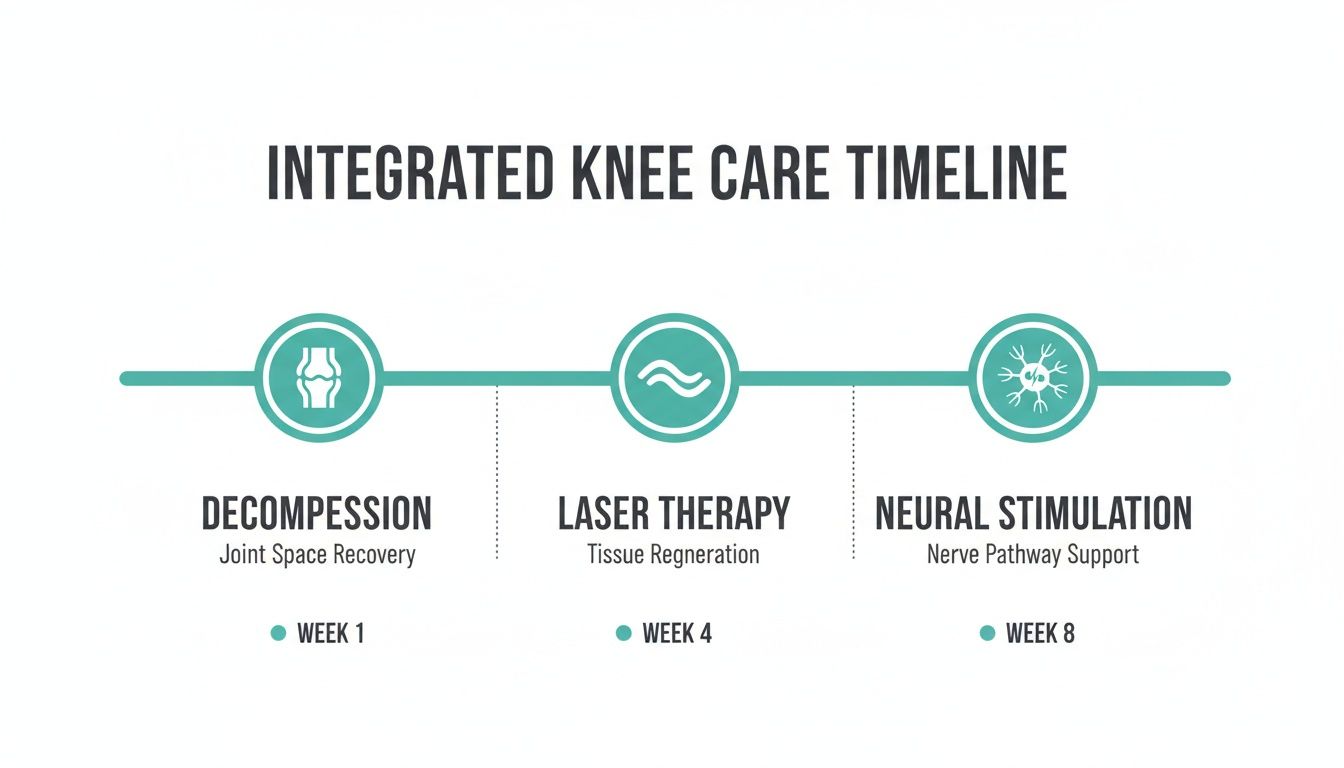
This timeline isn’t just a schedule; it shows the strategy. We start by relieving pressure, then shift to boosting your body’s natural healing processes, and finally, retrain the nerves to cement those improvements.
The first phase, which usually lasts about 2-4 weeks, is all about putting out the fire. Our immediate goal is to calm the inflammation and pain that are disrupting your life. We focus on reducing swelling, improving blood flow, and creating space within the joint to give it a chance to breathe.
This is when you’ll start to notice those first, welcome signs of relief. Key milestones often include:
At-home care is a huge part of this initial phase. Something as simple as using cold therapy correctly can make a world of difference. To learn more, we have a great guide on how to use gel ice packs correctly to get the most out of them.
Once the initial inflammation has settled down, our focus pivots to rebuilding. This second phase, typically from weeks 4-8, is where we work on restoring strength, improving flexibility, and correcting the movement patterns that caused the pain in the first place.
This is when you start to feel a real, functional difference. It’s not just about feeling less pain; it’s about what you can do again.
This stage is about translating pain reduction into real-world capability. It's the transition from simply feeling better to truly doing more, reclaiming activities you thought were lost.
Milestones in this phase are all about action:
The final phase starts around the 8-12 week mark and is all about locking in your progress for the long haul. The goal here is to make your knee as strong and resilient as possible, giving you the tools and knowledge to keep it that way.
This is where you build a sustainable, active lifestyle around your new, healthier knee. The milestones become deeply personal, reflecting a genuine return to the life you love—whether that's gardening for hours, getting down on the floor to play with your grandkids, or just taking a long walk without worrying about the consequences.
To help you visualize this journey, we've broken down what to expect into clear, manageable phases. This table gives you a bird's-eye view of the entire process, from initial relief to long-term stability.
| Recovery Phase | Typical Duration | Key Goals | Patient Milestones |
|---|---|---|---|
| Initial Relief | 2-4 Weeks | Reduce inflammation and pain, improve joint mobility. | Sleeping better, less morning stiffness, standing longer. |
| Functional Improvement | 4-8 Weeks | Rebuild strength, restore proper movement patterns. | Climbing stairs easily, resuming light exercise, improved balance. |
| Long-Term Maintenance | 8-12+ Weeks | Solidify gains, build resilience, prevent re-injury. | Returning to hobbies, sustained activity without flare-ups. |
Each person's journey is unique, but this framework provides a reliable guide for what to anticipate as you move from pain and limitation toward freedom and activity.
Our first goal is always to find a way to get you lasting relief without surgery. That’s what we do. But being honest about what’s best for your long-term health is the most important part of our job. While we'll always push to explore every effective non-surgical option, some situations just can’t be fixed without a surgeon's help.
Understanding when you've reached that point is crucial for making the right call about your health. This isn’t about giving up on conservative care; it’s about knowing when the problem itself requires a completely different tool.
Think of it like this: we're experts at repairing a damaged road. We can patch potholes (treat inflammation), resurface the asphalt (improve joint lubrication), and fix the drainage (reduce swelling). But if the bridge itself has a major structural crack, no amount of patching is going to make it safe to cross. The same idea applies to your knee.
Here are a few of those "cracked bridge" scenarios where it's probably time to talk to an orthopedic surgeon:
The decision to see a surgeon isn’t a failure. It’s simply recognizing that the structural damage is too severe for conservative methods to build upon.
We’re your partner in this, no matter what. Our commitment is to get you the best possible outcome, and sometimes that means guiding you toward a surgical evaluation. It's the right and responsible step toward getting your mobility and your life back.
Once you start exploring options beyond surgery, a lot of practical questions pop up. It's totally normal to wonder about how long treatments will last, what insurance might cover, and how to pick the right path for you. Let's get you some clear, straightforward answers so you can move forward with confidence.
This is the big question, and the honest answer is: it depends on the treatment and your follow-through.
Think of it this way: foundational changes like physical therapy and weight management are like building a stronger foundation for your house. As long as you maintain it, the benefits can last a lifetime. You're teaching your body to support itself better.
More advanced therapies, like PRP injections, are designed to jump-start your body's own healing crew. Many people experience significant relief for one to two years, sometimes even longer, because these treatments help repair the underlying tissue.
The real goal of a good, integrated plan isn't just to put a band-aid on the pain. It's to fix the root problems—inflammation, pressure, poor circulation—so the joint becomes healthier and more resilient for the long haul.
Insurance coverage can be a bit of a mixed bag. Standard physical therapy is usually well-covered, but some of the more advanced treatments, like Class IV laser therapy or PRP, are often still classified as "investigational" by many insurance companies. This means they might not cover them.
It is absolutely crucial to check with your insurance provider before starting treatment to see what your specific plan covers. We believe in total transparency here, so we’ll always provide you with clear cost information and walk you through all the payment options. No surprises.
There’s no magic bullet or one-size-fits-all solution for knee pain. That's why a precise diagnosis is the most important first step we take. What works for your neighbor's arthritis might not be what your torn meniscus needs.
Your best treatment plan will be built around the specific cause of your pain, how severe it is, your lifestyle, and your overall health. A thorough evaluation, including a hands-on physical exam and sometimes imaging, gives us the blueprint we need to design a strategy just for you. For most people, a combination of different therapies delivers the best, most durable results.
Yes! In fact, the right kind of exercise is one of the most powerful tools for recovery. The trick is to avoid activities that pound on the joint, like running or jumping, which can just make things worse.
Instead, you want to focus on low-impact exercises that build strength without adding stress.
The golden rule is to listen to your body. Working with a professional ensures you’re doing movements that help you heal, not hold you back.
At Bonesetters, our entire focus is on creating personalized care plans that get real, measurable results without surgery. If you're tired of living with knee pain and ready for a lasting solution, we invite you to see what our evidence-based approach is all about. Find out how we can help you get back to a more active, comfortable life by visiting us at https://bonesetters.org.