

Cervical spine decompression gently eases pressure on spinal nerves and discs, helping many patients find relief from nagging neck pain. It focuses squarely on nerve pressure relief, pain reduction, and restoring range of motion. People often explore this option when rest, medications, or basic therapies no longer deliver results.
This therapy applies targeted, gentle traction to pull vertebrae apart just enough to reduce disc bulging and open up nerve pathways. Real-time feedback from computer-guided systems ensures the force adjusts to each patient’s needs, delivering precise pressure relief every time.
Technologies include motorized traction tables, pneumatic decompression devices, and computer-guided systems designed to adapt force dynamically throughout each session. With consistent treatments, many patients report up to 50% pain reduction within the first month.
Ideal candidates often struggle with persistent neck pain that doesn’t improve with rest or medication. They may also experience tingling or numbness radiating into the arms, signaling nerve irritation.
A full course usually involves 15–20 sessions spread over 6–8 weeks. That schedule allows spinal tissues to adapt gradually and promotes lasting relief.

The diagram highlights the C3–C7 vertebrae—common sites for disc herniations and the main focus for targeted decompression.
Before diving deeper, here’s a snapshot of the core objectives, mechanics, and patient benefits.
| Aspect | Description |
|---|---|
| Primary Goals | Relieve nerve pressure, reduce pain, improve mobility |
| Mechanism | Gentle traction to decompress discs and joints |
| Technologies | Traction tables, computer-guided systems, pneumatic devices |
| Benefits | Faster relief, non-invasive, minimal downtime |
This overview sets the stage for detailed protocols, real-world case studies, and an inside look at how Bonesetters Critical Chiropractic integrates PulStar and Class IV laser therapy later in the guide.
Picture your cervical spine as a column of little cushions and springs, where each vertebra is separated by a fluid-filled disc acting like a mini shock absorber. This analogy helps us see how decompression gently eases pressure and soothes irritated nerves.
Imagine disc pressure like an overinflated bike tire. Just as you’d let air out slowly to reach the right tension, decompression therapy applies a controlled pull to create negative pressure inside the discs.
There are two main approaches to this therapy:
Good alignment is like a balanced mobile in your living room—when one piece shifts, the whole structure tips. Decompression restores that equilibrium, spreading out forces instead of focusing them on a single segment.
A large retrospective study of over 3 million patients showed cervical spine degeneration diagnoses rose by about 1.0 per 1,000 annually, with 54.4% of spinal injuries at discharge involving the neck. You can read more details in this major clinical study.
Decompression shines brightest when it’s part of a layered recovery plan. Stretching alone only goes so far—combining therapies builds lasting strength and prevents flare-ups.
Key Insight: Decompression is just one step in a comprehensive recovery strategy aimed at long-term relief.
We begin with low-force static sessions, giving tissues a chance to acclimate to traction. Once there’s comfort and tolerance, we introduce dynamic cycles to challenge and reinforce spinal structures.
– Start with light static holds for 1–2 minutes.
– Transition into alternating pull-and-release patterns.
– Keep a close eye on comfort levels and tweak angles to target C3–C7 segments.
To explore specific traction methods, see our guide on intersegmental traction: What Is Intersegmental Traction?
Activating your deep neck flexors during sessions provides extra stability and helps maintain proper vertebral spacing.
Proper hydration also plays a role by improving nutrient exchange under negative pressure.
Proper hydration can increase disc height by up to 2 mm during decompression, boosting nutrient flow and tissue repair.
Most people find a decompression session surprisingly relaxing. The gentle traction cycles feel like a subtle stretch, and many notice warmth or slight relief between pulls.
These steps keep you comfortable, focused, and in the right frame of mind for healing with each visit.
In non-surgical decompression of the cervical spine, various devices apply a gentle stretch to your neck and create space within spinal discs. These systems use controlled traction and negative pressure to ease nerve irritation and foster healing.
At Bonesetters Critical Chiropractic, the PulStar percussive tool delivers quick mechanical taps that relax tight muscles and enhance decompression effects.
Another staple is the Cox Flexion-Distraction table, which uses a gentle rocking motion—much like a rocking chair—to increase segmental spinal movement and soothe tension.
Key Insight: The right combination of static holds and dynamic cycles can boost comfort and outcomes for every patient.
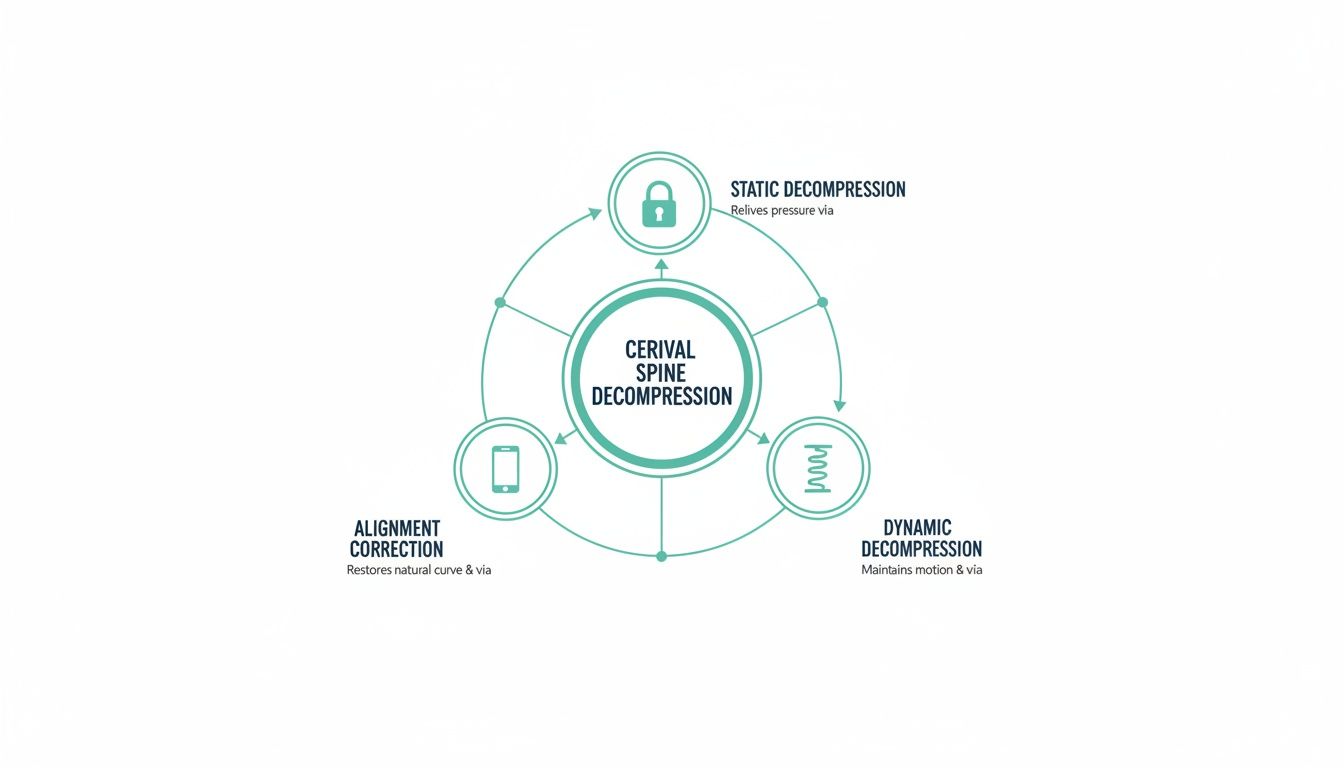
This concept map highlights how static holds, rhythmic cycles, and precise alignment nodes form a balanced decompression strategy.
Adjuncts like PEMF accelerate healing by boosting local blood flow and reducing inflammation, creating an ideal environment for tissue repair.
Modern decompression tables often include sensors that track muscle resistance in real time. These computer-guided systems automatically modify pull strength to maintain comfort and ensure steady progress.
During a typical 20-minute session, force levels ramp up gradually, plateau, then release in controlled cycles to avoid abrupt tension. Early studies suggest that combining mechanical decompression with PEMF can shorten recovery time by 30%, helping you return to daily activities faster.
"PEMF notably enhances soft tissue repair when combined with mechanical decompression," says Dr Hayes.
Depending on your pain tolerance and goals, our team will guide you to the best mix of techniques for optimal relief at Bonesetters.
Vacuum-assisted tables anchor your head and harness gentle negative pressure to lift discs, creating space for fluid exchange and nerve decompression.
Patients often describe a subtle upward tug followed by immediate easing of stiffness and tension. Clinical trials pairing vacuum-assisted and Cox tables reported a 25% increase in cervical range of motion within four weeks, alongside a 40% average pain reduction.
If you’d like to explore this further, check out our detailed guide on non-surgical disc herniation treatment: Learn More About Non-Surgical Disc Herniation Treatment at Bonesetters.
Cervical decompression can make a real difference if you’re dealing with a herniated disc that presses on spinal nerves, sending tingles or numbness down your arm. It’s equally effective for folks with mild to moderate spinal stenosis, helping to loosen that nagging neck stiffness and restore some lost motion.
Some people struggling with chronic muscle tightness—who’ve already tried stretches and seen little benefit—also find traction therapy eases the constant tension. On the flip side, this approach isn’t safe for everyone. Individuals with severe osteoporosis, active spinal infections, or spinal instability should explore other options.
Ideal candidates usually share a few key signs:
Expert Tip Early intervention can keep mild symptoms from snowballing into something more serious.
For instance, Sarah—a 45-year-old teacher—saw her tingling drop by 60% after just ten dynamic decompression sessions.
Your journey starts with a thorough evaluation: medical history, hands-on exam, and a close look at your imaging.
Most patients commit to two or three visits a week over 6–12 weeks. Here’s how it typically breaks down:
Patient Insight By week four, many report up to 40% pain reduction and a clearer sense of progress.
Looking at broader research, surgical decompression provides symptom relief in 70% to 95% of radiculopathy cases caused by disc herniation. In contrast, 20% to 60% of mild cases tend to worsen without any intervention. Learn more in this Parash Hospitals analysis: Read the full research on surgical success rates
By around week eight, most people measure noticeable gains in their range of motion—and by session twenty, pain relief often feels more lasting. On average, patients regain 15 to 25 degrees of cervical flexion and extension over the course of treatment.
Ready to get started? Schedule an initial assessment at Bonesetters Critical Chiropractic. Don’t forget to bring:
During your consultation, we’ll map out a clear plan, set realistic milestones, and go over insurance options.
Follow these steps to kick off your treatment:
Your first formal follow-up usually happens at the six-week mark to ensure you’re on track. Spots fill up quickly—contact Bonesetters today to book your evaluation and start moving toward lasting relief.
Non-surgical cervical spine decompression is a low-risk approach, yet patients occasionally notice mild side effects that clear up on their own.
Most of these after-effects ease within 24 to 48 hours with simple measures like rest and ice. However, certain conditions rule out traction therapy until you’ve been cleared by a specialist:
When non-surgical care isn’t enough, procedures such as anterior cervical discectomy and fusion (ACDF) come into play—but they carry bigger risks. National data from 2010–2022 reveal that 61.6% of cervical operations were ACDF, with morbidity rates between 13.2% and 19.3% and 5.1% 30-day readmissions. Explore more on trends in cervical spine surgery.
Recovery from ACDF often involves persistent pain, difficulty swallowing, and stiffness. Laminectomy—another common surgery—removes bone to relieve pressure but can destabilize the spine. Exercise-based physical therapy carries minimal risk but might not fully address severe disc bulges.
Below is a side-by-side look at non-surgical decompression versus key surgical methods.
| Method | Invasiveness | Success Rate | Recovery Time | Typical Risks |
|---|---|---|---|---|
| Non-surgical decompression | Low | 60–80% | 6–12 weeks | Mild soreness, temporary tingling |
| ACDF (Fusion) | High | 70–95% | 3–6 months | Infection, dysphagia, adjacent issues |
| Laminectomy | High | 65–85% | 3–6 months | Instability, scarring, blood loss |
| Physical therapy and exercises | Minimal | 50–70% | 6–8 weeks | Muscle strain, slower relief |
This table highlights why non-surgical decompression often leads to shorter downtime and fewer complications compared with surgical options.
Deciding on a decompression strategy starts with your specific diagnosis, lifestyle, and comfort level. If you need a shorter recovery and fewer post-treatment issues, non-surgical decompression can be very attractive. In contrast, those with severe cord compression or unstable breaks should discuss surgical routes first.
“Understanding your risk profile and treatment goals is critical before selecting a decompression strategy.”
— Dr. Leonard Hayes
You might also be interested in real patient feedback on decompression outcomes. Check out our guide on patient experiences with spinal decompression.
At Bonesetters Critical Chiropractic, we blend hands-on exams with advanced tools—like PulStar instrumentation and Class IV laser therapy—to craft a plan that suits your neck health. Book your assessment today and take the first step toward lasting relief. Early action often makes all the difference.

Our approach at Bonesetters Critical Chiropractic blends timing and precision to bring back your neck’s natural mobility. We focus on easing pressure in the cervical spine by layering PulStar percussive adjustments, custom traction angles, and Class IV laser therapy. The goal is a balanced, controlled stretch that feels more like gentle waves than jolts.
We start by scanning your vertebrae with the PulStar Sensor, which picks up tension points at a millimeter resolution. Once we’ve mapped out those tight spots, a series of percussive taps relaxes guarded muscles and primes each segment for the next phase.
Next comes the traction protocol. We set angles specific to your spine’s curves and apply a gentle pull cycle, opening disc spaces without overextension.
Real-time feedback on every tap lets us tweak angles and tension on the spot. You’ll often feel subtle relief—as if tension is melting away in small waves.
After decompression, we direct a Class IV laser beam into deeper soft tissues. This high-power light penetrates safely, helping to cut down inflammation and speed up the repair process. Patients often describe the sensation as warm yet soothing.
“I felt the tension melt away and saw my mobility improve by week four.” — Patient A
Graphic designer Jordan came in with stiff mornings that rated 6/10 on her pain scale. After eight sessions combining decompression and laser, she dropped to a 2/10 and regained full neck rotation.
“The laser heat felt gentle but powerful in reducing my inflammation.” — Jordan
We measure your cervical flexion, extension, and rotation before you start, then track changes at each visit. This data-driven route makes it clear how your body responds and where to adjust settings.
| Metric | Week 1 | Week 4 | Week 8 |
|---|---|---|---|
| Cervical Flexion | 30° | 45° | 55° |
| Cervical Extension | 25° | 40° | 50° |
| Lateral Rotation | 60° | 75° | 85° |
Seeing these numbers climb session after session can be a real motivator. We review the chart together and refine your decompression plan to match your pace.
Ready to get started? Set up your first assessment online or by phone, and our team will walk you through insurance details and appointment options.
We offer appointments Monday through Friday, with occasional Saturdays. Call at least 24 hours ahead to reschedule without a fee.
Bring any reports on your C3–C7 segments along with insurance cards, ID, and a list of medications. Wear loose clothing that lets your neck move freely.
Hydrate well and do light stretches before you arrive. Skip heavy meals or caffeine so your muscles are ready to relax.
If you have a personal neck roll or pillow, feel free to bring it. Otherwise, we’ll provide support bolsters.
Going in prepared helps you feel confident about the process. Try these conversation starters:
“Asking detailed questions helped me trust the plan from day one.” — Patient B
Committing to a structured decompression plan sets you on track for lasting relief. Reach out to Bonesetters Critical Chiropractic to book your evaluation and kick off focused care.
For direct booking visit our website or call us at (123) 456-7890.
Early action often leads to quicker gains in comfort and mobility.
Moving through these phases with data and expertise on your side makes for a smoother path back to pain-free movement. Don’t wait—start your neck health journey today.
Clinical studies show combining spinal decompression with adjunct laser therapy can cut pain scores by up to 40% within six weeks. Patient satisfaction often sits around 85% when care follows our structured protocol.
Many patients want to know how long the relief lasts after a cervical decompression plan. In our experience, most see noticeable pain drops for 3 to 6 months once they finish their full course. Keeping up with gentle neck stretches can actually push that benefit even further.
How long does relief last after decompression? It depends on the severity of your condition and how you care for your neck afterward. Many people report around 60% pain reduction in the first month, with lasting gains if they stick to follow-up stretching.
Is non-surgical treatment painful? Most patients describe the session as a gentle stretch rather than pain. You might feel mild soreness afterward, but it usually settles within 24 hours.
Expert Insight
Mild muscle soreness means your tissues are adapting. It’s a normal part of the healing process.
What activities should I avoid between sessions?
Skip heavy lifting and prolonged overhead work for a couple of days. Light walks, gentle neck stretches, and keeping well-hydrated all help your spine heal.
When might surgery still be recommended?
If imaging shows you have severe nerve compression or spinal instability, we might discuss surgical options like ACDF. Your provider will review your scans and symptoms to make the best call.
Between visits, low-impact cardio like walking keeps nutrients flowing into your discs. Simple posture drills also help maintain spinal curves and reduce flare-ups.
Tip
Avoid vigorous neck bending and twisting for 48 hours after each session.
If you experience sudden arm weakness or numbness that gets worse despite treatment, contact us right away. Those symptoms can point to worsening nerve issues and need prompt evaluation.
Ready to take the next step? Schedule your first assessment and discover how cervical decompression can bring lasting relief. Book easily online with Bonesetters Critical Chiropractic.
Slots fill up fast, so reserve yours today.